THE OIL ATLAS
Refined coconut oil
Overview
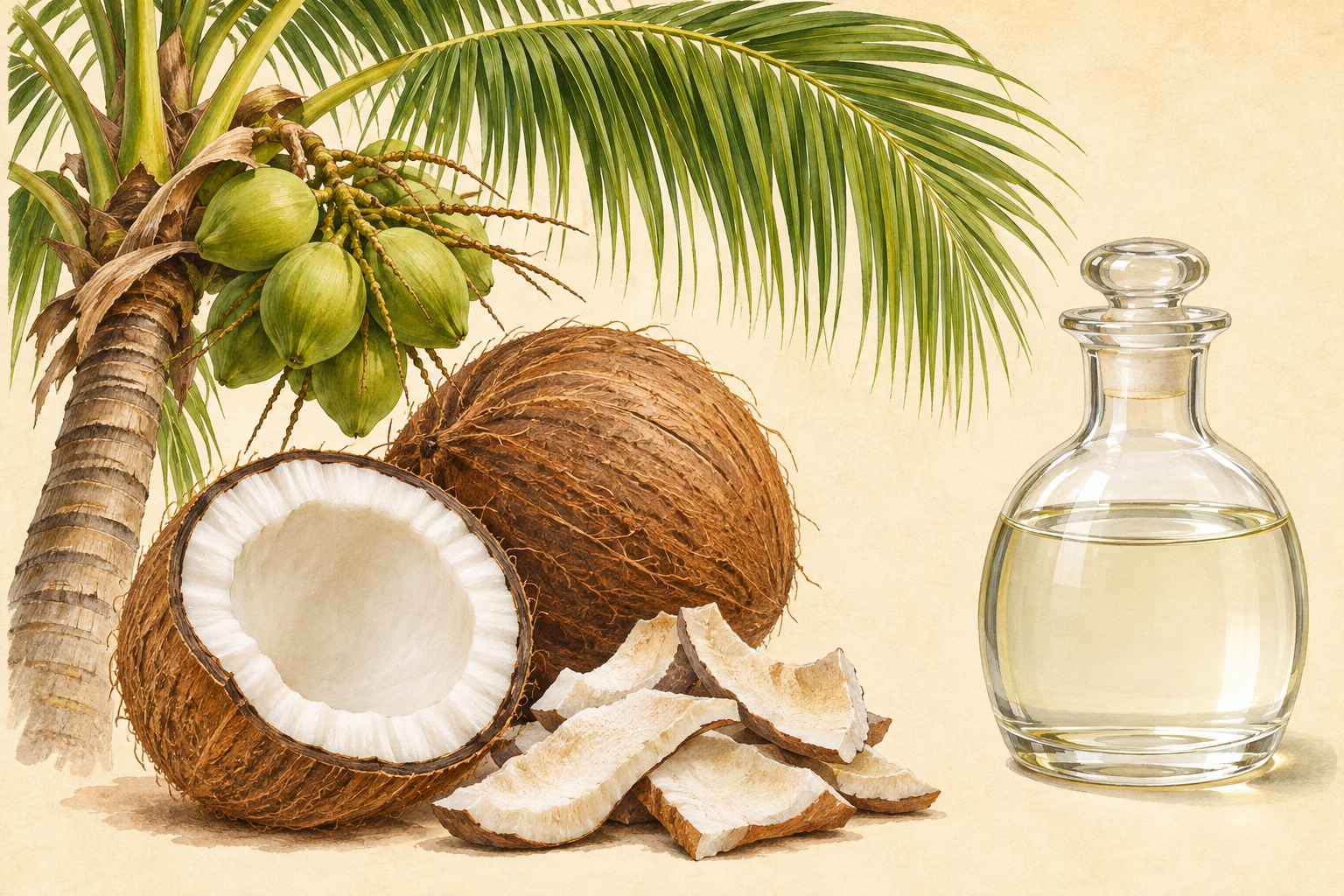
Refined coconut oil is food-grade oil produced from the mature coconut endosperm, commonly using dried copra as its starting material. Refining generally produces a milder aroma than virgin oil.
Source material
The botanical source is Cocos nucifera L.; the oil comes from the fruit endosperm, not coconut water. Copra is dried endosperm used as an oil-bearing raw material.
Virgin and refined oils share the coconut source but differ in processing and degree of refining. Similar fatty-acid profiles do not establish identical aroma or culinary behaviour.
Composition
| Fatty acid | Codex coconut-oil range (% of total fatty acids) |
|---|---|
| Lauric (C12:0) | 45.1–53.2 |
| Myristic (C14:0) | 16.8–21.0 |
| Oleic (C18:1) | 5.0–10.0 |
| Linoleic (C18:2) | 1.0–2.5 |
Source: Codex STAN 210-1999, Table 1, fatty-acid composition of authentic coconut-oil samples. These are not measurements confined to refined oils or nutrient values per 100 g of finished oil.
Region
The Philippine coconut industry roadmap distinguishes refined, bleached and deodorised (RBD) oil made from copra-derived crude oil and identifies its use in household cooking and commercial food processing. This documents use of a separately produced refined food oil, not simply consumption of dried coconut kernel.
Food use
Refined, bleached and deodorised coconut oil is used in household cooking, frying and confectionery manufacture. Philippine producer CIIF likewise markets its RBD oil as a food fat for frying and confectionery. Crude copra oil awaiting refining must not be treated as the finished edible product.
Extraction
Dried mature kernel (copra) is pressed or extracted to recover crude coconut oil, which is then refined for food use through steps that may include neutralisation, bleaching and deodorisation. The Philippine roadmap distinguishes crude (CNO), refined and bleached (RBO), and refined, bleached and deodorised (RBD) products. CIRAD likewise notes that crude copra oil requires refining before consumption.
Copra is dried kernel material, not the oil itself. Crude copra oil, refined-and-bleached oil, and refined-bleached-deodorized oil represent different processing stages and should not be assumed to have the same aroma or food-grade status.
Safety
This is a predominantly saturated fat. Distinguish food-grade refined oil from crude oil, and check intended use and storage condition. Turning white or solid with temperature alone does not prove spoilage; avoid oil showing off-odours or contamination.
Sources
Philippine Coconut Industry Roadmap 2021–2040: https://www.pcaf.da.gov.ph/wp-content/uploads/2022/06/Philippine-Coconut-Industry-Roadmap-2021-2040.pdf CIIF Oil Mills products: https://www.ciif.ph/products CIRAD Coconut uses: https://www.cirad.fr/en/our-activities-our-impact/tropical-value-chains/coconut/plant-and-uses Codex Alimentarius CXS 210-1999 (fatty-acid composition ranges): https://www.fao.org/4/y2774e/y2774e04.htm