THE OIL ATLAS
Nujiang lacquer oil and wax
Overview
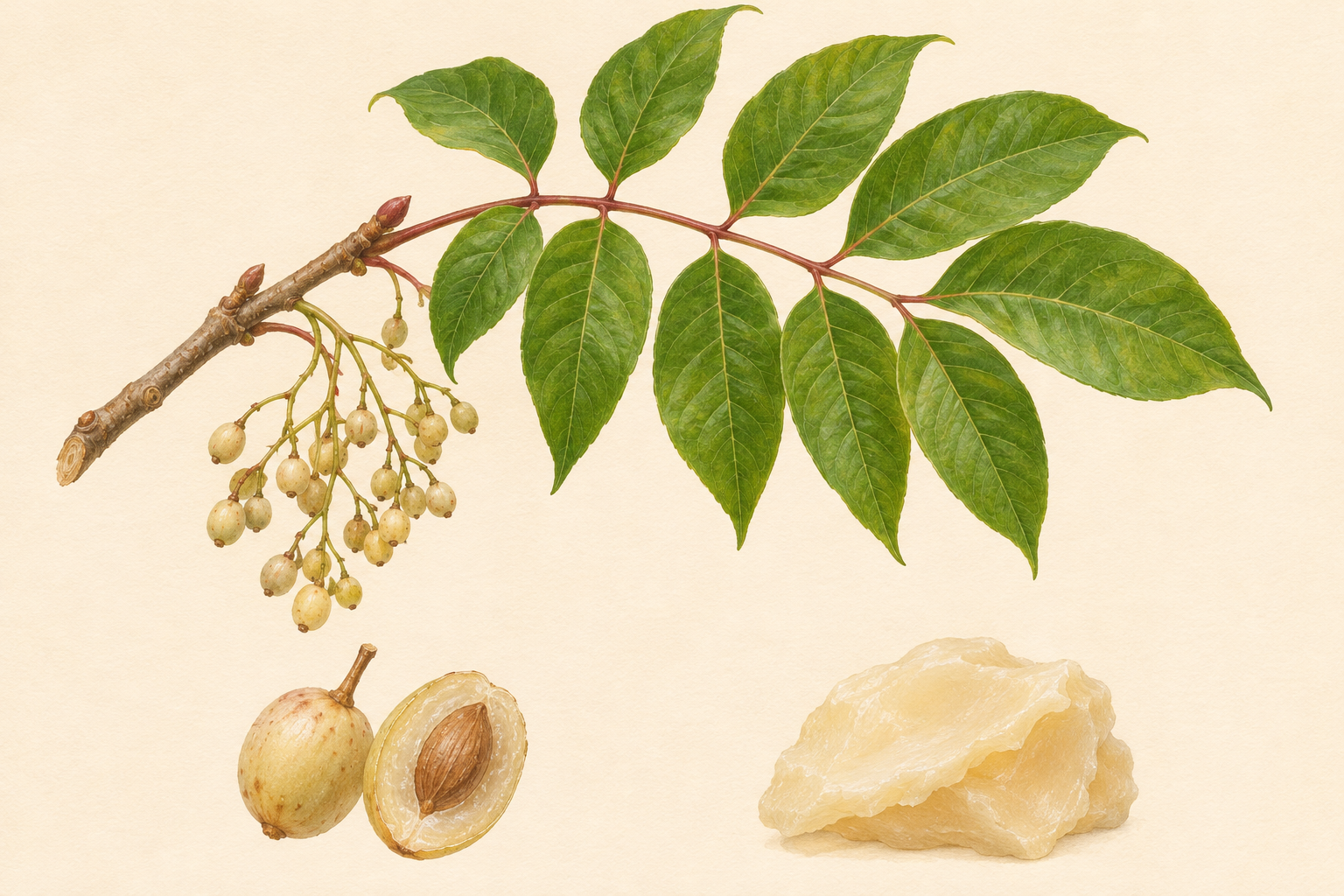
Lacquer oil is an edible fat pressed from the fruit mesocarp of Toxicodendron vernicifluum in the Nujiang region of Yunnan, China. Local people distinguish black and white lacquer oils. A 2022 field and analytical study documents their importance in the diets of Lisu, Nu and Dulong communities. This does not mean lacquer resin or raw plant material is safe to eat.
Source material
The oil-bearing material is the mesocarp of the lacquer tree drupe, Toxicodendron vernicifluum. The resin used in lacquer coatings and the edible fat pressed from fruits have different source materials and uses. Black and white lacquer oils are distinguished locally.
Composition
| Measure | Finding in 2022 study | Material and method |
|---|---|---|
| Lipid classes | Black oil tended to contain more diacylglycerols than white oil | Market samples compared by UPLC-MS/MS |
| Metabolomic differences | 57 discriminating markers reported | Comparative analysis of black and white oils |
| Major fatty-acid percentages | Not independently verified here | No figures inferred for percentage of total fatty acids |
Cell and mouse experiments in the paper must not be presented as demonstrated human medical or nutritional benefits.
Region
Nujiang Lisu Autonomous Prefecture, Yunnan, China. The 2022 researchers collected black and white oil samples at a market in Lushui and conducted interviews and observations in local markets and villages.
Food use
The study identifies lacquer oil as an important edible fat among Lisu, Nu and Dulong communities. Chicken prepared with lacquer oil and a drink combining lacquer oil and sugar are described in postpartum food traditions among Lisu and Nu people. Beliefs about postpartum recovery are cultural observations, not proof of clinical efficacy.
Extraction
The 2022 paper describes pressing the mesocarp of lacquer tree fruits harvested in September–October. Differences between black and white oil are associated with source and processing characteristics, but color is not attributed to a single universal factor.
Safety
Caution: Lacquer-tree resin, foliage, branches and fruits can cause contact allergies. Do not confuse traditionally prepared edible lacquer oil with coating resin or raw plant material. Consume only products established as food-grade. Anti-inflammatory and postpartum-depression findings in the 2022 study came from cell and mouse models, not human clinical trials.
Reported postpartum dietary customs are cultural practices, not clinical evidence of treatment efficacy. Food safety depends on the raw material, processing and finished product.
Sources
Liu L. et al. (2022), *Comparative Lipidomic and Metabolomic Analyses Reveal the Mystery of Lacquer Oil from Toxicodendron vernicifluum for the Treatment of “Yuezi” Disease in Nujiang, China*. Frontiers in Pharmacology 13:914951. https://pmc.ncbi.nlm.nih.gov/articles/PMC9234167/ ; https://doi.org/10.3389/fphar.2022.914951 (field use, pressing, black/white oil analysis and limits of experimental findings).