THE OIL ATLAS
Umari pulp oil
Overview
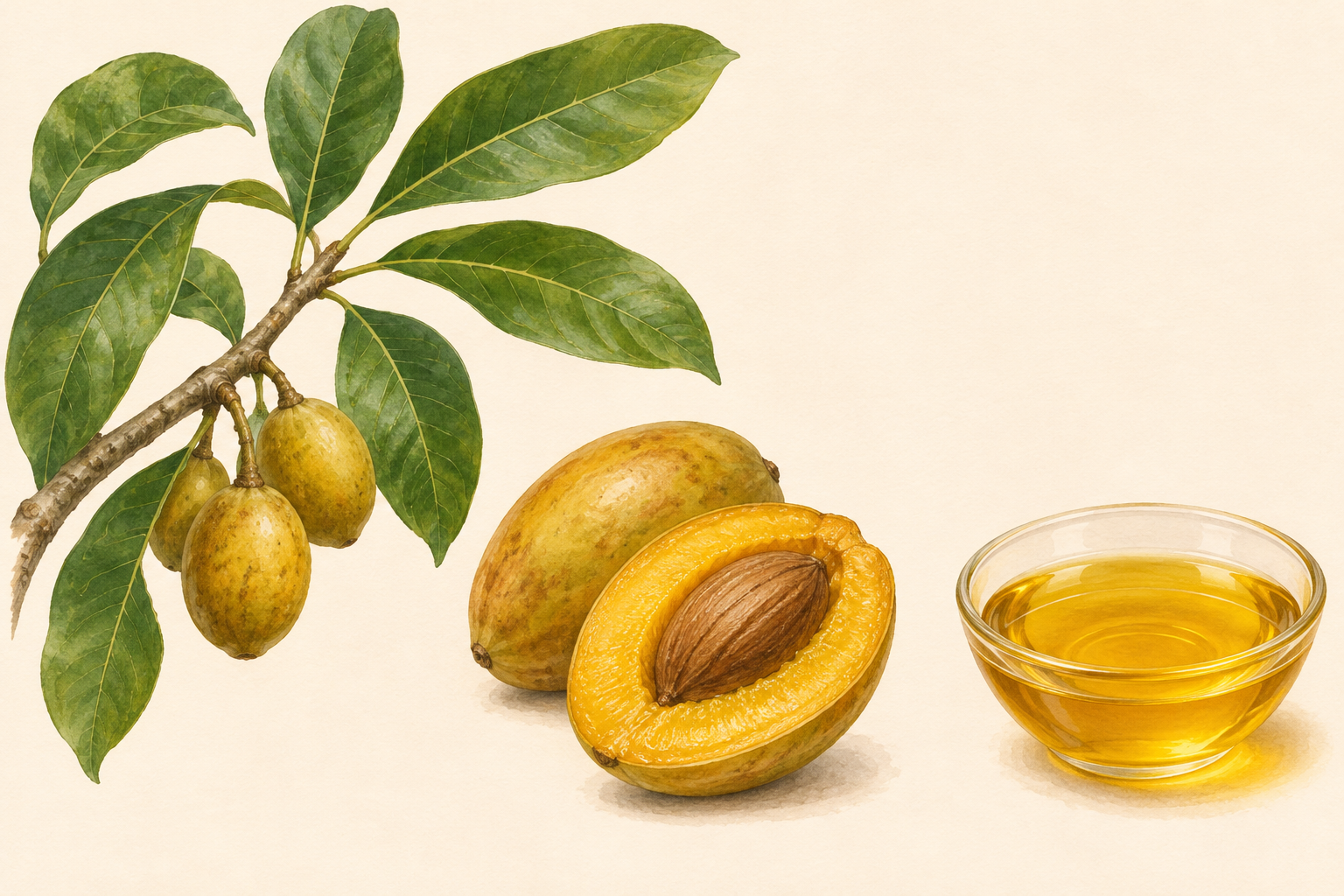
Umari pulp oil comes from the pulp of the Amazonian fruit tree Poraqueiba sericea. In addition to eating the oily pulp itself, a botanical study records using oil from the fruit to prepare cooked rice. A 1997 paper characterized oil extracted from pulp and peel. Kernel oil must be distinguished from pulp oil.
Source material
Fruit pulp of Poraqueiba sericea, sometimes studied together with the peel. Oil obtained from the seed and the practice of spreading naturally oily pulp on bread are different products or food uses.
Composition
| Measure | Reported value | Material and method |
|---|---|---|
| Crude oil extraction yield | 47.86% | 1997 study, Soxhlet extraction of pulp and peel with hexane; detailed yield basis requires checking the full tables |
| Neutral oil yield | 31.72% | Different processing stage in the same study |
| Fatty-acid profile | Predominantly unsaturated, notably oleic acid | Gas–liquid chromatography in the 1997 study; individual percentages not reproduced here |
These are laboratory extraction and analysis values, not household pressing yields or commercial nutrition-label specifications.
Region
The fruit tree is associated with the Amazon basin in Brazil, Peru and Colombia. A Brazilian botanical study documents oil from umari fruit being used to prepare cooked rice. Widespread consumption of the fruit itself does not establish the market scale of separated oil.
Food use
Falcão and Lleras (1980) recorded oil obtained from the fruit being used to prepare cooked rice (reported through personal communication). A Puerto Nariño food-use guide independently states that umari oil is used in rice dishes and frying. Eating the fatty pulp with cassava flour or spreading it on bread is not treated as evidence of separately extracted oil use. Current prevalence and commercial volumes are not established.
Extraction
A 1997 analytical study extracted crude oil from pulp and peel with hexane in a Soxhlet apparatus and compared neutralized and bleached oils. This laboratory process should not be presented as the method used by cooks. Compressed propane extraction was also investigated in 2024.
Safety
Solvent-extracted laboratory samples are not automatically suitable for eating. Food-grade products require control of residual solvents, oxidation and manufacturing hygiene. Edibility of the fruit does not guarantee the safety of every extracted oil.
Sources
1. Falcão & Lleras, 1980, botanical study of *Poraqueiba sericea* (fruit oil used for cooked rice): https://artefacts-discovery.researcher.life/full_text_files/DA-2/61/61c35c6cfbe53f0088be80d36238f669/full_text/aG1jU4tEoyQ68kjyrx0Ub8C44BDD3jdwRzCHgnao8lI%3D.pdf 2. Chasquibol Silva, 1997, *Grasas y Aceites* 48(1):11–16, DOI: https://doi.org/10.3989/gya.1997.v48.i1.769 (pulp-and-peel oil extraction and analysis). 3. Freitas et al., 2024, *The Journal of Supercritical Fluids* 213:106369, DOI: https://doi.org/10.1016/j.supflu.2024.106369 (compressed-propane extraction study). 4. Fundación Leo, Cartilla de Usos de Especies Promisorias de Puerto Nariño, p.15, Umarí: https://www.funleo.org/wp-content/uploads/2021/11/Cartilla-de-Usos-de-Especies-Promisorias-Puerto-Narino.pdf 5. Falcão & Lleras (1980), Acta Amazonica 10(3):445–462: https://doi.org/10.1590/1809-43921980103445