THE OIL ATLAS
Traditional North American bear grease
Overview
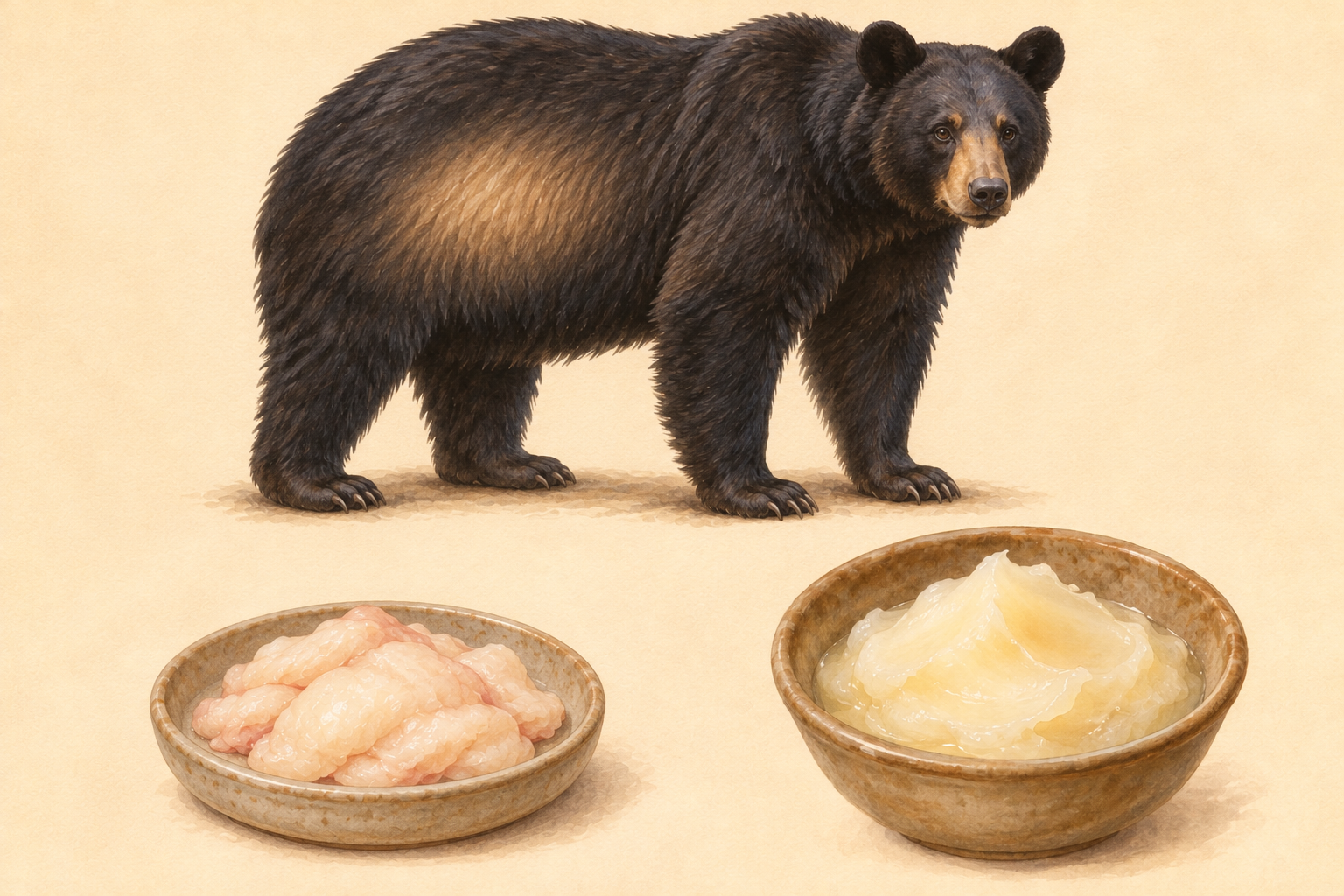
Bear grease is fat rendered and separated from bears and historically used as food by several Indigenous communities of northern North America. The entry concerns collected grease, not simply eating fatty meat.
Source material
Bear body fat, including black bear fat in documented Alaskan examples. Grease from different bear species and places should not be assigned one uniform nutritional composition.
Composition
The ethnographic sources reviewed here do not supply validated fatty-acid profiles or nutrition values per 100 g for the rendered grease. Values from unrelated animal fats are not substituted.
Region
Documented examples include Beaver, Stevens Village and Fort Yukon in Alaska, with other uses across northern North America. The practice is not attributed to every Indigenous community.
Food use
An Alaska Department of Fish and Game report documents rendering by Beaver residents and use of bear grease in “Indian ice cream” at Stevens Village. Another Alaska report records historical cooking and preservation of shellfish in bear grease.
Extraction
Fat removed from bears was heated to render and collect a separate grease. Interviews in Alaska describe the practice being transmitted through families.
Safety
Historical use does not demonstrate present-day food safety. Wildlife handling, contamination, parasite hazards and applicable hunting or food regulations require independent assessment; rendered fat should not automatically be treated as safe.
Sources
1. Alaska Department of Fish and Game, Technical Paper No.377, p.112. https://www.adfg.alaska.gov/download/indexing/Technical%20Papers/TP%20377.pdf 2. Alaska Department of Fish and Game, “Subsistence Use of Brown Bear in Southeast Alaska,” Technical Paper No.214, p.53. https://www.adfg.alaska.gov/TechPap/tp214.pdf 3. Traditional Animal Foods of Indigenous Peoples of Northern North America, “Bears.” https://www.sacredfoods.ca/mammals/bears/