THE OIL ATLAS
Northeastern pequi kernel oil
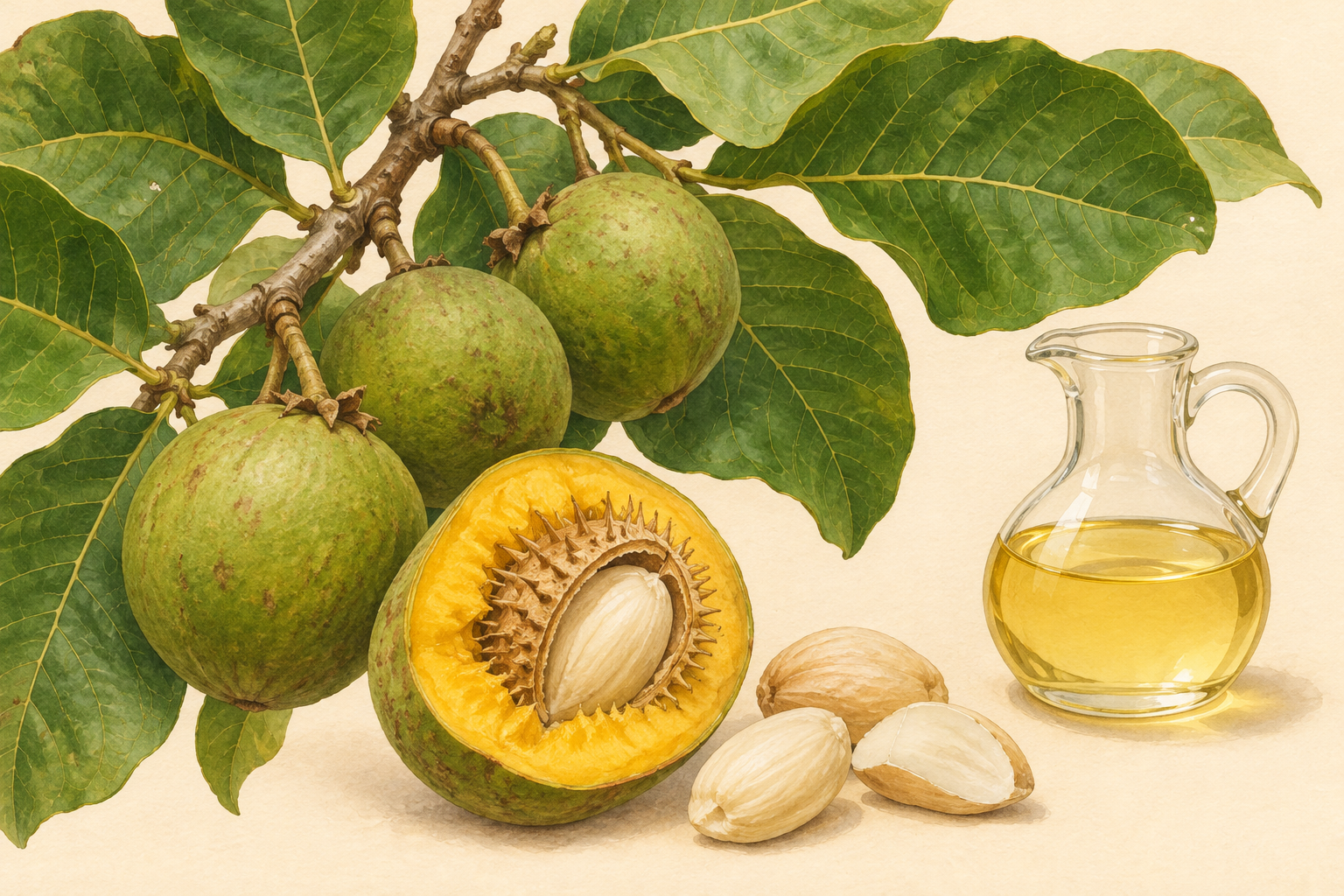
Overview
An oil separated from the kernel (amêndoa) inside the hard, spiny stone of Caryocar coriaceum, associated with the Araripe region of northeastern Brazil. It is distinct from pulp oil. A regional university thesis specifically describes the kernel oil as a valued culinary ingredient.
Source material
The kernel inside the hard stone of Caryocar coriaceum, not the surrounding fruit pulp.
Composition
This oil comes from Caryocar coriaceum kernels. Pulp and kernel oils are different materials, so pulp-oil composition is not directly transferable to the kernel oil.
Region
Chapada do Araripe, northeastern Brazil, including Ceará. Regional sources document production and sale of pequi products, including kernel oil.
Food use
A dissertation hosted by the Federal University of Cariri describes the pale, mild-smelling oil from the kernel as a prized culinary ingredient. This is evidence concerning separated kernel oil, rather than simply eating the pulp or applying evidence about pulp oil to the kernel. Specific dishes and current sales volumes remain unverified.
Extraction
The kernel must be removed from the hard stone before its oil can be recovered. A Brazilian environment-ministry regional reference distinguishes oil from pulp and from kernel. Specific heating and refining conditions at individual producers are not established.
Safety
The spiny endocarp can cause injury. Food-grade oil should not be confused with oil intended for cosmetics or medicinal applications. Historical and regional food use does not establish current authorization in every jurisdiction or universal safety.
Sources
1. Federal University of Cariri, dissertation on Caryocar coriaceum extraction, p.26 (kernel oil as a prized culinary ingredient). https://proder.ufca.edu.br/wp-content/uploads/2018/08/extrativismo-do-pequi-caryocar-coriaceum-wittm_dissertac3a7c3a3o-1.pdf 2. Brazilian Ministry of the Environment, Northeast region, Caryocar coriaceum, p.149 (kernel versus pulp oil). https://fitoterapiabrasil.com.br/sites/default/files/documentos-oficiais/regiao-nordeste21-12-2018.pdf 3. Guedes et al., AOCS Lipid Library, Pequi oil (genus-level background, not species-specific kernel fatty-acid values). https://www.aocs.org/resource/pequi-oil/ 4. Oliveira et al. (2026), Foods 15(12), 2185 (review; do not conflate pulp and kernel measurements). https://doi.org/10.3390/foods15122185