THE OIL ATLAS
Northeastern pequi pulp oil
Overview
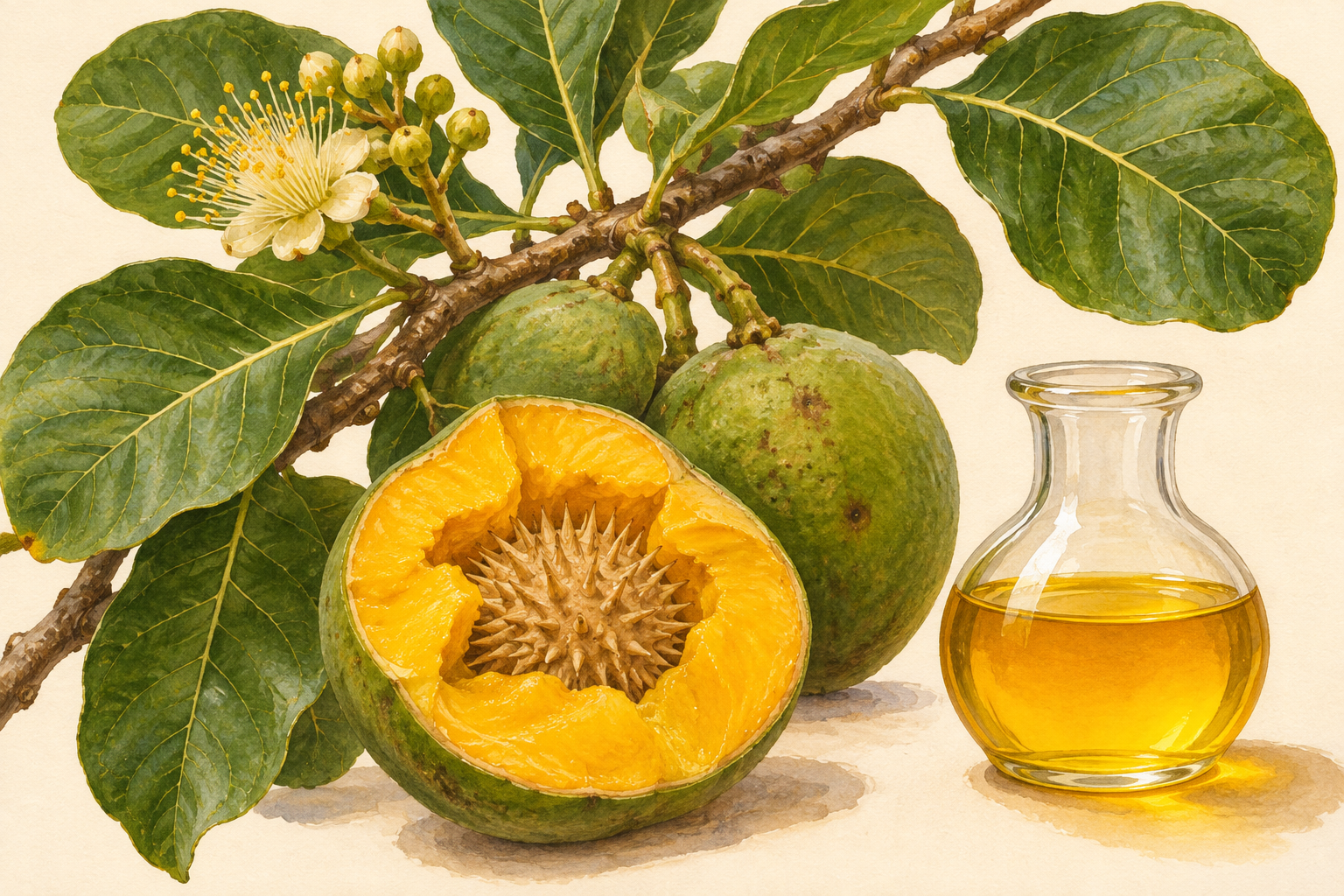
This regional pequi pulp oil is separated from the mesocarp of Caryocar coriaceum in the Araripe region of northeastern Brazil. A 2015 ethnobotanical field study documents its extraction, sale and economic role. It should not be conflated with oil of C. brasiliense.
Source material
Fruit pulp (mesocarp) of Caryocar coriaceum. The fruit contains a hard, spiny inner stone; pulp oil and oil from the kernel inside it are different products.
Region
Communities around the Araripe–Apodi National Forest (FLONA), northeastern Brazil, have a documented tradition of extracting oil from Caryocar coriaceum fruits. A 2015 ethnobotanical study describes fruit gathering within the forest, oil production at nearby temporary camps, and sales along roads and in local urban markets.
Food use
Field research documents heating the pulp, collecting separated oil and selling it by roadsides and in markets. Pequi dishes at harvest celebrations are also documented, but use of the separated oil in any particular dish is not established.
Extraction
A 2015 photographic ethnobotanical account documents the traditional collection of fruits and extraction of oil, generally during December–March, with oil sold in nearby markets. The observed product is oil from Caryocar coriaceum fruits; processing methods for other pequi species or kernel oils should not be substituted. Pressing conditions documented for other pequi species are not transferred to this traditional process.
Safety
Documented production and trade do not guarantee the microbiological safety, oxidative condition or current regulatory compliance of every handmade oil. Confirm the species, plant part and food-grade handling.
Sources
Cavalcanti et al. (2015), Pequi (Caryocar coriaceum) Oil Production, Ethnobotany Research and Applications 14:437–452. https://doi.org/10.17348/era.14.0.437-452 AOCS, Pequi oil, https://www.aocs.org/resource/pequi-oil/ (genus-wide background; avoid cross-species compositional claims).