THE OIL ATLAS
Amazonas tucumã pulp oil
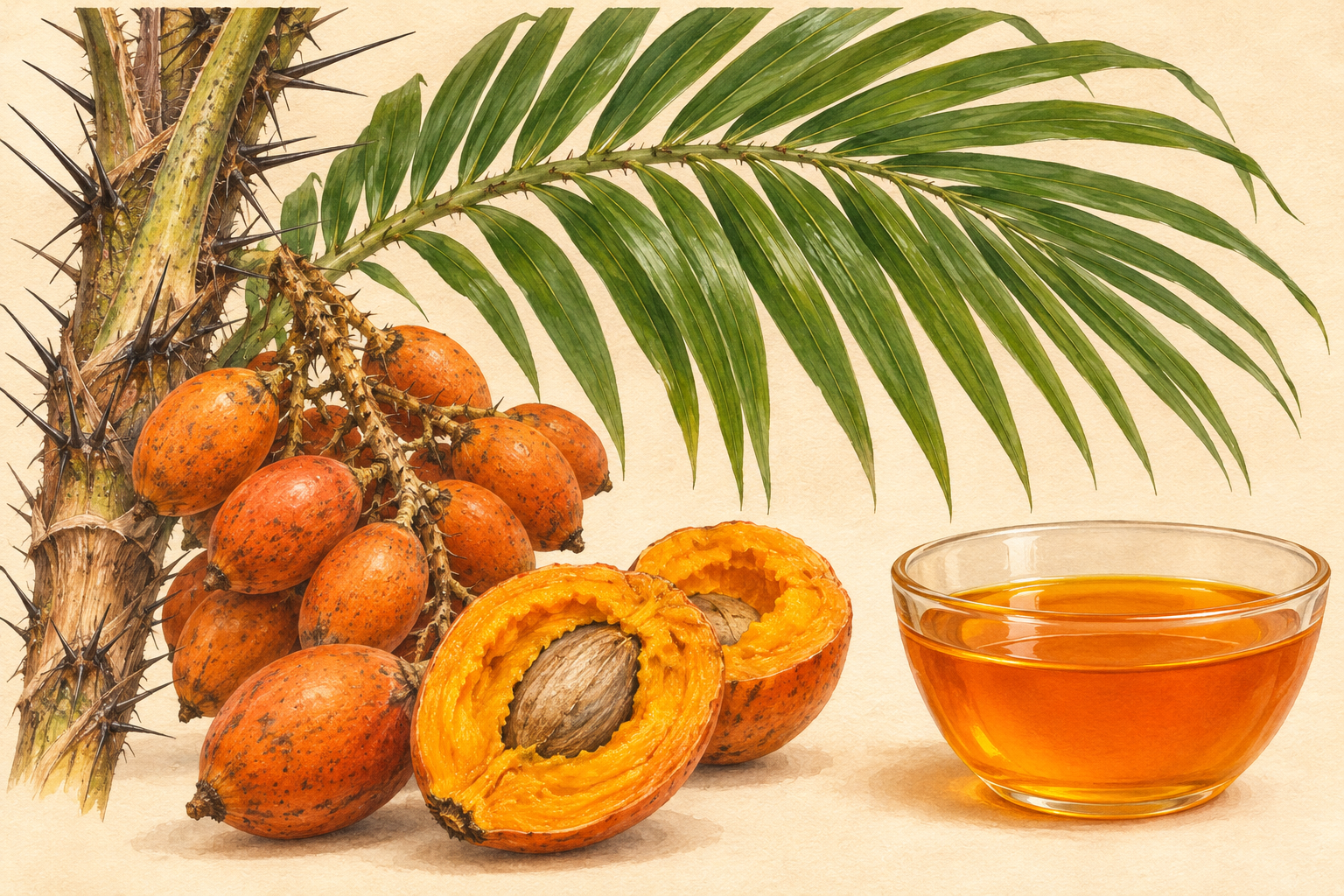
Overview
Oil separated from the pulp of Astrocaryum aculeatum, the Amazonian tucumã palm. It differs from oil obtained from the kernel.
Source material
The raw material is pulp of Astrocaryum aculeatum (Arecaceae), known in Brazil as tucumã-do-amazonas. The common name tucumã alone does not distinguish it from A. vulgare.
Composition
Pulp and kernel oils have different compositions. Nutrient values for whole pulp or kernels, and fatty-acid percentages for kernel oil, cannot be assigned to pulp oil.
Region
The Brazil species account of Biodiversity for Food and Nutrition records extraction from both pulp and kernel and culinary use of the oil.
Food use
Separated pulp oil is used for cooking. Fresh pulp eaten in sandwiches and the drink called tucumã wine are different foods.
Extraction
The oil-bearing part is the pulp. PROSEA records local extraction of edible pulp oil in this genus but does not specify traditional processing temperatures or times for this species.
Safety
Distinguish food-grade pulp oil from cosmetic and research oils. Botanical identity alone does not establish current marketing authorisation or product safety. Do not reproduce laboratory solvent extraction or unvalidated refining methods at home.
Sources
1. Biodiversity for Food and Nutrition, Astrocaryum aculeatum, Brazil species account. https://www.b4fn.org/resources/species-database/detail/astrocaryum-aculeatum/ 2. Wulijarni-Soetjipto & Jansen (2001), Astrocaryum, PROSEA 14. https://prosea.prota4u.org/view.aspx?id=855