THE OIL ATLAS
Macaúba pulp oil
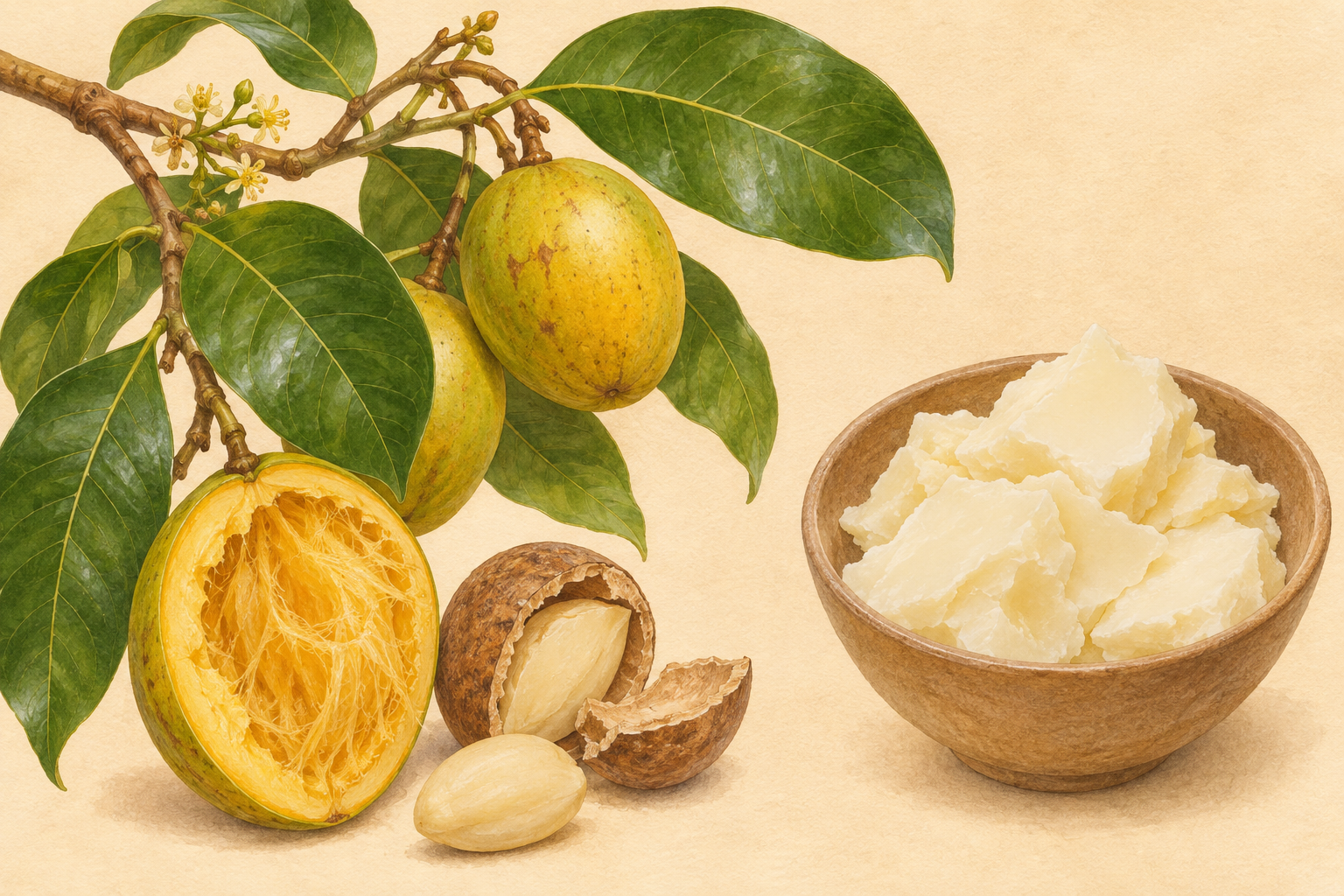
Overview
Oil separated from Acrocomia aculeata fruit pulp. Its orange-coloured pulp oil and oil from the seed kernel are different products.
Source material
The source is the mesocarp. Common names include macaúba and bocaiúva. Culinary records and analytical values for kernel oil cannot be substituted for pulp oil.
Composition
Costa and colleagues found oleic acid to be the main unsaturated fatty acid in their pulp-oil sample. Their analysis used dried Brazilian pulp extracted with hexane, not a universal specification for food products.
Region
Museu do Cerrado distinguishes food uses of pulp oil from kernel oil, citing Lorenzi and Negrelle. Traditional communities in the Pantanal also have records of macaúba-oil use more generally.
Food use
Recorded pulp-oil uses include cooking oil, ice cream and liqueurs. These differ from eating the pulp itself or using kernel-derived oil.
Extraction
Oil is recovered from the pulp. Embrapa documents an aqueous process using wet pulp. This technical process should not be assumed to represent every traditional method.
Safety
Use oil managed for food purposes. Animal and laboratory findings do not establish human therapeutic benefits. Research hexane extracts are not automatically commercial food specifications; food production requires controls for solvent residues, oxidation and hygiene.
Sources
1. Museu do Cerrado (2021), Óleo de Macaúba, Usos; bibliographic attribution to Lorenzi & Negrelle (2006). https://museucerrado.com.br/oleo-de-macauba/ 2. Costa et al. (2020), Phytochemical profile, anti-inflammatory, antimutagenic and antioxidant properties of Acrocomia aculeata pulp oil. https://doi.org/10.1590/fst.25319 3. Embrapa, Macaúba: processo de extração de óleo de polpa de macaúba por via úmida. https://www.infoteca.cnptia.embrapa.br/handle/doc/1126437