THE OIL ATLAS
Beechnut oil
Overview
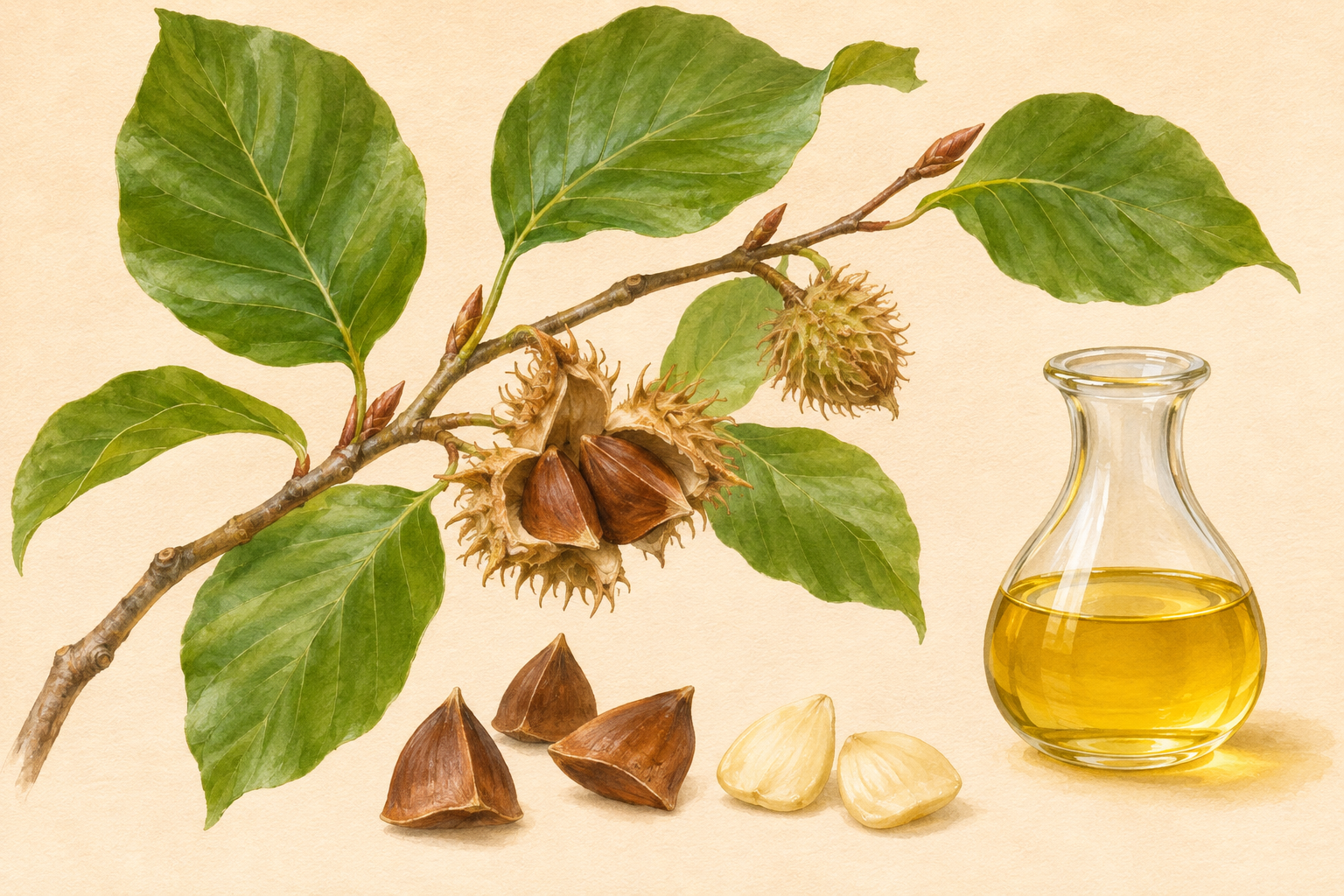
Oil separated from nuts of European beech (Fagus sylvatica), historically pressed for culinary use in parts of Europe.
Source material
The oil derives from beech nuts; eating the nuts and using the separated oil are different forms of evidence.
Composition
Stoličná’s ethnographic paper cites fat content of 42–48% by mass in shelled beechnuts. This is not pressing yield or the fatty-acid composition of separated oil.
Region
Rastislava Stoličná’s study of traditional food records household beechnut-oil production continuing into the twentieth century in the Slovak–Moravian border region. This is specific ethnographic evidence, not proof of widespread use throughout Europe.
Food use
In the Slovak–Moravian border region, the separately extracted oil was used for frying, with potatoes, and spread on dry or toasted bread. This is evidence of culinary use of the oil itself, distinct from eating the nuts.
Extraction
The ethnographic account contrasts cold pressing of fresh, shelled nuts, yielding a clear aromatic oil, with warm pressing of unshelled nuts, described as producing a yellow, bitter oil. These are historical descriptions rather than modern product specifications.
Safety
Historical accounts of beech-nut oil use do not certify present-day food safety or shelf life. Unprocessed nuts may contain harmful constituents; do not cook with oil that has not been manufactured and labeled for food use.
Sources
Stoličná, Rastislava. 2016. Ethnographic study of traditional foods in Slovakia, p.245 (fat content of shelled nuts; cold versus warm pressing; twentieth-century household production; frying, potatoes and bread). Slovak Academy of Sciences PDF: https://www.sav.sk/journals/uploads/0109144610%20slovensky_narodopis_2016_2-stolicna.pdf