THE OIL ATLAS
Galip/Nangai oil
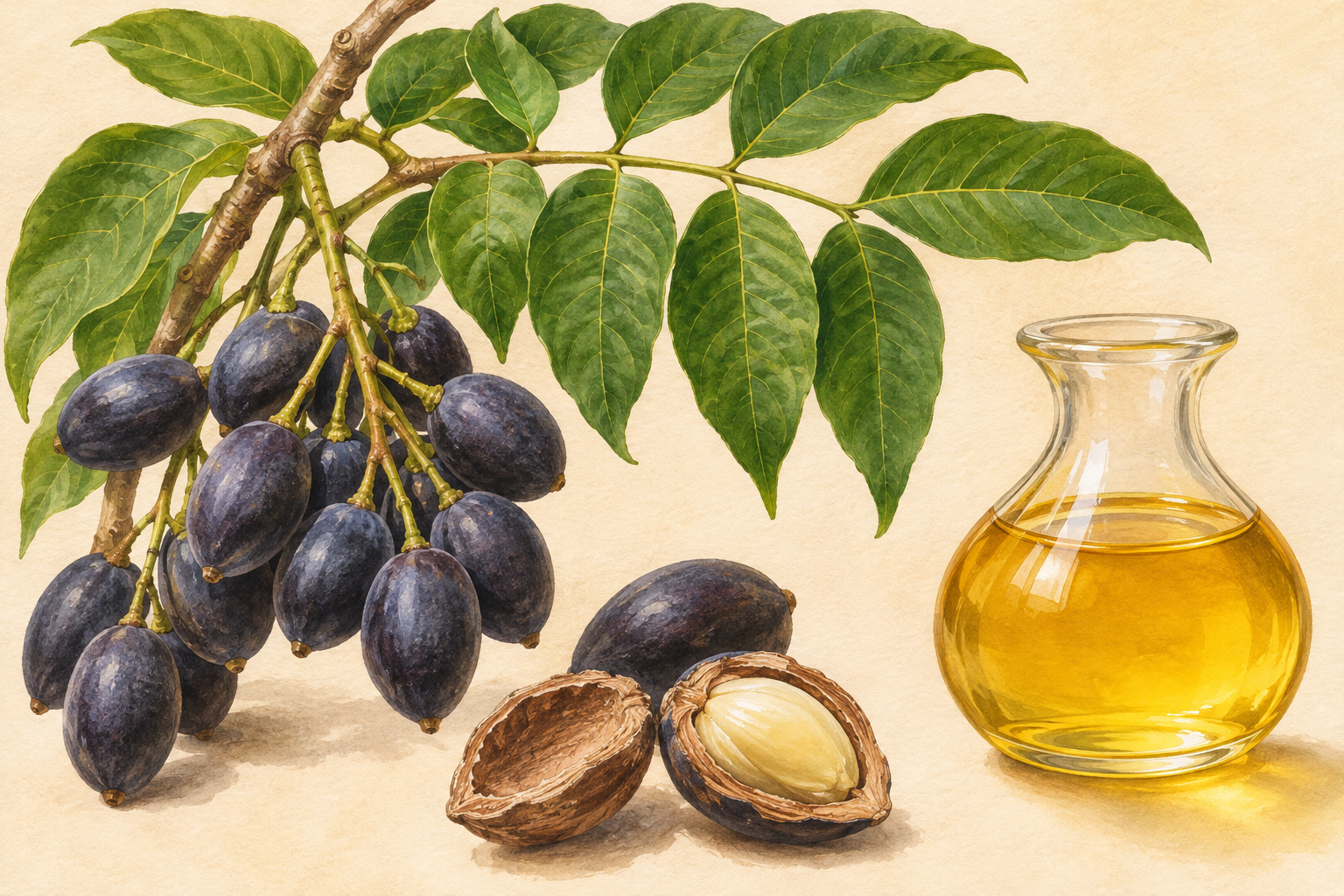
Overview
Nangai (galip or ngali) oil is separated from the kernels of Canarium indicum, a tree used in Melanesia. FAO and World Agroforestry explicitly document culinary use of the extracted oil, independently of eating the nuts themselves.
The World Agroforestry species account records mixing freshly separated seed oil into food and using it for cooking in place of coconut oil. This is separate evidence from eating nangai kernels directly.
Source material
The oil comes from the kernels inside the hard fruits of Canarium indicum, also known as nangai, galip, ngali or kenari. Philippine pili nut (Canarium ovatum) is a related but different species.
Composition
| Measure | Literature value | Material and basis |
|---|---|---|
| Oil in seeds | 70–80% | Percentage of seed mass, World Agroforestry species profile |
| Protein in seeds | 13% | Same seed-level source |
| Starch in seeds | 7% | Same source |
The 70–80% figure is oil content of seeds, not a fatty-acid percentage in separated oil.
Region
FAO records cultivation and use from Malaysia to New Guinea and Melanesia. Names differ locally: nangai in Vanuatu, ngali in Solomon Islands and galip in Papua New Guinea.
Food use
World Agroforestry explicitly records fresh seed oil mixed with food and extracted seed oil used as a substitute for coconut oil in cooking. Both practices are distinct from eating raw or roasted nuts.
Extraction
Kernels are recovered from the hard fruit and the oil is separated. The sources establish extraction but do not provide one uniform regional pressing temperature or refining method.
Safety
Select oil manufactured and labeled for food use and observe storage and oxidation conditions. Some sources warn that eating the seed coat may cause diarrhea; this does not directly establish the same hazard for separated oil. Do not consume oil sold for lighting or other non-food uses.
Sources
World Agroforestry, Agroforestree Database 4.0, *Canarium indicum*, pp. 1–5, https://apps.worldagroforestry.org/treedb/AFTPDFS/Canarium_indicum.pdf (p. 3: fresh oil mixed with food, extracted oil used for cooking, and 70–80% seed oil content). FAO Ecocrop, *Canarium indicum*, https://ecocrop.apps.fao.org/ecocrop/srv/en/cropView?id=606 World Agroforestry, Agroforestree Database 4.0, Canarium indicum, p. 3: fresh seed oil is mixed with food; extracted seed oil substitutes for coconut oil in cooking. The 70–80% figure refers to the nut oil content, not the fatty-acid composition of extracted oil. https://apps.worldagroforestry.org/treedb/AFTPDFS/Canarium_indicum.pdf