THE OIL ATLAS
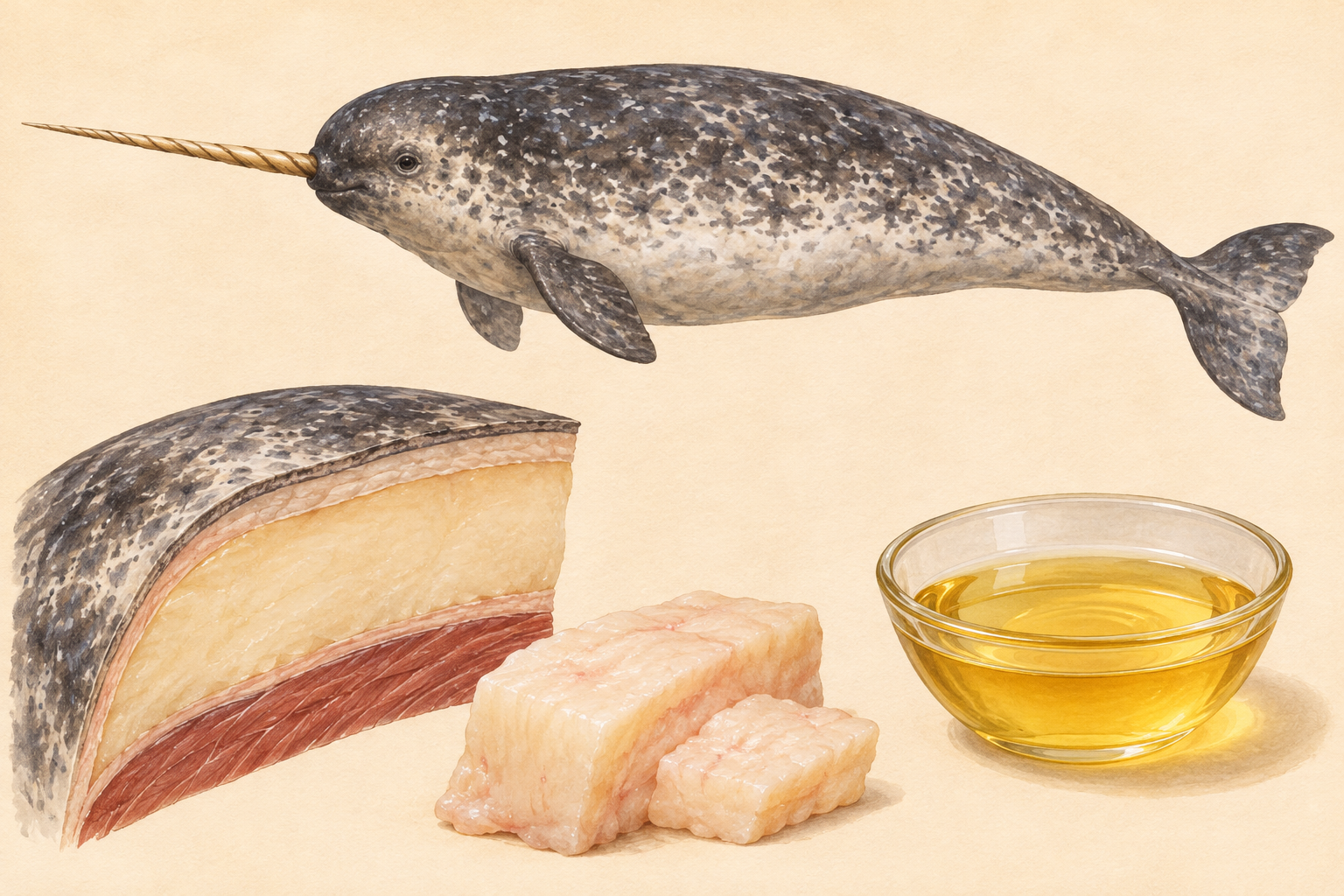
Narwhal rendered blubber oil
Overview
Oil separated from narwhal (Monodon monoceros) blubber has been eaten as misirak, a traditional Inuit condiment in the Canadian Arctic. This is distinct from eating skin and attached blubber (maktaaq) directly.
Source material
Narwhal blubber. The oil separated and aged for use as a condiment is distinct from whole skin-and-blubber maktaaq.
Composition
No sample-matched fatty-acid profile or per-100-g nutrition analysis of separated narwhal oil has been established here. Values for whole maktaaq must not be transferred to the oil.
Region
Documented in Inuit foodways of the Canadian Arctic, including northern Baffin Island. Preparation and use can vary among communities.
Food use
Narwhal misirak is eaten as a condiment with dried, frozen or cooked meats. This is separate from the consumption of unseparated blubber.
Extraction
Oil is separated from blubber and used as misirak. Traditional misirak is described as aged under oxygen-limited conditions, but no single temperature or ageing duration has been verified specifically for narwhal oil.
Safety
Marine-mammal fats may raise contaminant and storage-related food-safety concerns. Historical consumption is not a recommendation to prepare or sell the product. Harvest and trade are subject to wildlife rules.
Sources
1. Indigenous Peoples Atlas of Canada, “Wildlife”, Narwhal — Tuugaalik. https://indigenouspeoplesatlasofcanada.ca/article/wildlife/ 2. Environment and Climate Change Canada, COSEWIC Narwhal assessment, chapter 9. https://www.canada.ca/en/environment-climate-change/services/species-risk-public-registry/cosewic-assessments-status-reports/narwhal/chapter-9.html 3. TRAFFIC, Breaking the Ice: International Trade in Narwhals. https://www.traffic.org/site/assets/files/2528/breaking_the_ice_report.pdf