THE OIL ATLAS
Spatholobus parviflorus seed oil (Bhemila oil)
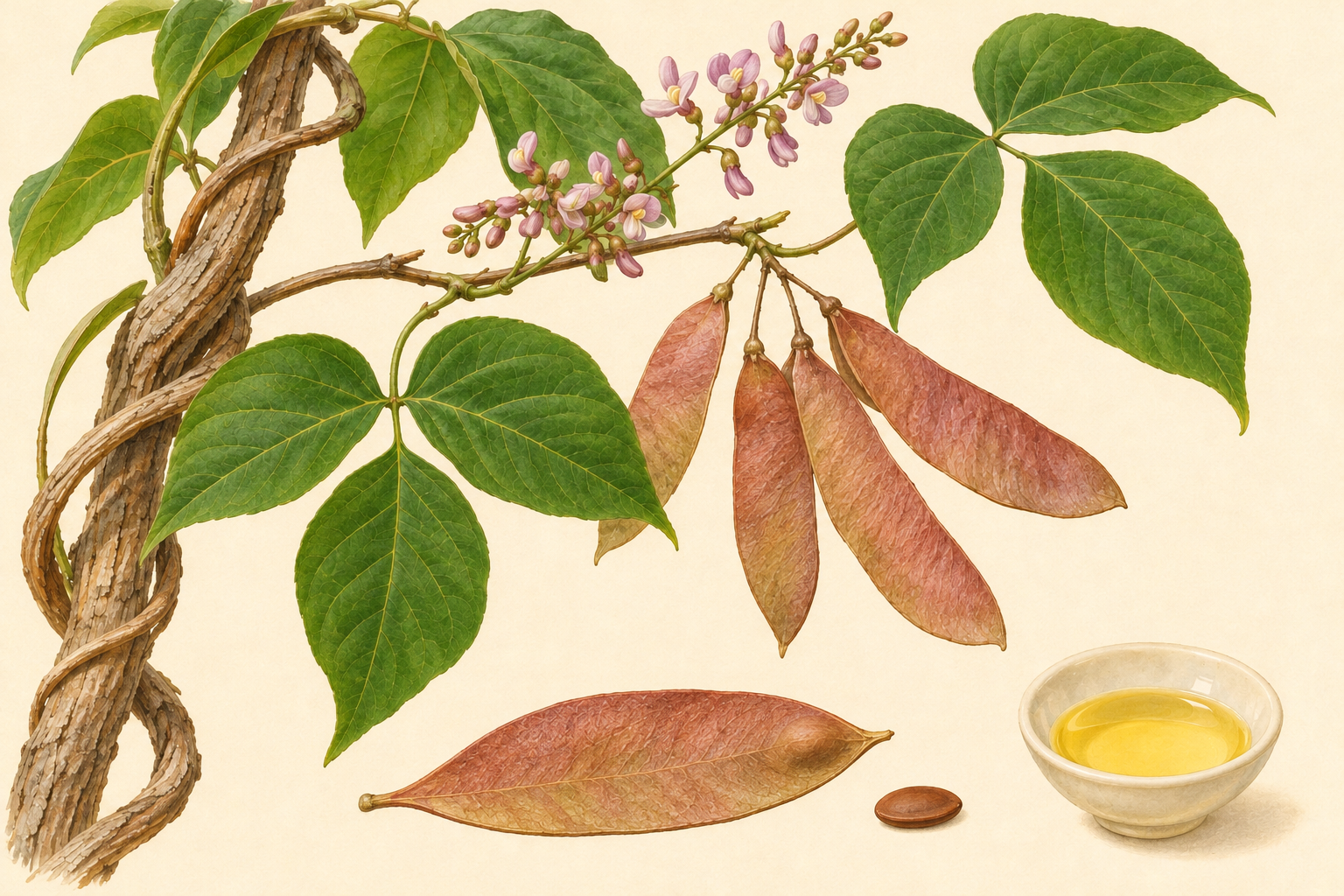
Overview
Bhemila oil is obtained from the seeds of the climbing legume Spatholobus parviflorus. An early twentieth-century US Department of Agriculture plant-introduction record describes the seed oil as used for cooking and anointing. This concerns separated oil, not merely the consumption of the seeds.
Source material
The source is the seed of Spatholobus parviflorus (Roxb. ex DC.) Kuntze. Historical synonyms include Spatholobus roxburghii and Butea parviflora. Kew accepts Spatholobus parviflorus as the species name.
Composition
A Nepalese survey lists seed oil content at 20%, but the underlying analytical method and sample conditions are insufficiently established here, so this is only a qualified reference figure. Seed oil yield is not the fatty-acid composition or nutritional composition of the extracted oil. No unverified fatty-acid percentages are supplied.
Region
The plant is native from the Indian subcontinent to southwestern China and Indochina. The historical culinary-oil statement traces to an Indian economic-botany account. A survey in Chitwan, Nepal, identifies the species among local oil resources; it does not establish widespread present-day household cooking use.
Food use
The USDA inventory entry, citing Watt’s earlier economic-products account, explicitly says the seed oil is used for cooking. No specific dishes, frequency of consumption, or current retail market are established by the sources reviewed.
Extraction
The sources document oil from seeds but do not establish the historical pressing equipment, heating temperature, or refining method. Laboratory extraction methods must not be presented as traditional processing.
Safety
Historical culinary use does not establish modern food-grade safety or compliance with current food laws. Oil of unverified food-grade quality and regulatory status should not be consumed.
Sources
1. USDA, Seeds and Plants Imported, Inventory No. 64, entry 50725 (received 1920), Spatholobus parviflorus. https://www.ars-grin.gov/npgs/pi_books/scans/pi064.pdf 2. Baral & Acharya, Quantitative estimation of potential fatty-oil bearing plants, Banko Janakari 7(2), Tables 2–3. https://www.nepjol.info/index.php/BANKO/article/view/18115/14738 3. Kew Science, Plants of the World Online, Spatholobus parviflorus. https://powo.science.kew.org/taxon/urn:lsid:ipni.org:names:519167-1