THE OIL ATLAS
Nena palm oil (pupunha-brava)
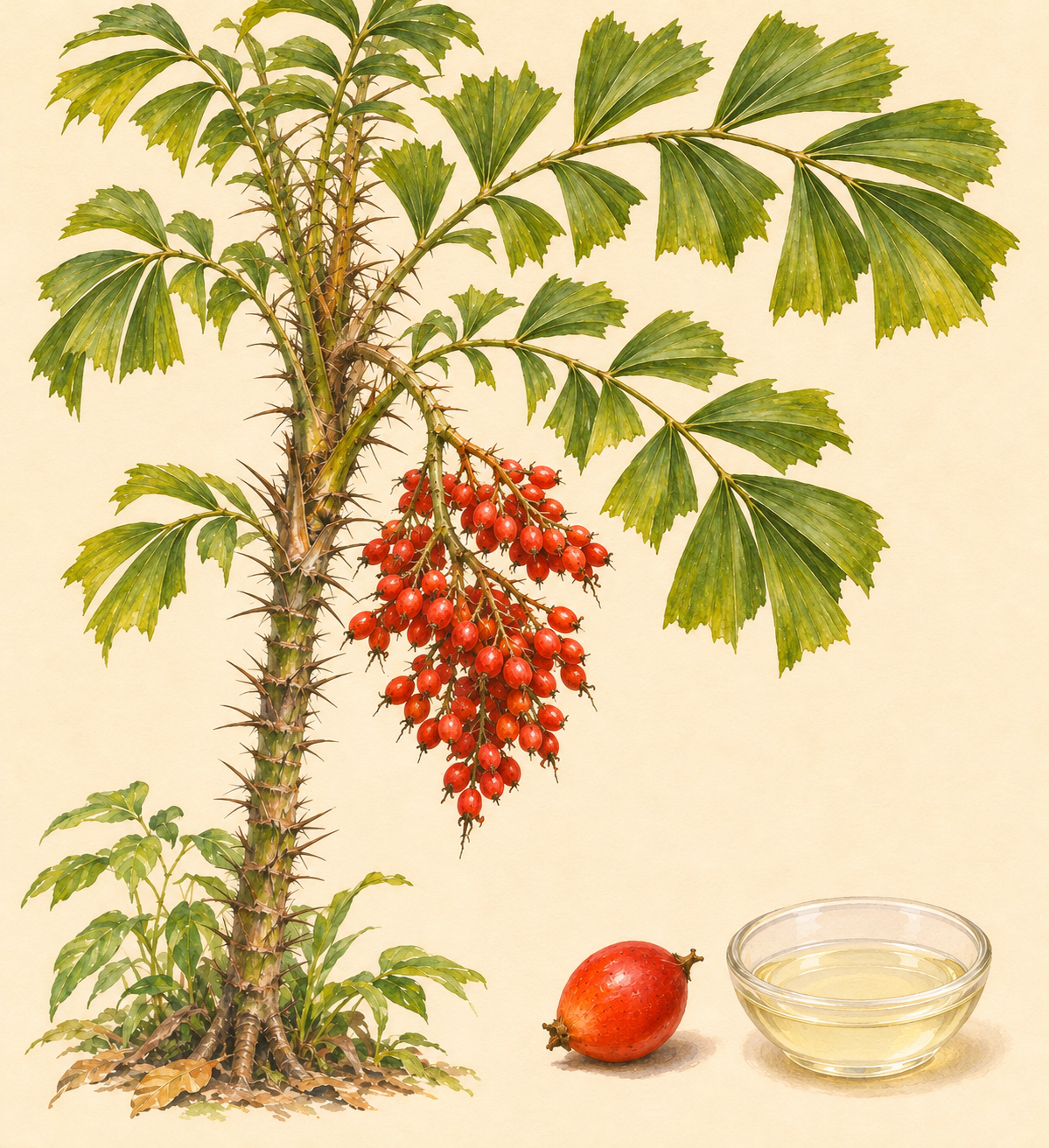
Overview
Nena oil is a traditionally extracted oil from nena (Aiphanes aculeata) documented in an ethnobotanical study of Huni Kuĩ food plants in Acre, Brazil. The record concerns separated oil, not merely eating the fruit.
Source material
Nena palm (Aiphanes aculeata, locally pupunha-brava). The testimony does not conclusively assign the extracted oil to pulp or seed, so neither part is asserted.
Composition
No source-matched quantitative values have been established here for oil yield, fatty-acid profile or nutrients per 100 g of food. Values from related species or different plant parts are not substituted.
Region
Huni Kuĩ communities in Acre, western Brazil, documented in a 2023 ethnobotanical study. The authors report that traditional oil extraction was common until around the end of the twentieth century but is declining in the three surveyed villages.
Food use
The ethnobotanical account records food and topical uses of extracted oils from several named palms, including nena. It does not establish a nena-specific dish or current commercial distribution.
Extraction
An elder recalled pounding plant material with some water into a porridge, leaving it overnight and spooning off oil floating on top the next day. This is a shared recollection covering several palms, not a measured nena-specific protocol.
Safety
Historical food use does not establish modern regulatory approval, toxicological safety or hygienic quality. Plant-part-specific safety and present-day food-market status remain unverified.
Sources
Pilnik et al. (2023), “Traditional botanical knowledge: food plants from the Huni Kuĩ indigenous people, Acre, western Brazilian Amazon”, Rodriguésia 74, e00482021, Modes of consumption. https://www.scielo.br/j/rod/a/pQ8rtZgnG9SLwB6KsPf3Pyg/?format=html&lang=en