THE OIL ATLAS
Madia chilensis seed oil
Overview
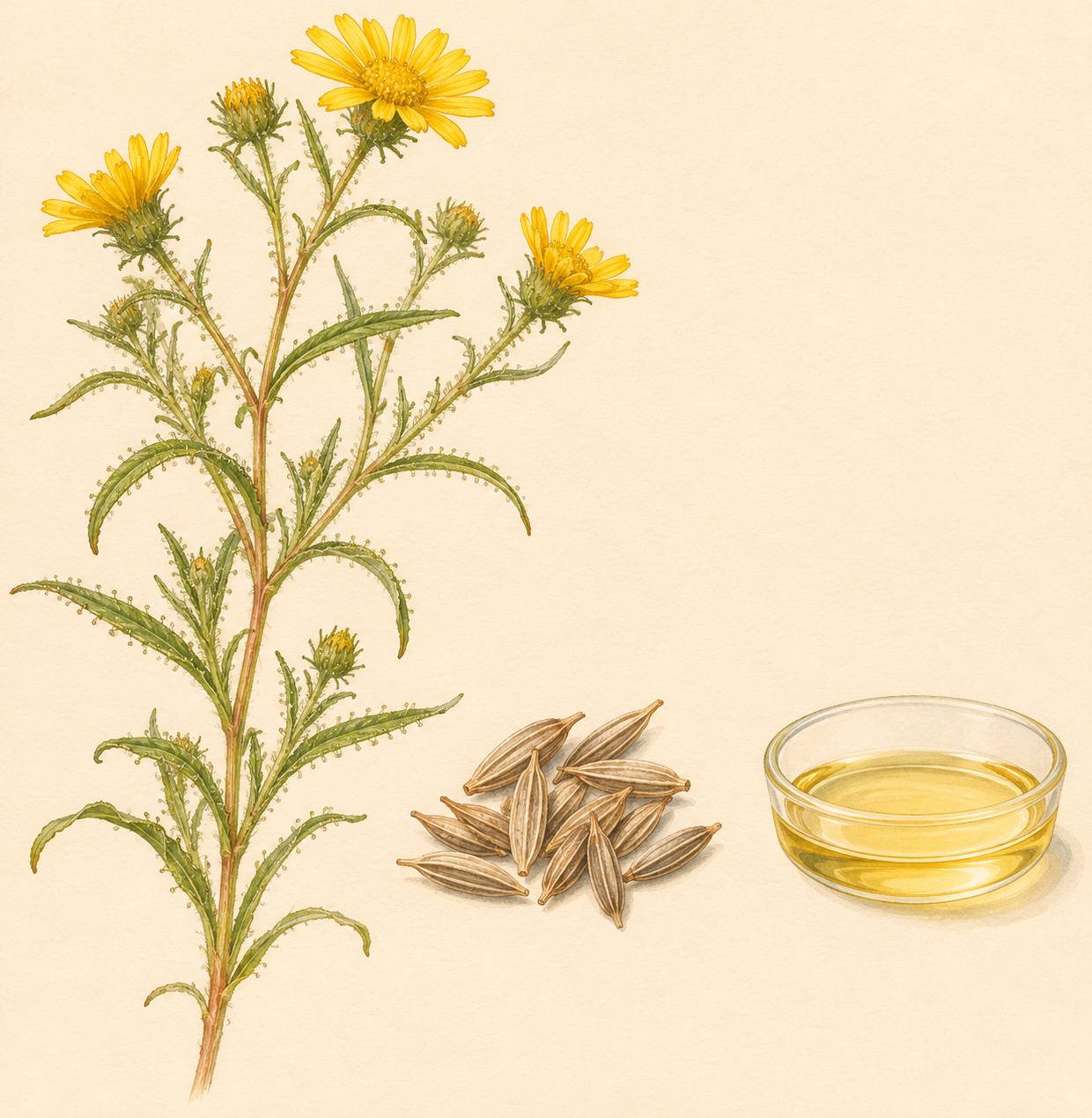
Oil obtained from the achenes of the Chilean asteraceous plant Madia chilensis. A Chilean edible-plant field guide describes obtaining oil by boiling the achenes in water or crushing them. It is treated separately from Madia sativa.
Source material
Achenes (seed-bearing dry fruits) of Madia chilensis (Nutt.) Reiche. Evidence about M. sativa must not automatically be attributed to this species.
Composition
No fatty-acid profile of the separated oil with fully traceable sample and analytical conditions was verified in this review. Seed oil content and the fatty-acid percentages of extracted oil are different measurements.
Region
Chile. A 2022 review records the seeds of both M. chilensis and M. sativa as historical oil sources for Mapuche communities; it does not establish widespread current use.
Food use
Historically documented as a source of edible oil. Specific dishes, frequency of use and contemporary retail availability were not verified. Eating roasted achenes is distinct from using separately extracted oil.
Extraction
The Chilean field guide describes boiling the achenes in water or crushing them to obtain oil. Extraction temperatures, yields and refining parameters were not established.
Safety
Traditional food use does not establish modern product safety or marketing permission. Use only oil with verified food-grade quality and botanical identity, with attention to contamination and oxidation.
Sources
1. Chilean field guide, *Plantas silvestres comestibles y medicinales de Chile y otras partes del mundo*, pp.190–191, https://colegiodearqueologos.cl/wp-content/uploads/2017/11/guia-de-campo_plantas-silvestres-comestibles-y-medicinales-de-chile-y-otras-partes-del-mundo.pdf 2. *Patterns of Traditional and Modern Uses of Wild Edible Native Plants of Chile* (2022), Plants 11(6):744, https://pmc.ncbi.nlm.nih.gov/articles/PMC8953413/