THE OIL ATLAS
Tucumã beetle larva oil
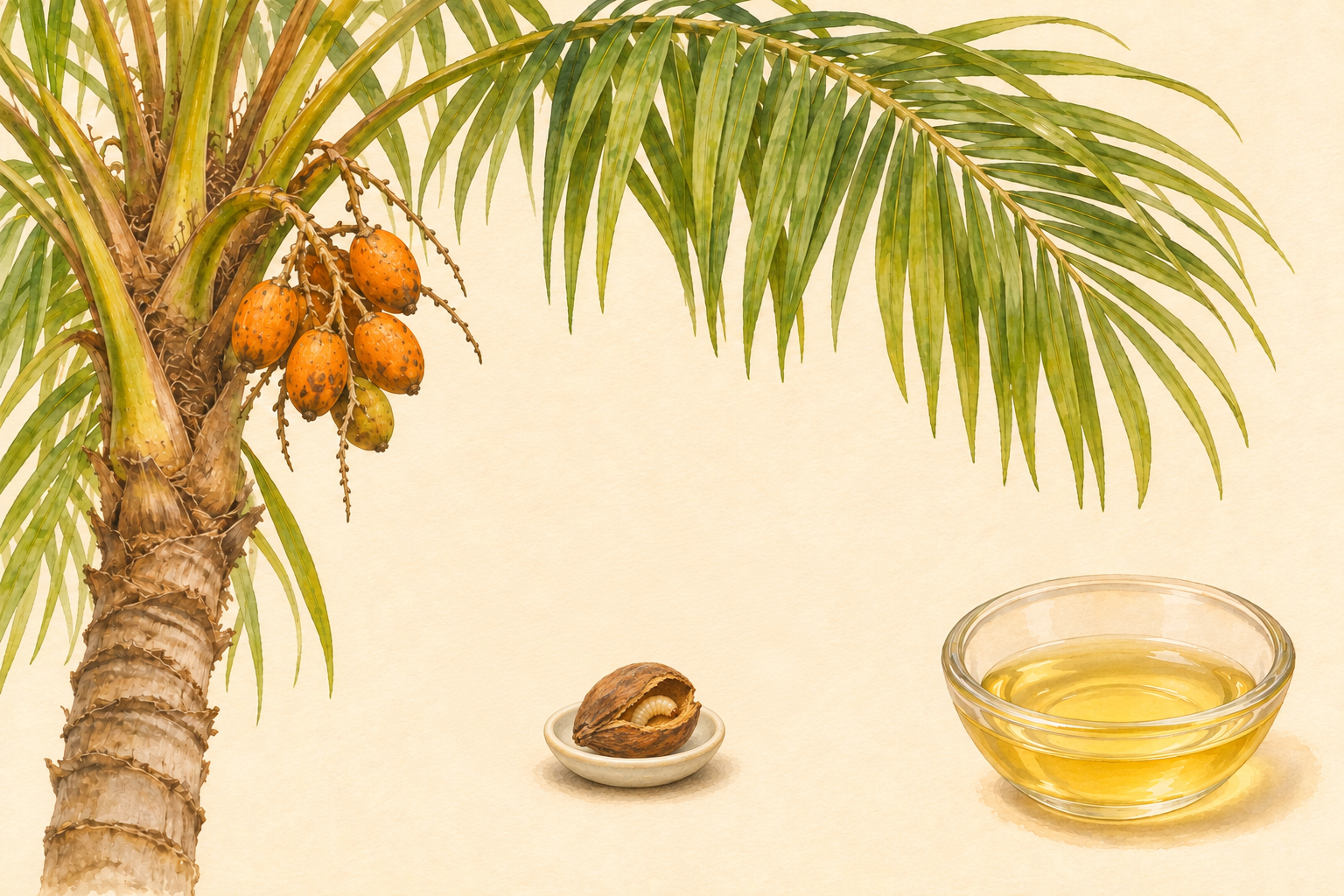
Overview
On Brazil’s Marajó Island, beetle larvae inhabiting tucumã fruit are heated to separate an edible oil.
Source material
The material is larvae growing inside the palm fruit, rather than the kernel itself. The ethnographic name is óleo de bicho de tucumã; each oil-producing larva was not identified scientifically.
Region
A 2019 ethnography investigates women’s collecting and oil-making in the Bairro Alto quilombola community on Marajó, Pará.
Food use
The oil is used for cooking and stored after filtration, separately from eating whole larvae. Medicinal and topical uses are also reported, without demonstrating efficacy.
Extraction
Fruits are opened to collect larvae, which are heated to release fat; insects and oil are separated and the oil filtered. Tools and methods vary between households.
Safety
Insect foods require attention to identification, hygiene and allergy. Ethnography is not food-safety certification or advice to eat unidentified collected larvae or medicinal and cosmetic products.
Sources
Araujo, Barros & Peralta Bezerra, XII RAM ethnographic paper, 2019: https://www.academia.edu/73341170/Entre_a_técnica_e_a_socialização_de_conhecimento_aproximações_sobre_o_Óleo_de_Bicho_de_Tucumã_em_uma_comunidade_quilombola_no_Marajó_PA FAO, Edible insects, 2013, food safety chapters: https://www.fao.org/4/i3253e/i3253e.pdf