THE OIL ATLAS
Tucumã kernel oil
Overview
Oil separated from kernels of tucumã (Astrocaryum aculeatum) in the Brazilian Amazon. It is distinct from pulp oil; a study analyzed kernel oil yield and a fatty-acid profile rich in lauric and myristic acids. Eating tucumã pulp does not itself establish culinary use of kernel oil.
Source material
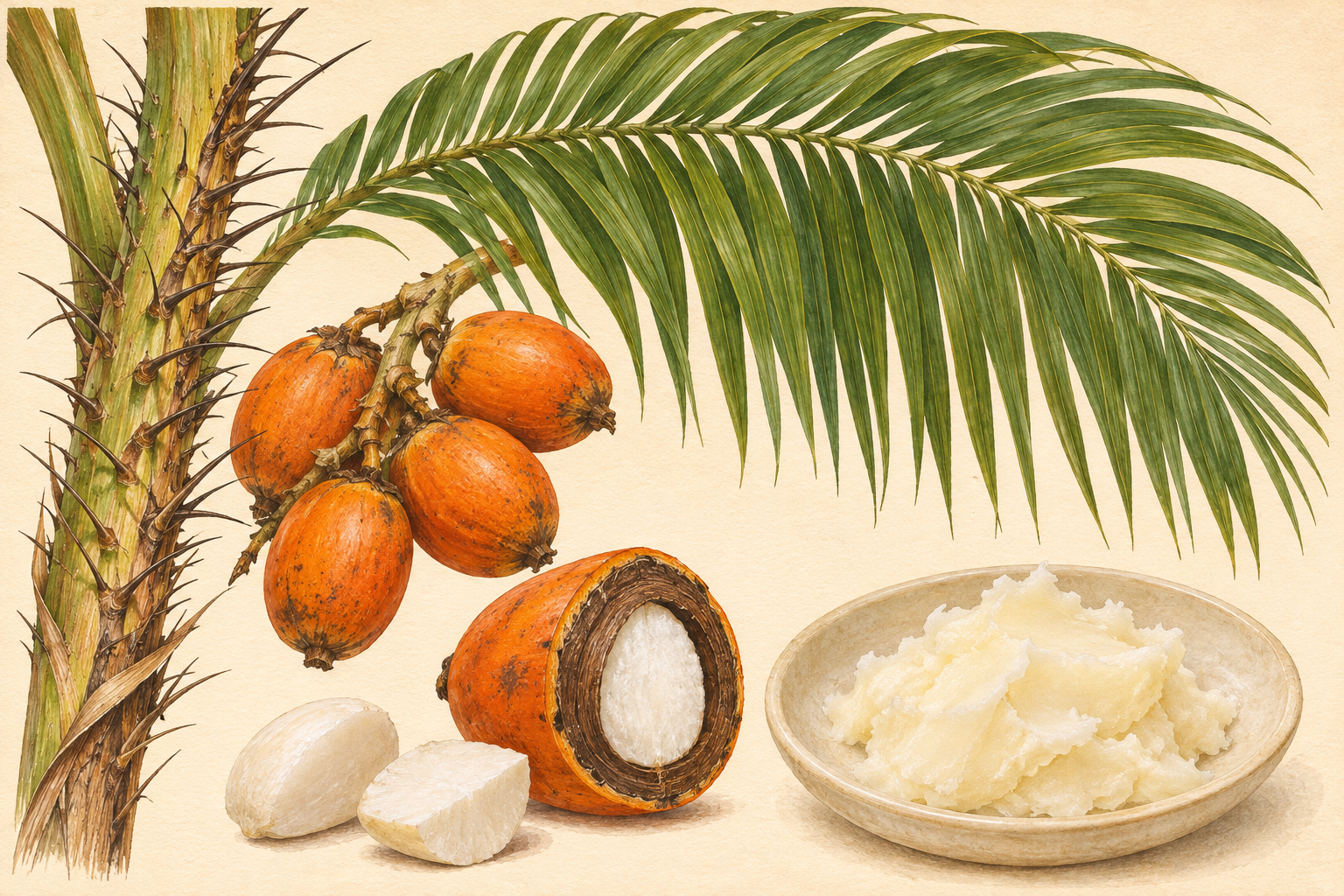
Kernels of Astrocaryum aculeatum. The pulp and kernels are distinct oil-bearing parts and their analytical values must not be interchanged.
Composition
In a 2020 study using kernels remaining after pulp sales at Manaus markets, oil extraction yield was 28–45%; lauric acid was 52.3–57.5% and myristic acid 23.4–27.1% of total fatty acids in the separated kernel oil. Extraction yield and fatty-acid percentages have different denominators. These are research-sample values, not product specifications.
Region
Tucumã fruit is used in the Brazilian Amazon. A 2020 study analyzed kernels remaining after pulp was sold at Manaus markets. Selling the pulp is not evidence that kernel oil is widely sold as a food product.
Food use
A biodiversity and nutrition resource describes oils from both pulp and kernels and their cooking uses, but the record does not establish a named dish or prevalence of kernel-oil consumption. Eating tucumã pulp in sandwiches is not counted as evidence of kernel-oil use.
Extraction
Kernels are recovered from seeds after the pulp is used, and lipids are separated. A 2020 study reports experimental extraction, which must not be described as a universal traditional regional process.
Safety
Choose oil whose food-grade suitability and quality controls are established. A fatty-acid analysis of research kernel oil does not certify the safety or shelf life of every marketed product.
Sources
1. Biodiversity for Food and Nutrition, *Astrocaryum aculeatum* species database: https://www.b4fn.org/resources/species-database/detail/astrocaryum-aculeatum/ (pulp and kernel oil and food uses) 2. Kernel-oil analysis (2020): https://doi.org/10.1002/aocs.12374 (yield and fatty-acid profile).