THE OIL ATLAS
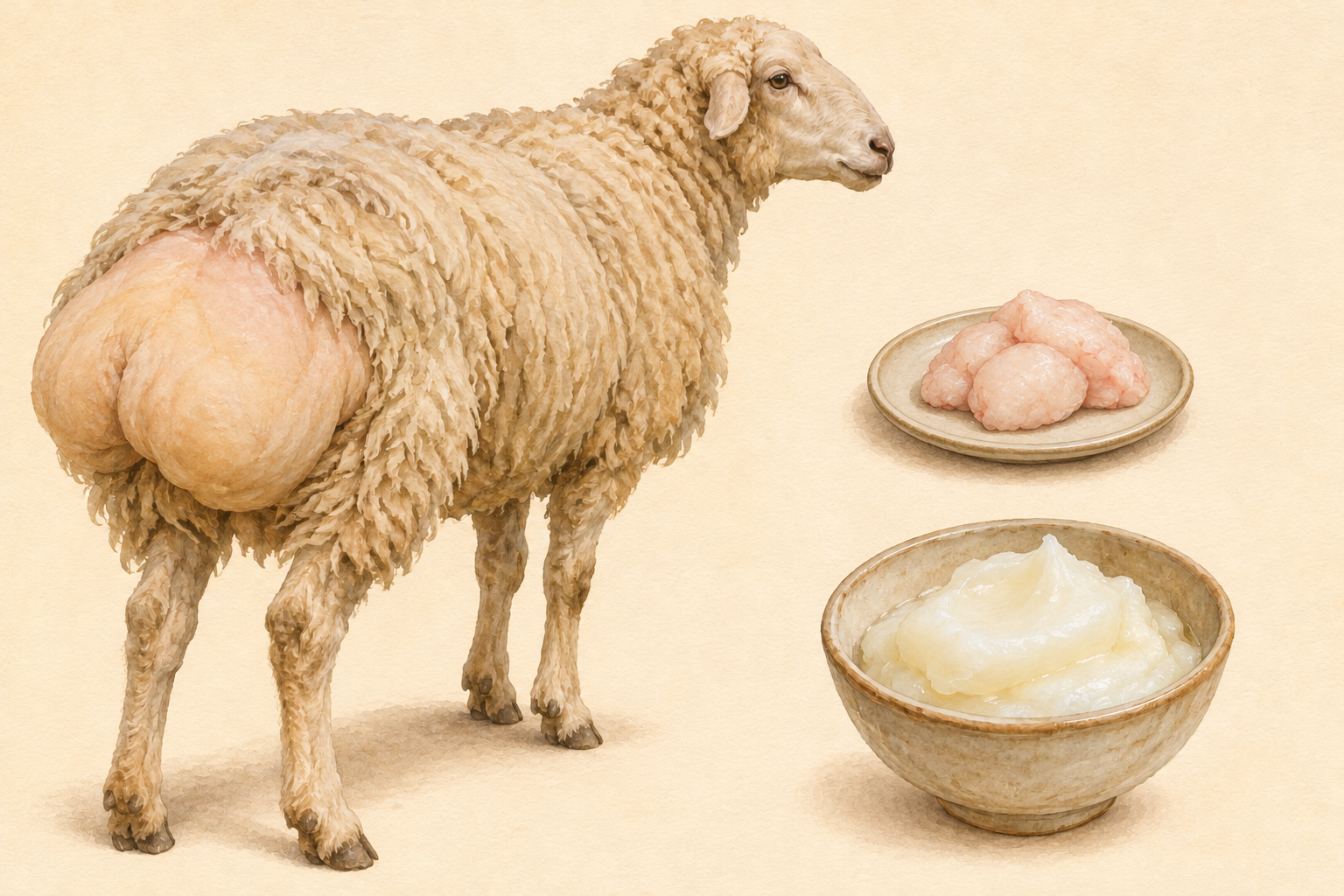
Rendered fat-tail sheep fat (kurdyuk)
Overview
Kurdyuk refers to fat stored in the tails of fat-tailed sheep. In Central Asian cooking, rendered tail fat is used as a distinct cooking fat. This entry concerns rendered fat, rather than simply eating the fatty tail tissue.
Source material
The source is adipose tissue stored in the tail and rump of fat-tailed sheep, anatomically distinct from kidney suet and intermuscular fat. The tissue is rendered to obtain cooking fat, separately from eating pieces of fatty tail meat.
Composition
Oil content of the raw material and fatty-acid proportions in separated oil are different measures. Whole-source data and figures for other species or plant parts cannot establish this oil’s nutrition values.
Region
Fat-tailed sheep and the culinary use of their tail fat are recorded across Central Asia. A Turkmen food-culture publication describes the importance of the fat tail and the use of rendered animal fat to preserve cooked meat.
Food use
Rendered tail fat is used in some versions of Central Asian plov/palov. Gowurdak involves cooking meat in melted animal fat for preservation. Techniques and quantities vary by region and household.
Extraction
Tail or rump fat is cut into pieces and heated until liquid fat separates from the remaining solids. This is an independently rendered cooking fat, not merely consumption of fatty meat.
Safety
Rendering, straining and storage require hygienic handling and protection against deterioration. Traditional use does not establish present-day regulatory compliance for every product. Do not import quantitative fatty-acid values without matching breed, tissue and analytical conditions.
Sources
Turkmenistan Civil Aviation Authority, Lachyn, Gowurdak (2016), https://caa.gov.tm/storage/uploads/lachin/Lachyn14%20Stitched%20File%2001-08-16_LRv1.pdf Brill, Food by Country, Central Asian sheep-tail fat and palov, https://brill.com/display/book/9789004432109/BP000006.pdf