THE OIL ATLAS
Dilobeia seed oil
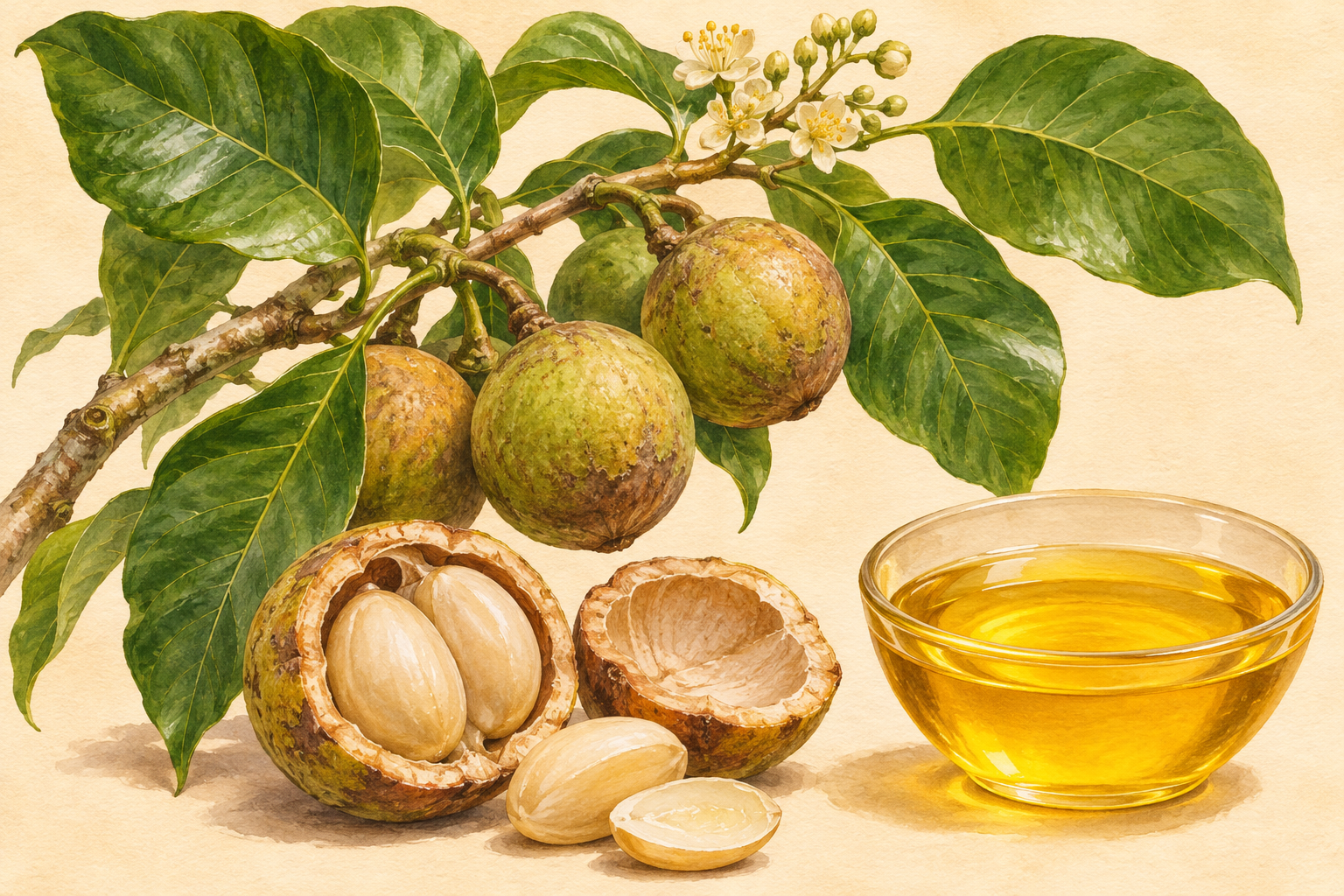
Overview
Oil separated from seeds of Dilobeia thouarsii in Madagascar. A documented traditional process breaks the hard stones, boils them in water and skims the oil that rises. Historical use during shortages of ordinary cooking oil does not establish modern food safety. Never repurpose non-food-grade oil for cooking.
Source material
Seeds inside the hard fruit stones of Dilobeia thouarsii. The entry concerns recovered oil, not direct consumption of the fruit or seeds.
Composition
| Measure | Literature value | Material, unit and conditions |
|---|---|---|
| Seed oil content | 60–65% | Percentage of seed mass, PROTA |
| Oleic acid | About 72% | Percentage of total fatty acids in separated oil, PROTA |
| Stearic acid | 12% | Same basis |
| Palmitic acid | 6% | Same basis |
Seed oil content and the fatty-acid percentages of extracted oil have different denominators. These are not current product specifications or safety assessments.
Region
The documented uses are from Madagascar. PROTA describes cosmetics, soap and lighting as more common applications; this does not establish widespread use as an everyday cooking oil.
Food use
The separated oil was reportedly used for cooking when conventional edible oils were scarce. Its distinctive odour was said to diminish during cooking. The source does not identify particular dishes, so none are inferred.
Extraction
A recorded traditional method pounds the hard stones in a mortar, boils the pieces in a little water and collects oil floating on the surface.
Safety
Caution: historical use during food-oil shortages does not establish present-day safety. Never repurpose oil made for non-food applications. Products without verified food-grade status and safety should not be recommended as substitutes for ordinary cooking oil.
Sources
PROTA, species account for *Dilobeia thouarsii* (Pl@ntUse). https://plantuse.plantnet.org/en/Dilobeia_thouarsii_%28PROTA%29 Used for traditional processing, historical food use during shortages, fatty-acid composition and non-food uses.