THE OIL ATLAS
High-oleic soybean oil
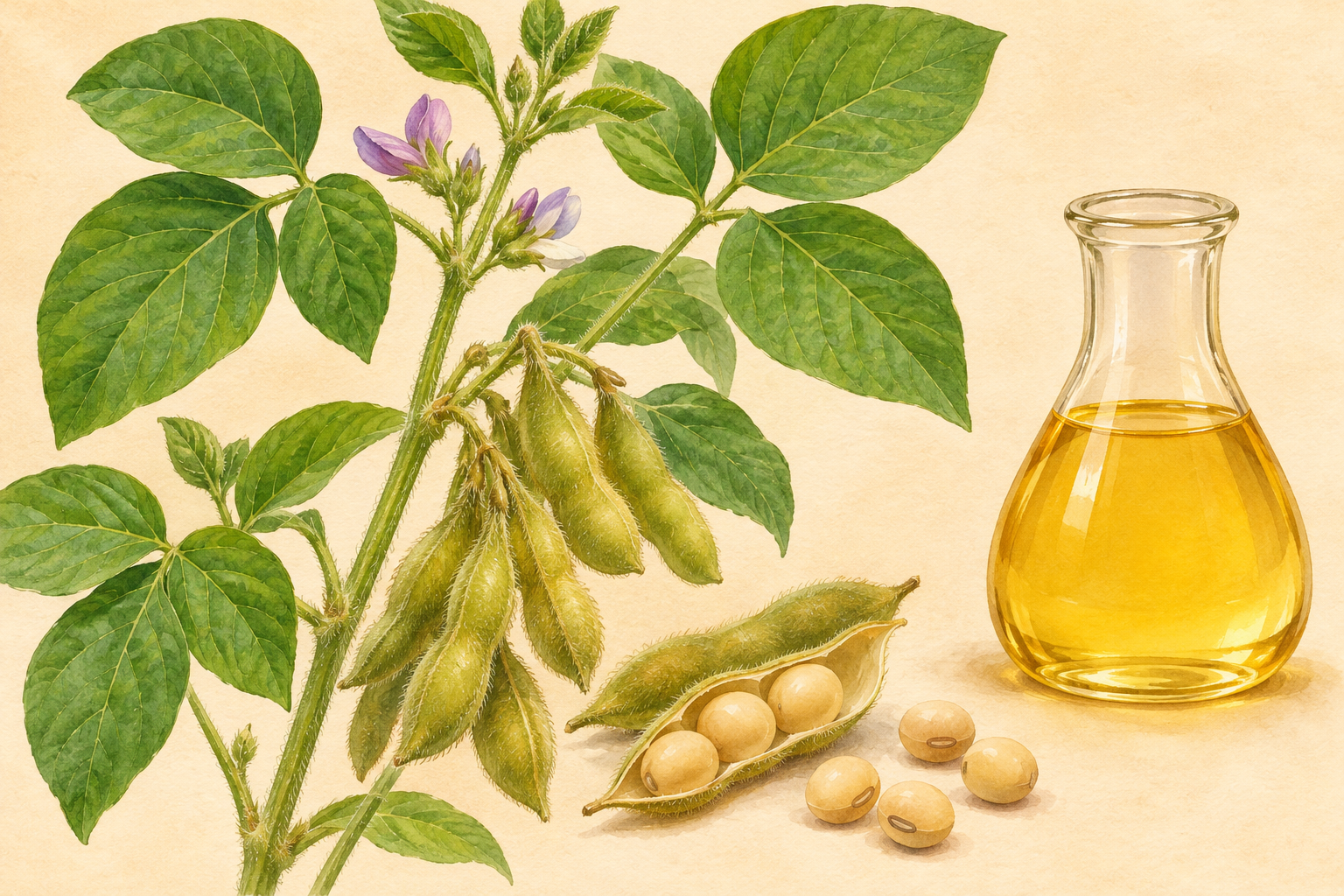
Overview
High-oleic soybean oil is a group of edible oils separated from soybean (Glycine max) seeds with a higher oleic-acid proportion than conventional soybean oil. It is used as an ingredient in food processing and cooking; the absence of a named traditional dish does not negate its food use. Product specifications must be distinguished from measured fatty-acid profiles.
Source material
The oil is extracted from the seeds of Glycine max.
Region
High-oleic soybean oil is a modern product category arising from soybean breeding and food manufacture. Growing, processing and sale may take place in different locations.
Food use
Food-grade high-oleic soybean oil is used for frying, sautéing, dressings and as an oil ingredient in manufactured foods. “High-oleic” describes the fatty-acid composition rather than a named traditional dish. Follow the particular food-grade product’s stated applications and heating guidance.
Extraction
Oil is separated from soybean seeds and refined as appropriate for food use. The high-oleic characteristic chiefly concerns the source soybean and resulting fatty-acid composition; it does not mean every extraction or refining step differs from conventional soybean oil. Distinguish finished edible oil from research samples.
Safety
Select food-grade high-oleic soybean oil and follow the labeled uses and storage conditions. The designation alone does not guarantee identical frying performance, health effects or fatty-acid percentages across products. Reseal after opening and protect from light and heat; check labeling concerning soybean-derived ingredients.
Sources
1. Codex Alimentarius, *Standard for Named Vegetable Oils*, CXS 210-1999 (product categories and terminology). https://www.fao.org/fao-who-codexalimentarius/codex-texts/list-standards/en/