THE OIL ATLAS
Higher-oleic palm oil (OxG)
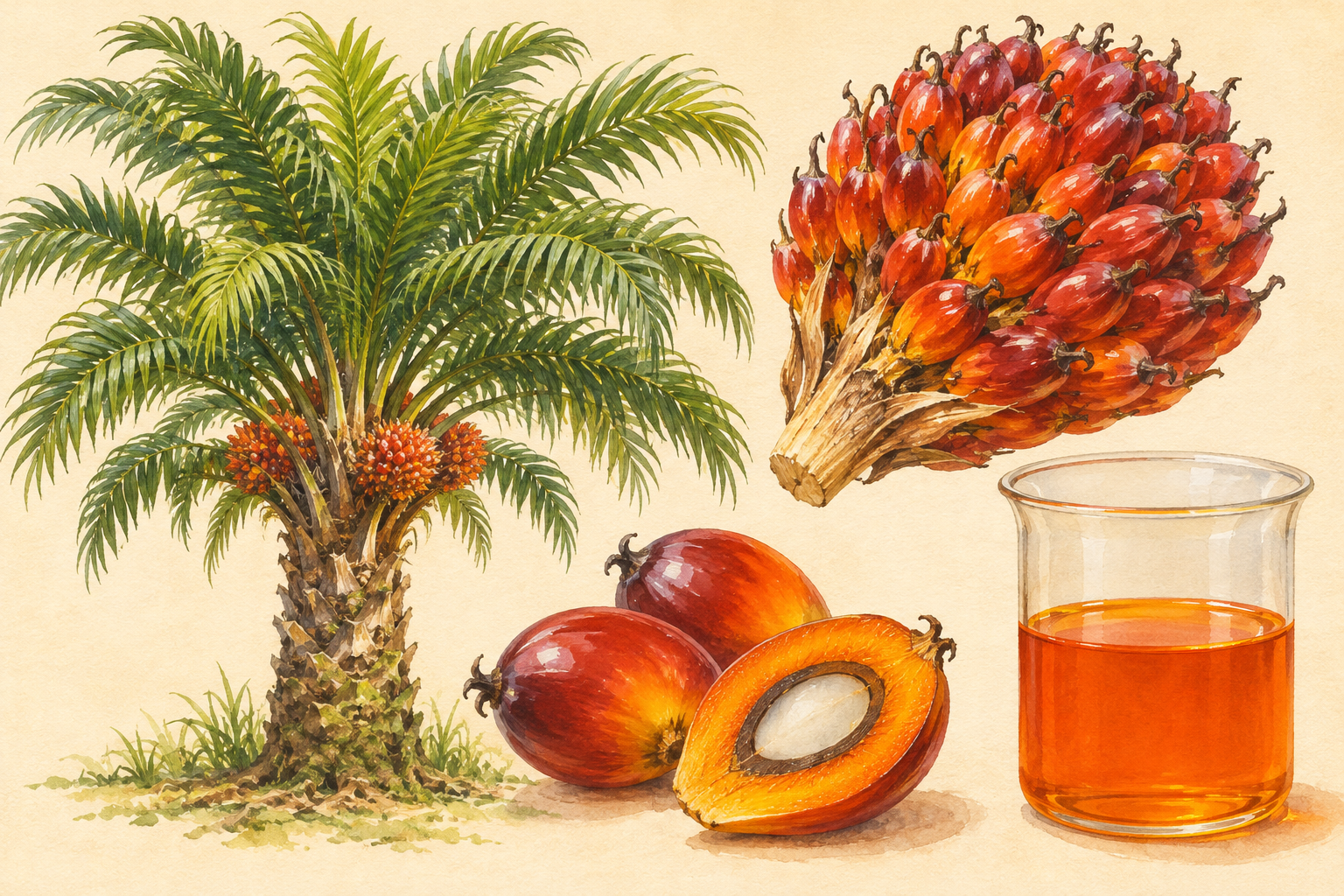
Overview
High-oleic OxG palm oil is separated from the fruit pulp of hybrids of Elaeis oleifera and E. guineensis. It is distinct from conventional African palm mesocarp oil and from palm-kernel oil extracted from the seed kernel. Choose products whose food-grade specifications and processing are established.
Source material
The oil comes from the fruit mesocarp of the Elaeis oleifera × E. guineensis hybrid.
Region
OxG denotes hybrids of the American oil palm (Elaeis oleifera) and African oil palm (E. guineensis). The existence of these hybrids or a compositional food-oil standard does not itself establish household cooking traditions in a particular country. Production locations, distribution and actual food uses require separate evidence.
Food use
Food-grade OxG mesocarp oil is used as an oil ingredient for food manufacture and cooking. The Codex reference does not identify a traditional dish or establish household adoption in any particular country. The documented use concerns separated food-grade mesocarp oil.
Extraction
Oil is separated from the fruit mesocarp of OxG hybrids and processed or refined for its intended food use. It differs in source tissue from palm-kernel oil, which comes from the kernel. Analytical figures for conventional African palm mesocarp oil should not be relabelled as measurements of OxG hybrid oil.
Safety
Choose food-grade oil made from the fruit pulp of an OxG oil-palm hybrid, and distinguish it from conventional African oil-palm fruit oil and palm-kernel oil. The hybrid designation alone does not specify the fatty-acid composition or refining status of an individual product. Follow its cooking and storage instructions, reseal after opening and keep away from heat and light.
Sources
Codex Alimentarius, Standard for Named Vegetable Oils, CXS 210-1999: https://www.fao.org/fao-who-codexalimentarius/codex-texts/list-standards/en/