THE OIL ATLAS
Lentisk fruit oil
Overview
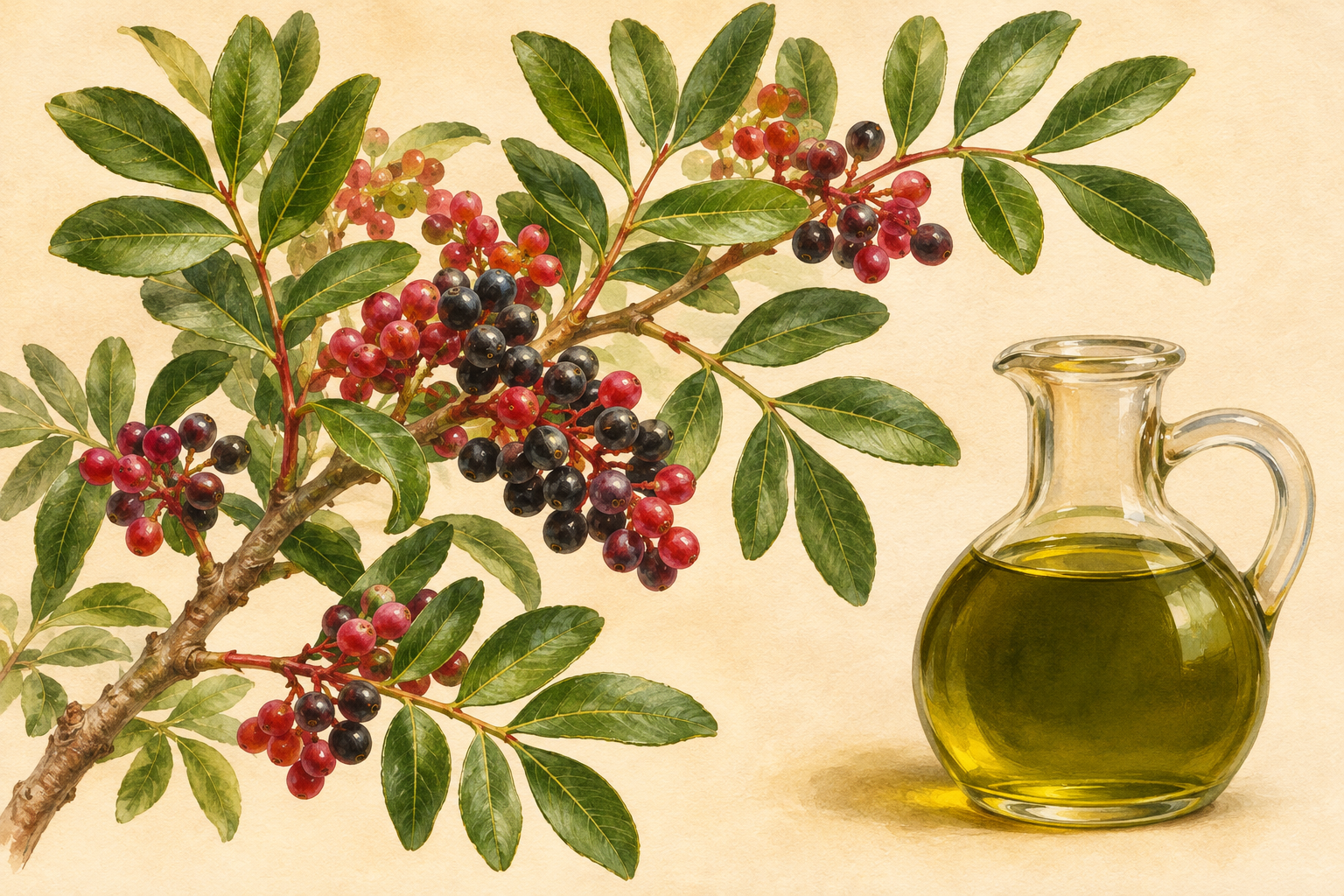
Oil separated from the fruits of lentisk (Pistacia lentiscus), also called the mastic tree. Food uses in Tunisia and neighboring areas include salads, pastries and seasoning. The fruit oil is different from mastic resin tapped from the trunk and from volatile oils distilled from leaves or twigs.
Source material
The oil is separated from the fruit of Pistacia lentiscus.
Composition
Oil content of the raw material and fatty-acid proportions in separated oil are different measures. Whole-source data and figures for other species or plant parts cannot establish this oil’s nutrition values.
Region
Food use of lentisk fruit oil is recorded in Tunisia and parts of North Africa. The geographic history of mastic resin production and trade must not be presented as the distribution of edible fruit-oil use.
Food use
The separated fruit oil is recorded in salads, pastries and as a seasoning. These uses differ from flavoring food with mastic resin. The cited sources do not establish a particular named traditional dish or standard recipe quantity.
Extraction
The fruits are harvested and pressed to separate oil. This differs from tapping resin from the trunk or steam-distilling leaves and twigs. Pressing temperatures and refining conditions cannot be assumed identical in every region.
Safety
Choose fruit oil manufactured and labeled for food use. Do not substitute cosmetic oil, mastic resin or aromatic essential oil. Follow product storage instructions and limit deterioration from light, heat and air. Historical use does not certify the quality of any particular batch.
Sources
1. FAO AGRIS, lentisk fruit oil reference record: https://agris.fao.org/search/en/records/6798c2fad6a63682f0456973 (food-use reference) 2. *Food Chemistry* research record: https://www.sciencedirect.com/science/article/abs/pii/S0308814611012374 (fruit-oil research) 3. *Journal of Food and Nutrition Research* 9(4), article 1: https://pubs.sciepub.com/jfnr/9/4/1/ (supplementary reference)