THE OIL ATLAS
Pentadesma butter
Overview
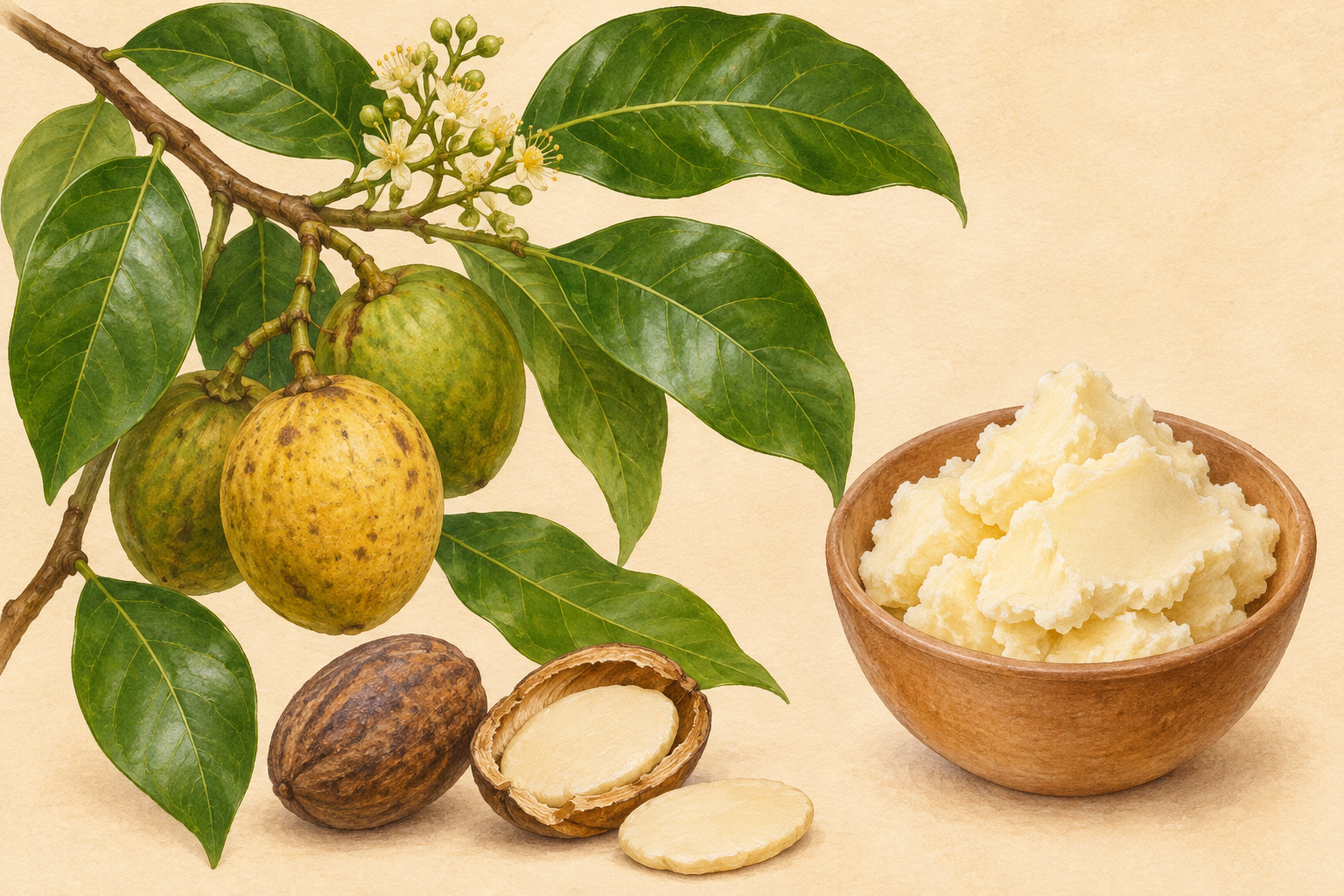
Pentadesma butter, also called kanya butter, is a kernel fat from Pentadesma butyracea. PROTA records cooking use and past marketing as margarine.
Source material
The source is Pentadesma butyracea Sabine seed kernel, not shea, fruit pulp or presscake.
Composition
In a 2015 study of Beninese cottage-produced butter, Table 6 reports three-sample means of 53.72% oleic and 42.07% stearic acid, as fatty-acid composition percentages rather than universal retail specifications.
Region
Cottage butter production in Benin has been studied directly. The tree’s wider African range does not establish production volumes everywhere.
Food use
The solid fat is used in cooking and sometimes in place of shea butter. Cosmetic and external medicinal products are separate uses.
Extraction
The Beninese study identifies kernel drying, roasting and fat heating as operations affecting quality. Raw-material storage and processing both matter.
Safety
PROTA reports toxic resin in kernels and antinutritional constituents in presscake. Neither raw kernels nor crude extracts should be assumed safe; use appropriately processed food-grade products. Shea-butter standards do not automatically apply.
Sources
PROTA, Pentadesma butyracea: https://plantuse.plantnet.org/en/Pentadesma_butyracea_%28PROTA%29 Ayegnon et al. (2015), J Sci Food Agric 95:3137–3143, DOI:10.1002/jsfa.7052: https://dspace.uac.bj/server/api/core/bitstreams/7752748a-de91-4ac3-b6ae-94fa749175c5/content