THE OIL ATLAS
Pili nut oil
Overview
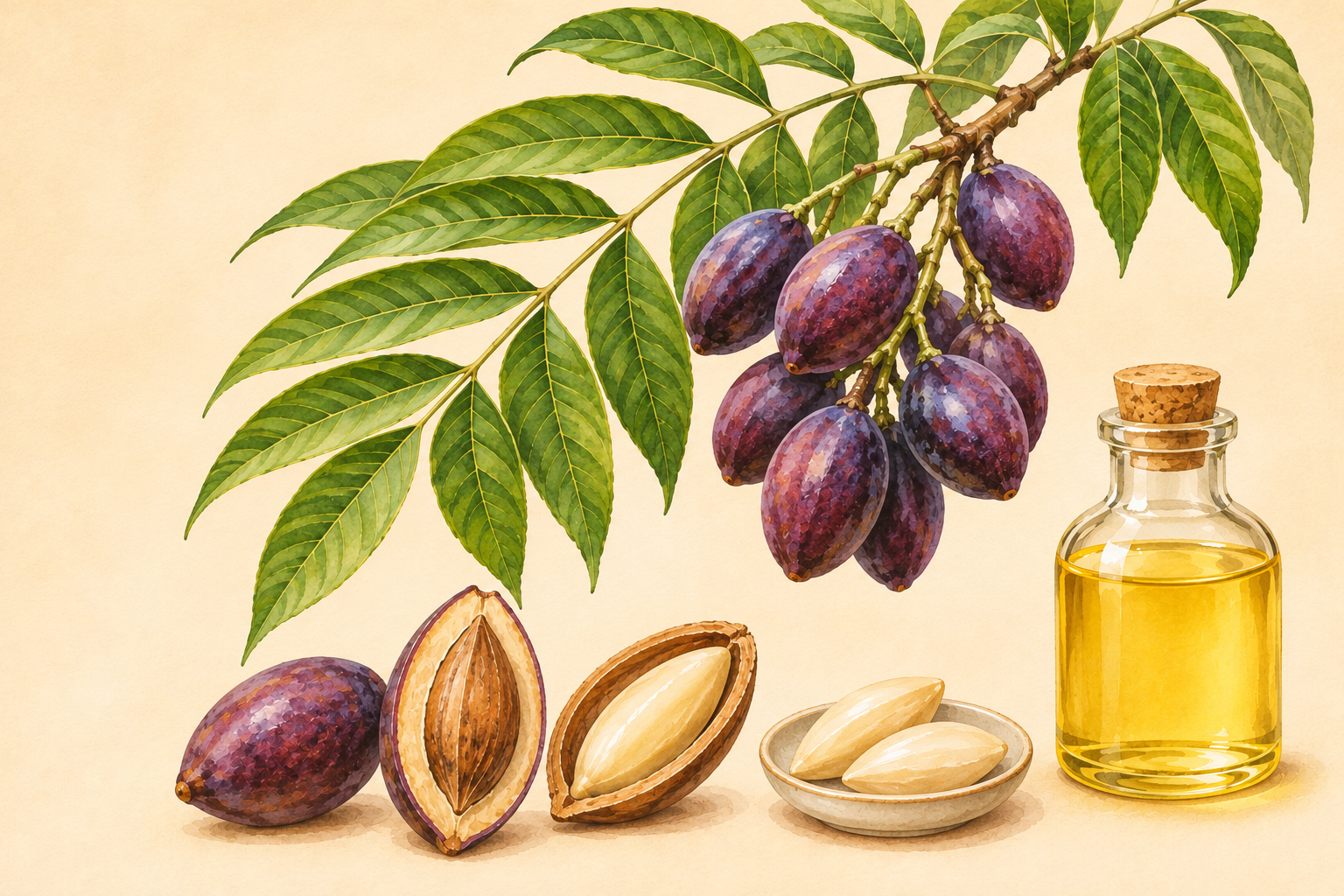
An edible oil from kernels of Philippine pili (Canarium ovatum), distinct from pili pulp oil and oils of other Canarium species.
Source material
Kernels of Philippine pili, Canarium ovatum, distinct from the pulp used for pulp oil.
Composition
| Measure | Reported value | Sample, unit and source |
|---|---|---|
| Oleic acid | 51.31% | 1989 kernel-oil analysis; % of total fatty acids |
| Palmitic acid | 25.98% | Same 1989 sample; % of total fatty acids |
| Palmitic acid | 33.3% | Separate 2000 sample; % of total fatty acids |
| Stearic acid | 10.9% | Same 2000 sample; % of total fatty acids |
| Oil content of kernels | About 71% | FAO value for kernel material, not fatty-acid composition of finished oil |
The 1989 and 2000 values come from different samples. Oil content of the kernels is distinct from the fatty-acid composition of the separated oil.
Region
Pili is native to the Philippines, but the tree’s origin alone does not establish culinary use of separated pili-nut oil. Records of food-grade kernel oil must be distinguished from traditions of using whole nuts in sweets.
Food use
FAO Minor Oil Crops records edible oil produced from pili kernels and used in cooking. Use of whole pili nuts in sweets differs from use of separated oil. PROSEA described commercial feasibility of kernel-oil extraction as unexplored at the time; historical culinary use does not establish commercial production scale.
Extraction
Kernels are recovered by cracking the shells and then processed for oil. Solvent extraction and fractionation are documented research or processing methods, not necessarily traditional village techniques.
Kernel oil is not the same product as pili pulp oil: the extraction tissue and fatty-acid profile differ.
This entry concerns fixed oil separated from pili kernels. Roasting kernels or adding them to sweets differs from pressing them for oil. Refining equipment and temperatures not documented in the existing FAO account should not be asserted.
Safety
Flavour varies with cultivar and processing. Food-grade raw materials and hygienic processing are important. Store the oil sealed and away from light to limit oxidation, and consider potential nut allergens.
EU Implementing Regulation 2023/267 concerns specified dried pili nuts; it does not constitute a blanket authorisation of separated pili nut oil. The regulation also requires an allergy warning for consumers allergic to cashew and walnut.
Sources
1. https://www.fao.org/4/X5043E/x5043E0a.htm 2. FAO, Minor Oil Crops: Pili nut, https://www.fao.org/4/X5043E/x5043E0a.htm 3. PROSEA, Canarium ovatum, https://prosea.prota4u.org/view.aspx?id=1483 4. Commission Implementing Regulation (EU) 2023/267, https://eur-lex.europa.eu/eli/reg_impl/2023/267/oj/eng