THE OIL ATLAS
Niger seed oil
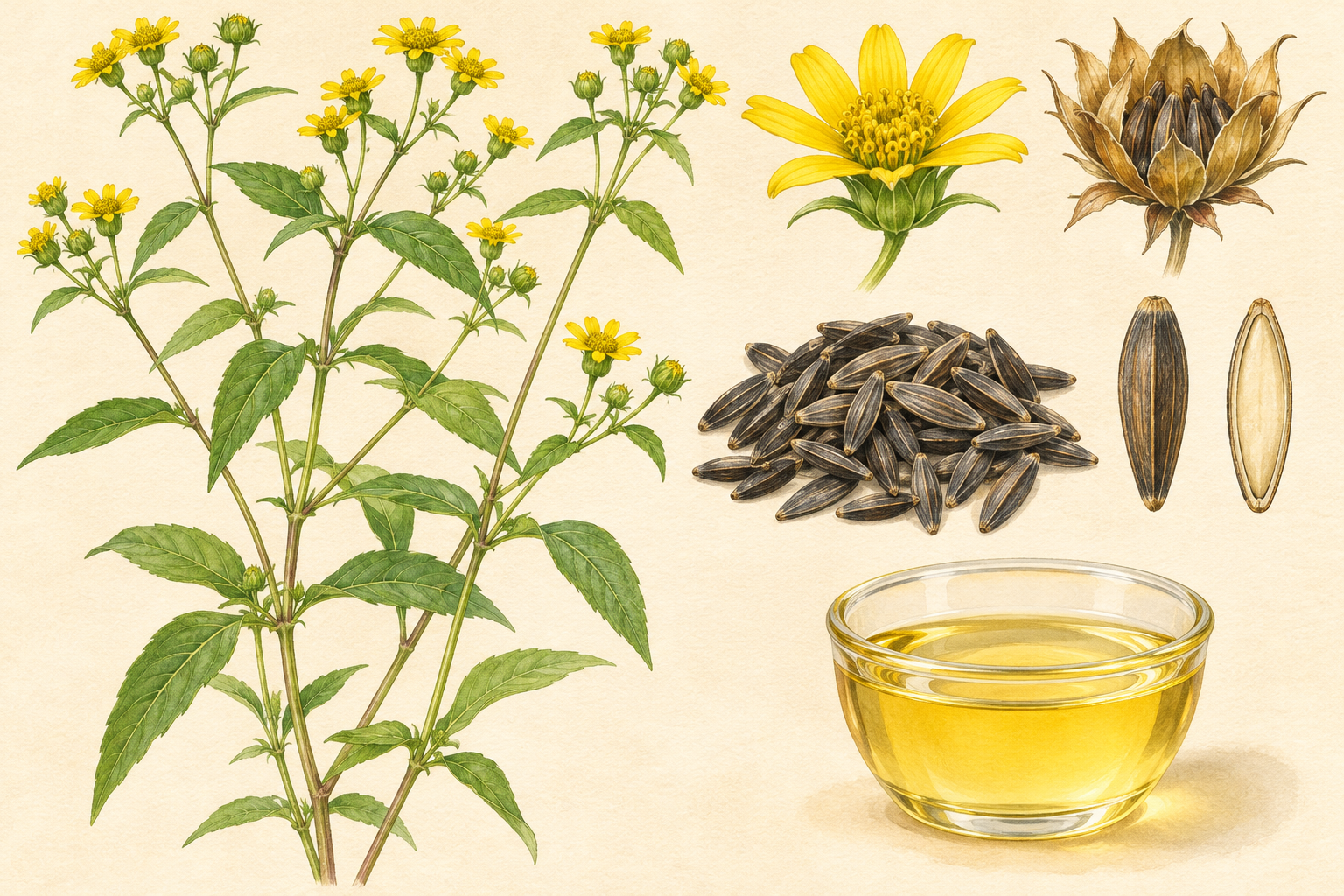
Overview
Niger seed oil, also called noog oil, is an edible oil separated from the seeds of Guizotia abyssinica. It is used in Ethiopia and South Asia and is rich in linoleic acid.
Source material
The source is the seed of Guizotia abyssinica (Asteraceae), called noog or nug in Ethiopia and ramtil in India.
Composition
FAO’s Minor Oil Crops monograph gives literature-derived ranges as percentages of total fatty acids: linoleic 51.6–72.6%, oleic 7.0–39.4%, palmitic 5.0–12.4%, stearic 2.3–11.6%, and linolenic 0.9–3.0%. These are ranges from multiple sources, not a specification for a single bottle. Seed oil content of 25–60% is a different measurement and must not be confused with the oil’s fatty-acid profile.
Region
FAO describes an African origin, a range from Ethiopia to Malawi and extensive introduction to India. It lists Ethiopia, India and Bangladesh among producing countries.
Food use
FAO explicitly records the extracted oil as edible and notes that in India it is sometimes mixed with sesame oil. This is distinct from eating the seeds as snacks. The source alone does not establish a specific named dish.
Extraction
Seeds are dried, threshed and cleaned before extraction. FAO records expellers as common in India and traditional ghani presses in Bangladesh. The expressed oil is pale yellow, nearly odourless and nutty in taste.
Safety
FAO reports poor keeping quality associated with its high linoleic-acid content. Choose food-grade oil, limit exposure to light, heat and air, and avoid rancid oil. Distinguish edible oil from oil used for lamps or soap.
Sources
FAO, “Minor Oil Crops — Noog Abyssinia”; FAO, “Bird Food Grains — Niger Seed”.