THE OIL ATLAS
High-oleic sunflower oil
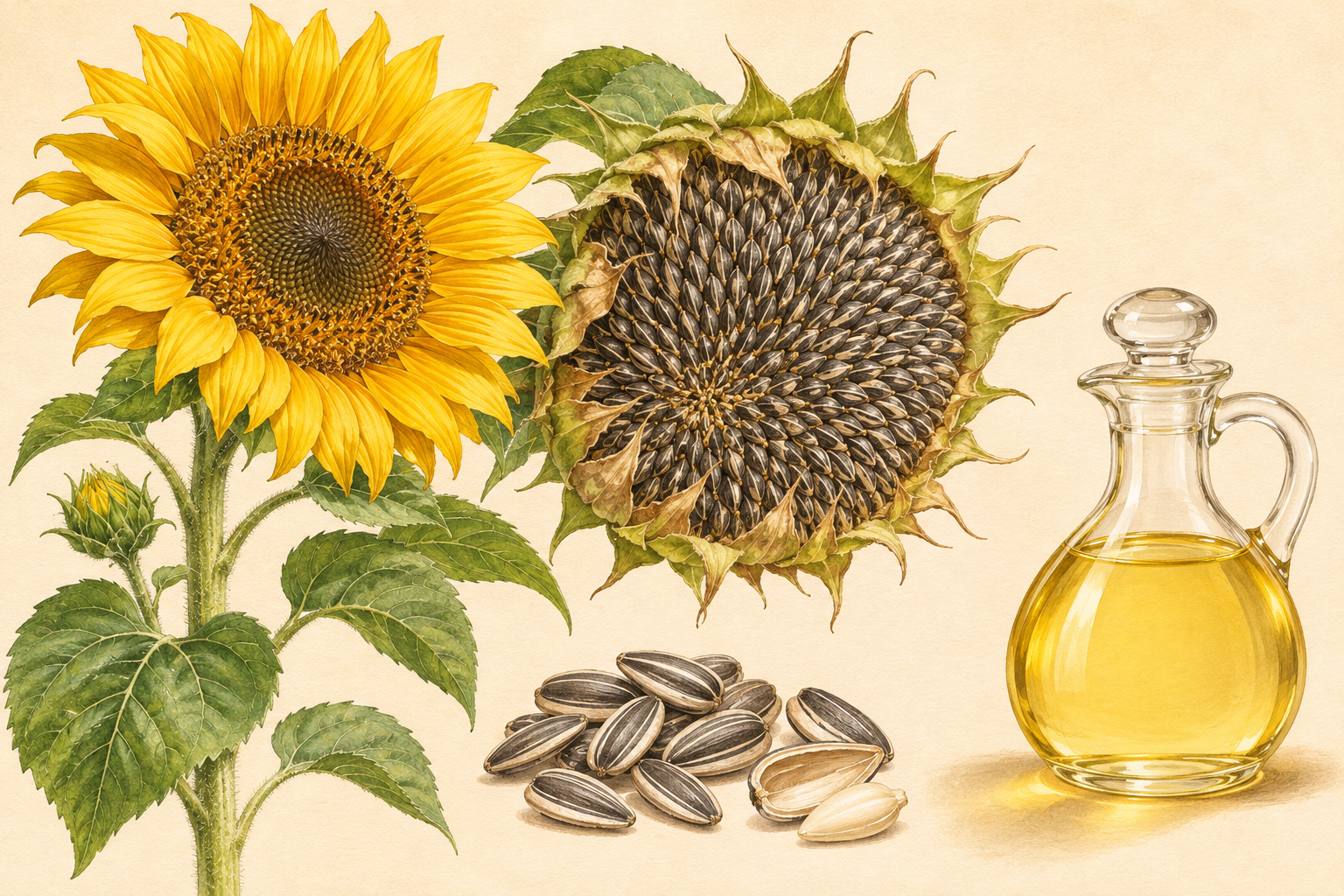
Overview
High-oleic sunflower oil comes from cultivars selected for an oleic-rich seed oil.
Source material
Its source is the seed of high-oleic cultivars of Helianthus annuus L.
Composition
The historical Codex text hosted by FAO specifies at least 75% oleic acid as a percentage of total fatty acids. This defines a category rather than an identical composition for every product.
Food use
Cargill supplies high-oleic sunflower oil for professional frying. “High-oleic” describes its fatty-acid composition, not a traditional cuisine.
Extraction
Selected seeds are crushed and refined; refining alone does not turn conventional oil into a high-oleic type.
Safety
Follow product directions for heating and reuse. Canada has fatty-acid nutrition disclosure requirements associated with high-oleic naming; these are jurisdiction-specific.
Sources
FAO, historical Codex vegetable-oil standard: https://www.fao.org/4/y2774e/y2774e04.htm Cargill, European sunflower supply chain: https://www.cargill.com/story/sunflower-oil-supply-chain-keeps-customers-moving CFIA, fats and oils labelling: https://inspection.canada.ca/en/food-labels/labelling/industry/fats-and-oils
Region
Cargill documents European sourcing, Dutch crushing and refining, Belgian bottling and supply to western European foodservice.