THE OIL ATLAS
Light sesame oil
Overview
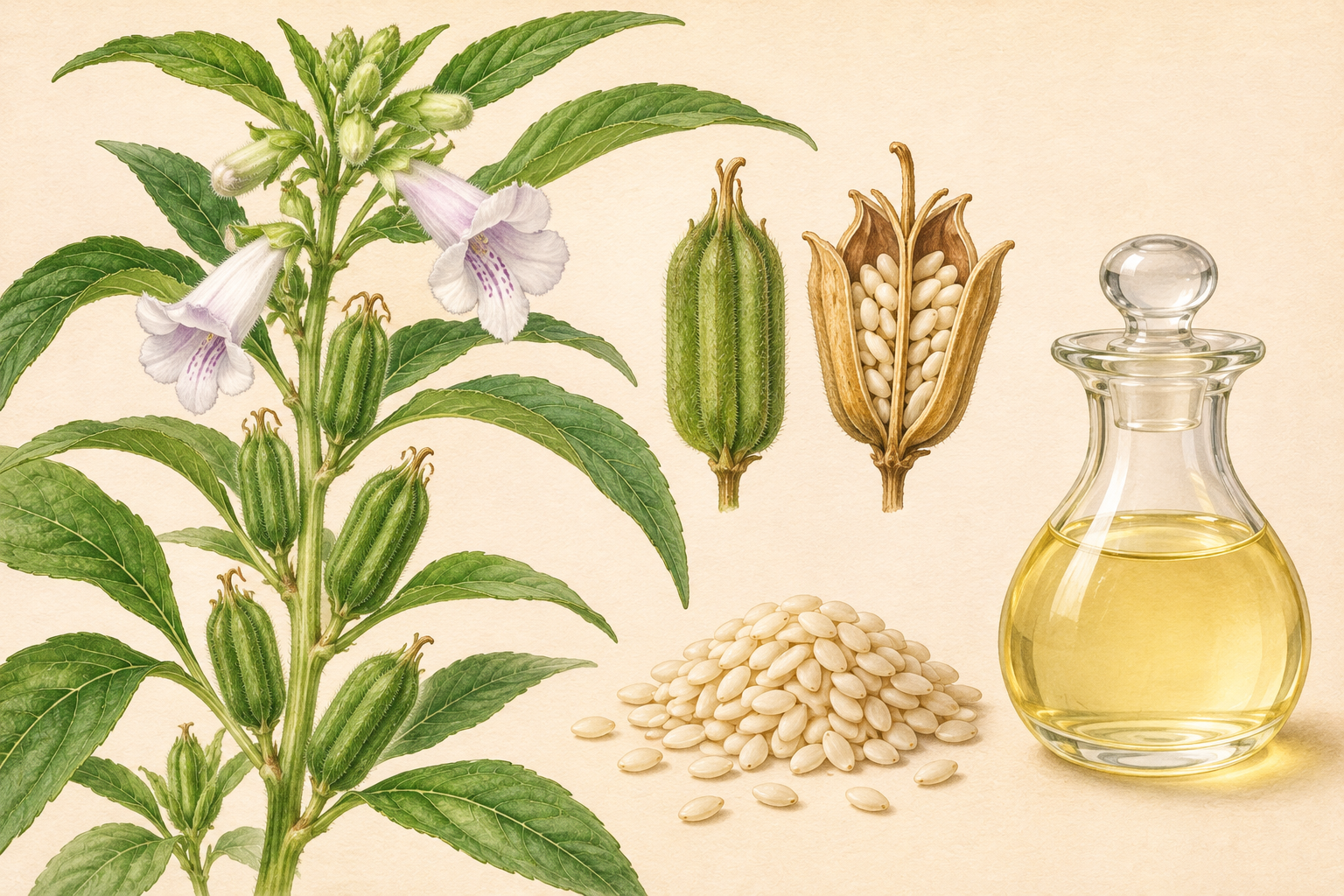
Untoasted sesame oil is an edible oil separated from seeds of Sesamum indicum L. without strong roasting. Japanese taihaku sesame oil is a mild-flavoured, pale product style, not a different botanical species. Sesame allergy precautions still apply.
Source material
The oil is separated from the seeds of Sesamum indicum L.; it is distinct from whole seeds and sesame paste.
Pale edible sesame oil is made from unroasted seeds or without the strong roasted flavour of dark sesame oil. The Japanese trade term taihaku describes a product style rather than a different botanical species.
Composition
Codex CXS 210-1999 lists these ranges for authentic sesame-seed oil samples (unit: % of total fatty acids; not separate tests of toasted and untoasted oils):
| Fatty acid | Standard range |
|---|---|
| Oleic acid (C18:1) | 35.9–42.3% |
| Linoleic acid (C18:2) | 41.5–47.9% |
| Palmitic acid (C16:0) | 7.9–12.0% |
| Stearic acid (C18:0) | 4.8–6.1% |
These are neither guarantees for individual brands nor experimental evidence of fatty-acid changes caused by roasting.
Region
A FAO market study identifies China, Myanmar and India as major producers of sesame oil; its production shares are historical estimates, not current figures. Sesame oil is established in East Asian food cultures. The figures do not distinguish roasted from unroasted oil.
Food use
Pale, mild sesame oils, including Japanese taihaku-style oil, can be used when the cook wants the ingredients to remain prominent, including in baking and frying. Although the source plant is the same as for toasted sesame oil, seed heating and refining produce different flavors. The name taihaku alone does not establish an identical extraction or refining method for every product.
Extraction
Oil is separated from seeds of Sesamum indicum. The seeds are pressed without roasting; some products are subsequently refined, including colour and odour removal. Eating sesame seeds and using separately extracted sesame oil are distinct food practices.
Safety
Sesame can cause food allergy. People with sesame allergy should not assume that roasting status or refining alone makes an oil safe; follow ingredient labels and medical advice. Keep the container closed and away from light and heat after opening, following product-specific storage instructions.
Sources
References: - https://www.fda.gov/food/nutrition-food-labeling-and-critical-foods/food-allergies - https://www.fao.org/fao-who-codexalimentarius/sh-proxy/en/?lnk=1&url=https%3A%2F%2Fworkspace.fao.org%2Fsites%2Fcodex%2FStandards%2FCXS+210-1999%2FCXS_210e.pdf - https://www.fao.org/4/y2774e/y2774e04.htm - https://feedipedia.review.fao.org/node/26 - https://www.agmrc.org/commodities-products/grains-oilseeds/sesame-profile
Additional references - https://www.fao.org/fao-who-codexalimentarius/sh-proxy/tr/?lnk=1&url=https%3A%2F%2Fworkspace.fao.org%2Fsites%2Fcodex%2FStandards%2FCXS+210-1999%2FCXS_210e.pdf - https://www.fao.org/4/x5434e/x5434e0c.htm - https://www.fao.org/4/Y2774E/y2774e04.htm - https://www.foodallergy.org/living-food-allergy/food-allergy-essentials/common-allergens/sesame