THE OIL ATLAS
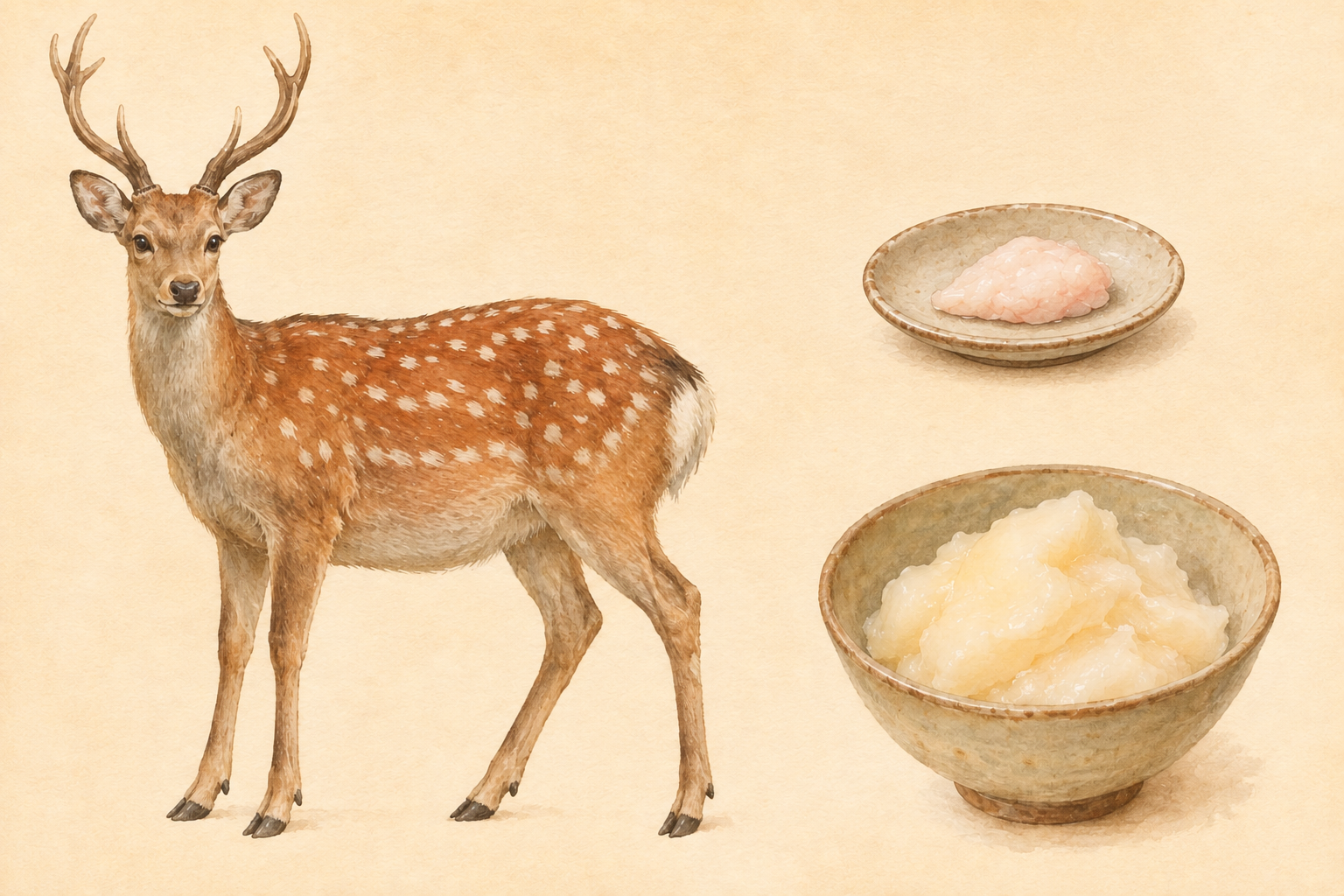
Rendered fat from Hokkaido sika deer
Overview
Historical Ainu foodways used fats extracted from land animals including Hokkaido sika deer (Cervus nippon yesoensis) to season dishes. This entry concerns separated fat, not merely eating fatty deer meat.
Source material
Fat from Hokkaido sika deer. The public cultural source confirms extraction of deer fat without specifying one uniform anatomical site.
Composition
The cultural source does not give sample-matched fatty-acid profiles or per-100-g nutrient values for separated deer fat. Data for cosmetic-grade refined deer fat must not be represented as edible-oil composition.
Region
Historical Ainu foodways in Hokkaido. Modern venison marketing is not evidence that the same extracted-fat practice continues unchanged.
Food use
Extracted fats seasoned soups, mixed-grain dishes and rataskep. This use is documented in a public Ainu cultural publication.
Extraction
The historical record establishes extraction of animal fat but does not specify deer-specific heating temperatures, filtration methods or storage duration.
Safety
Wild-game handling and applicable food-hygiene rules matter. Commercial refined sika deer fat marketed for cosmetics is not to be treated as food-grade oil.
Sources
1. Hokkaido Ainu cultural research publication, “Seasoning”, p.30 (Japanese and English). https://ainu-center.hm.pref.hokkaido.lg.jp/HacrcHpImage/05/pdf/05_005_03.pdf 2. North Life, Hokkaido Sika Deer Refined Oil (cosmetic ingredient, not food). https://www.northlife.co.jp/english-products/754