THE OIL ATLAS
Bonduc seed oil
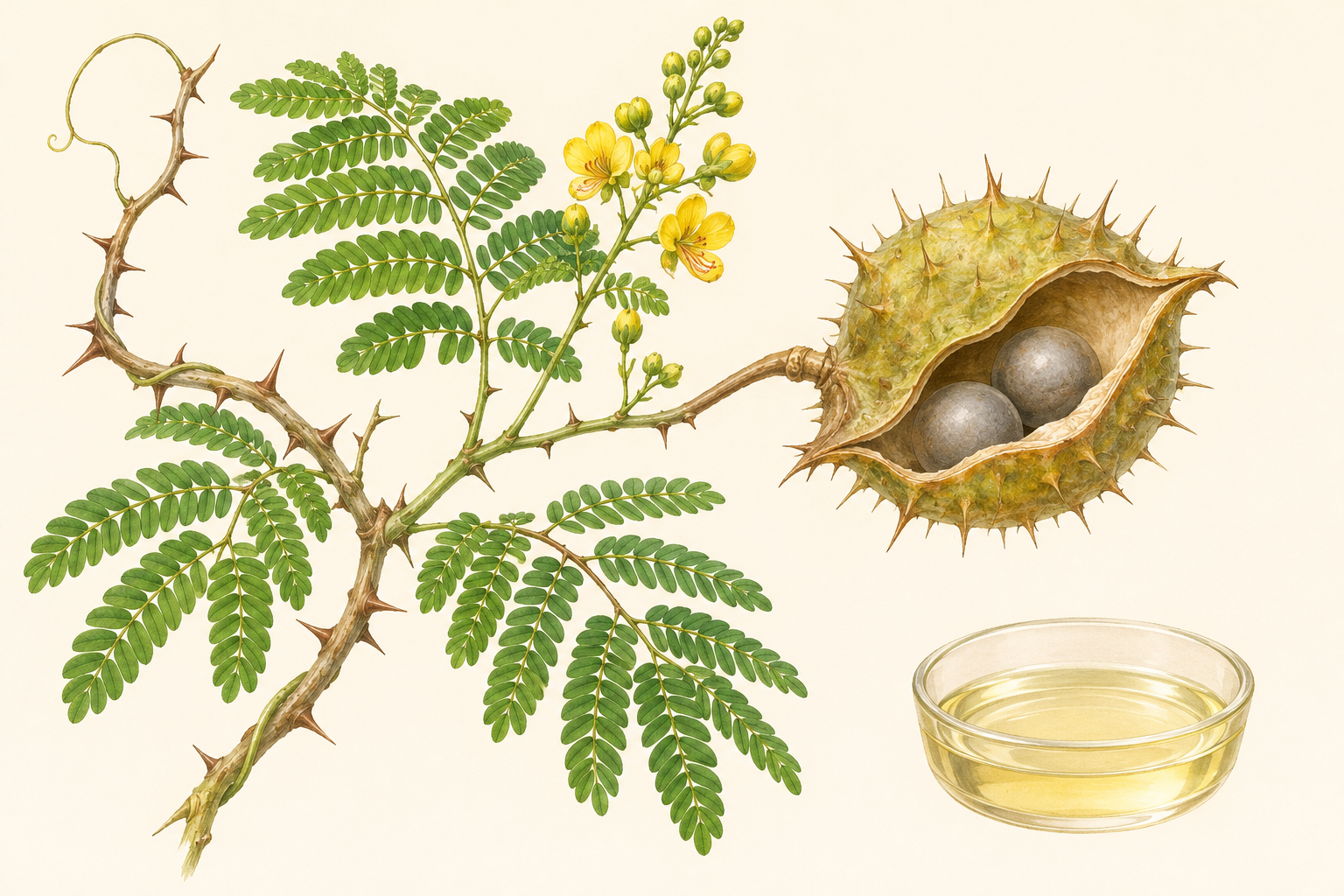
Overview
Warning: the source reports vesicant properties of the oil and a toxicity concern for the plant in large doses. Do not extract or consume it at home.
Bonduc seed oil is derived from seeds of Caesalpinia bonduc (also treated as Guilandina bonduc). PROTA records use of its seed oil in cooking in Equatorial Guinea. The same reference raises concerns about toxicity from large amounts of the plant; this is not a general recommendation to consume the oil.
Source material
The source is bonduc seed. Medicinal use of seeds and their use as beads or gaming counters must not be conflated with culinary use of separately extracted oil.
Region
The plant is widespread in the tropics. PROTA specifically records culinary seed-oil use in Equatorial Guinea; it should not be assumed wherever the species grows.
Food use
PROTA records culinary use of oil separated from the seeds in Equatorial Guinea. This is distinct from eating whole seeds or using the plant medicinally or industrially. The account does not establish a named dish, frequency of consumption or validated pretreatment conditions.
Extraction
PROTA records cultivation for seed oil in Equatorial Guinea and use of that oil in cooking. It does not establish the exact crushing, pressing, heating or refining steps, nor any validated removal of potentially toxic constituents. Oil extraction alone does not establish food safety.
Safety
PROTA documents cooking with the seed oil in Equatorial Guinea but also cautions that the plant is believed to be poisonous in large doses. The regional use record does not establish a safe intake level or the safety of unrefined or modern commercial oils. Do not prepare or consume oil without verified species identification, toxicological assessment, processing conditions and food-grade compliance. Chemical analyses of solvent-extracted oil from other settings cannot establish the safety of this traditional preparation.
Product-specific compliance in Japan, the US and EU and safe intake conditions remain unverified. Purchase, consumption and home extraction or detoxification are not recommended here.
PROTA also describes the oil as having vesicant properties. This oil-specific statement is distinguished from the separate large-dose caution concerning the plant.
Sources
PROTA, “Caesalpinia bonduc”, Plant Resources of Tropical Africa (Medicinal Plants 1), https://plantuse.plantnet.org/en/Caesalpinia_bonduc_%28PROTA%29 (seed-oil cooking and cultivation in Equatorial Guinea; toxicity caution concerning the plant in large doses). Kew Science, Plants of the World Online, Guilandina bonduc (taxonomic context, not evidence of culinary use).