THE OIL ATLAS
Pindoba (Attalea eichleri) seed oil
Overview
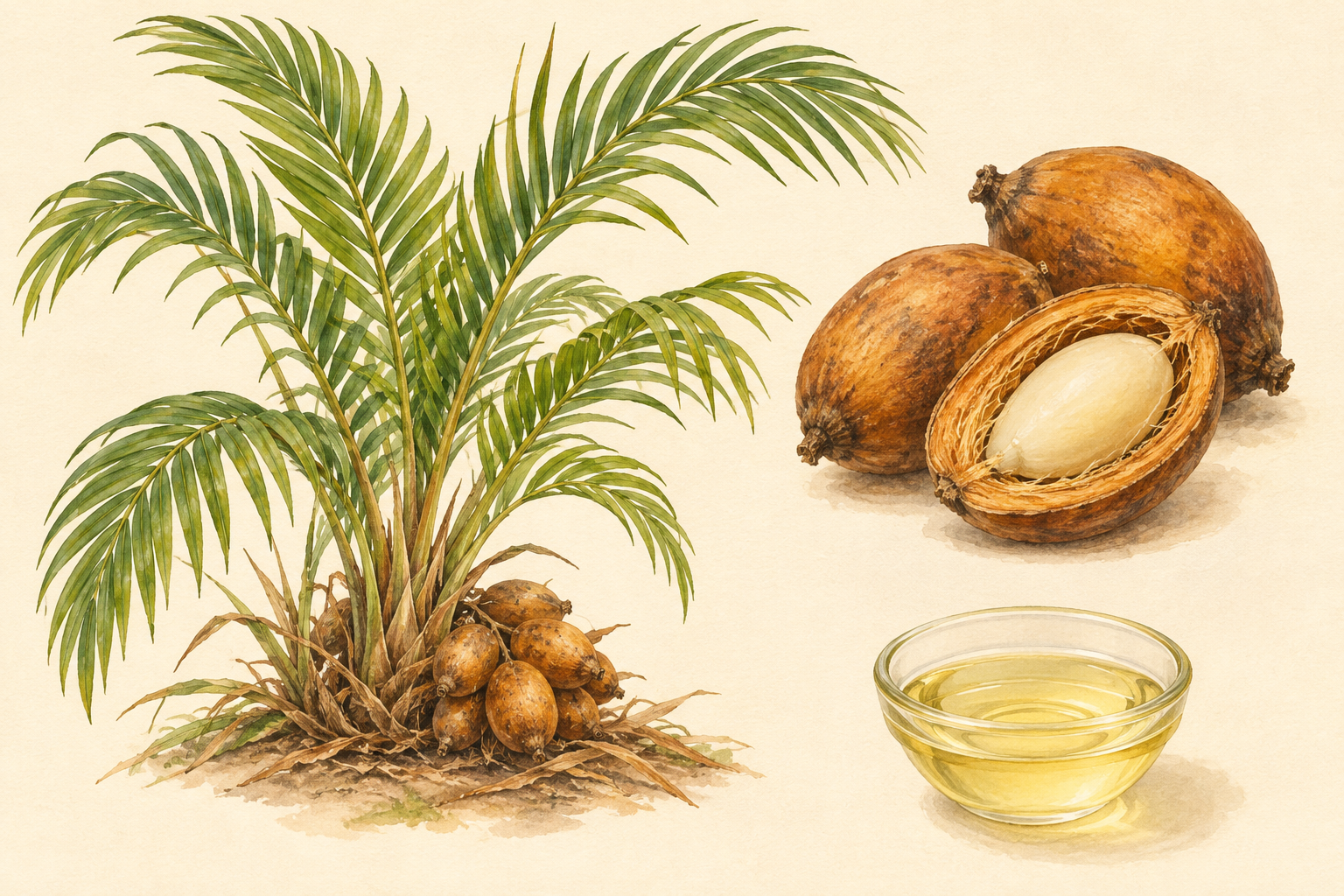
An edible seed oil separated from the pindoba palm (Attalea eichleri). An ethnobotanical guide to the Kalunga communities of central-western Brazil explicitly records extraction of seed oil for cooking. This is distinct from mesocarp oil or eating the seeds directly.
Source material
Seeds inside fruits of the palm Attalea eichleri (Drude) A.J.Hend. Vernacular names include pindoba, palhinha, piaçaba, painha, coco-painha and candoba. The subject is separated seed oil, not oil from the fruit pulp or a seed-based milky preparation.
Composition
The reviewed species-specific sources do not provide a fatty-acid profile, vitamin composition or nutritional values per 100 g with identifiable sampling and measurement conditions. Values from related Attalea species are not substituted.
Region
Ethnobotanical documentation records food use among Kalunga communities in Goiás, Brazil. A 2014 field study notes continued knowledge of traditional palm-oil extraction alongside replacement by commercial oils. Current commercial volumes are not established.
Food use
The guide As palmeiras dos kalungas explicitly states that oil from the seeds is extracted and used for cooking. Eating seeds, pounding them for cakes, or preparing a coconut-like milk are separate uses and are not treated as evidence for the oil. Specific dish names and frequency remain undocumented.
Extraction
The guide documents extraction of seed oil but does not establish species-specific heating time, pressing equipment, extraction yield or a complete production protocol. Generic palm-oil processes are not attributed to this species without evidence.
Safety
Documented traditional consumption does not establish present-day food safety certification, product testing or authorization for sale in any jurisdiction. Allergen, contamination and oxidation assessments for specific products remain unverified.
Sources
1. As palmeiras dos kalungas: guia de identificação e etnobotânica, p.74, Attalea eichleri / Pindoba. https://museucerrado.com.br/wp-content/uploads/2020/03/Livro_palmeiras_cerrado_renata.pdf 2. Use and Diversity of Palm (Arecaceae) Resources in Central Western Brazil (2014), Kalunga Engenho II ethnobotany. https://pmc.ncbi.nlm.nih.gov/articles/PMC3930192/