THE OIL ATLAS
Sablefish oil (Haida rendered oil)
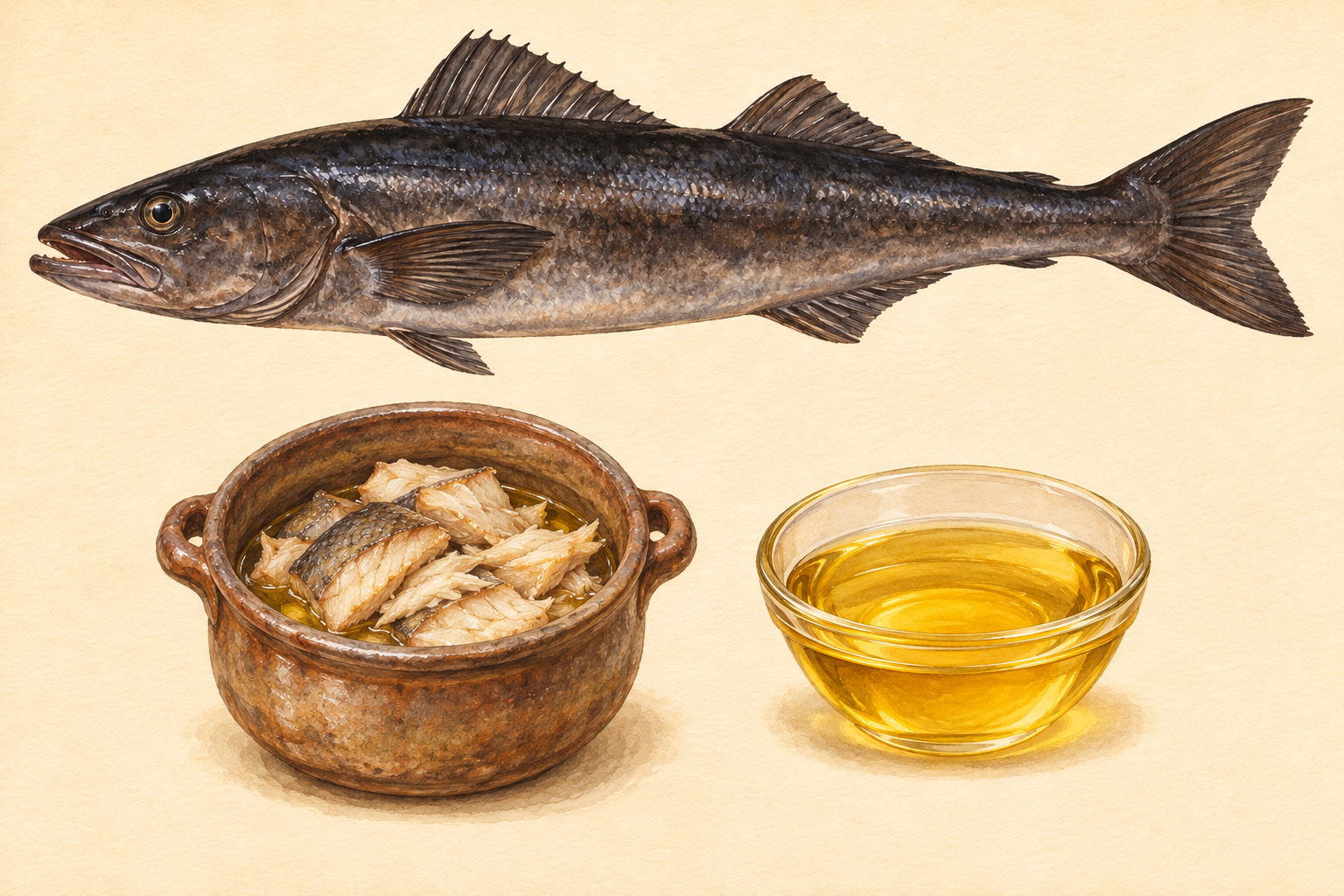
Overview
Sablefish oil was rendered as a separate oil in historical Haida fisheries. Accounts describe extracting oil from heated fish, rather than merely consuming fatty fish flesh.
Source material
Sablefish or blackcod (Anoplopoma fimbria). Oil recovered by heating and pressing the fish; not interchangeable with liver oils of other species.
Composition
No sample-specific fatty-acid profile with verified analytical conditions has been established for this traditional preparation. Figures for generic commercial fish oil are not substituted.
Region
Historical rendering and trade are documented around Englefield Bay and other parts of Haida Gwaii, British Columbia, Canada.
Food use
The rendered oil was valued as a food resource and trade item. The cited record does not establish a named contemporary dish or ongoing market availability.
Extraction
Fish were boiled and surface oil skimmed; alternatively, cooked flesh was wrapped in spruce-root sacks and squeezed between boards to recover oil.
Safety
Historical extraction does not establish compliance with modern food regulations or hygienic standards. Storage, oxidation and contaminants require separate consideration.
Sources
Parks Canada, Gwaii Haanas–South Moresby: Review of Vertebrate Fishery Resources, p.188. https://parkscanadahistory.com/publications/gwaiihaanas/fishery-inv.pdf ; Cooking and Preserving Fish, KnowBC. https://www.knowbc.com/limited/Books/Indian-Fishing/Cooking-and-Preserving-Fish