THE OIL ATLAS
Kenger / Gundelia seed oil
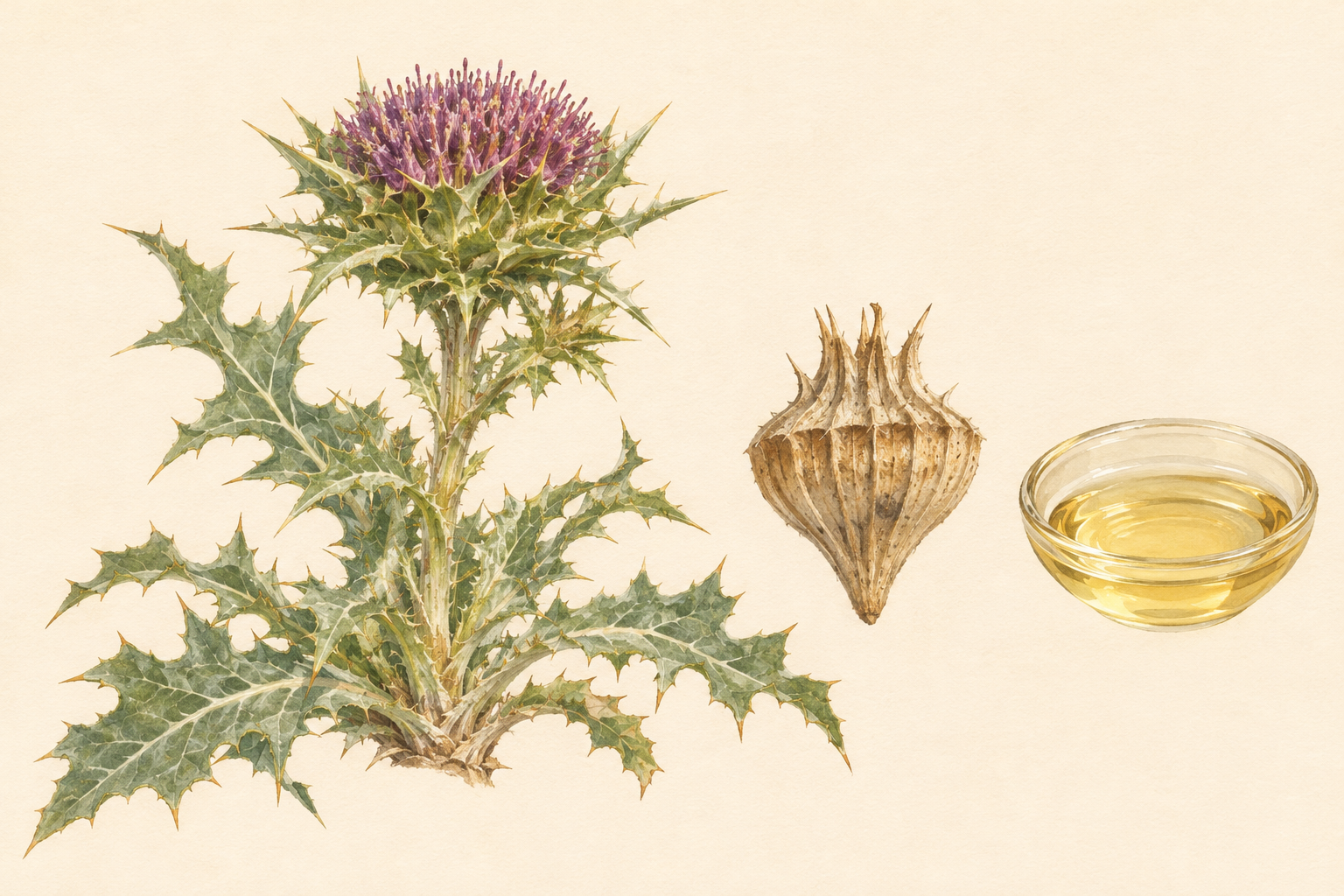
Overview
Oil obtained from the fruits or seeds of Gundelia tournefortii. Kew records that its fruits were used as a source of oil until the recent past, and a botanical review describes edible oil from the seeds. This is distinct from dishes made with the stems and flower heads; routine present-day household cooking-oil use is not established.
Source material
Seeds of Gundelia tournefortii L. (Asteraceae). Traditional dishes in which shoots are cooked in olive oil do not constitute evidence of Gundelia seed-oil use.
Composition
A 2012 study of Iranian seed material using diethyl-ether extraction reported 22.8% seed oil content and oleic and linoleic acids at 27.99% and 54.59% of the analyzed oil, respectively. Seed oil content and oil fatty-acid composition are different measures; neither is a retail nutrition label.
Region
Seed oil was experimentally characterized using material from Iran. The plant is widely eaten across parts of western Asia and the eastern Mediterranean, but the distribution and frequency of household use of its extracted oil are unverified.
Food use
Kew records use of the fruits as an oil source until the recent past, while a 2024 plant-resource review describes edible oil from the seeds. Together they support historical use of separated oil. The 2012 paper investigated the seed as a potential edible-oil source rather than documenting a widespread culinary practice, and a 2025 regional interview study found no seeds in the meals it examined, showing substantial present-day regional variation.
Extraction
The 2012 study extracted milled seeds using diethyl ether in the laboratory. This method is not evidence of traditional food-grade extraction or preparation.
Safety
Laboratory solvent-extracted oil must not be treated as ready-to-eat food. Food-grade processing, residual solvents, oxidation and local legal status require separate checks.
Sources
Royal Botanic Gardens, Kew, Plants of the World Online, Gundelia tournefortii, https://powo.science.kew.org/taxon/urn:lsid:ipni.org:names:210758-1/general-information ; Khanzadeh et al. (2012), “Physiochemical Properties of Gundelia tournefortii L. Seed Oil,” Journal of Agricultural Science and Technology 14:1535–1542, https://citeseerx.ist.psu.edu/document?doi=3f3b65a2f4cf7daa0fae99d6ea0ebcd09d342624&repid=rep1&type=pdf ; 2024 botanical review, https://link.springer.com/article/10.1007/s10722-024-01927-2 ; 2025 Çukurova interview study, https://www.agrifoodscience.com/index.php/TURJAF/article/view/7927 .