THE OIL ATLAS
Dingili seed oil
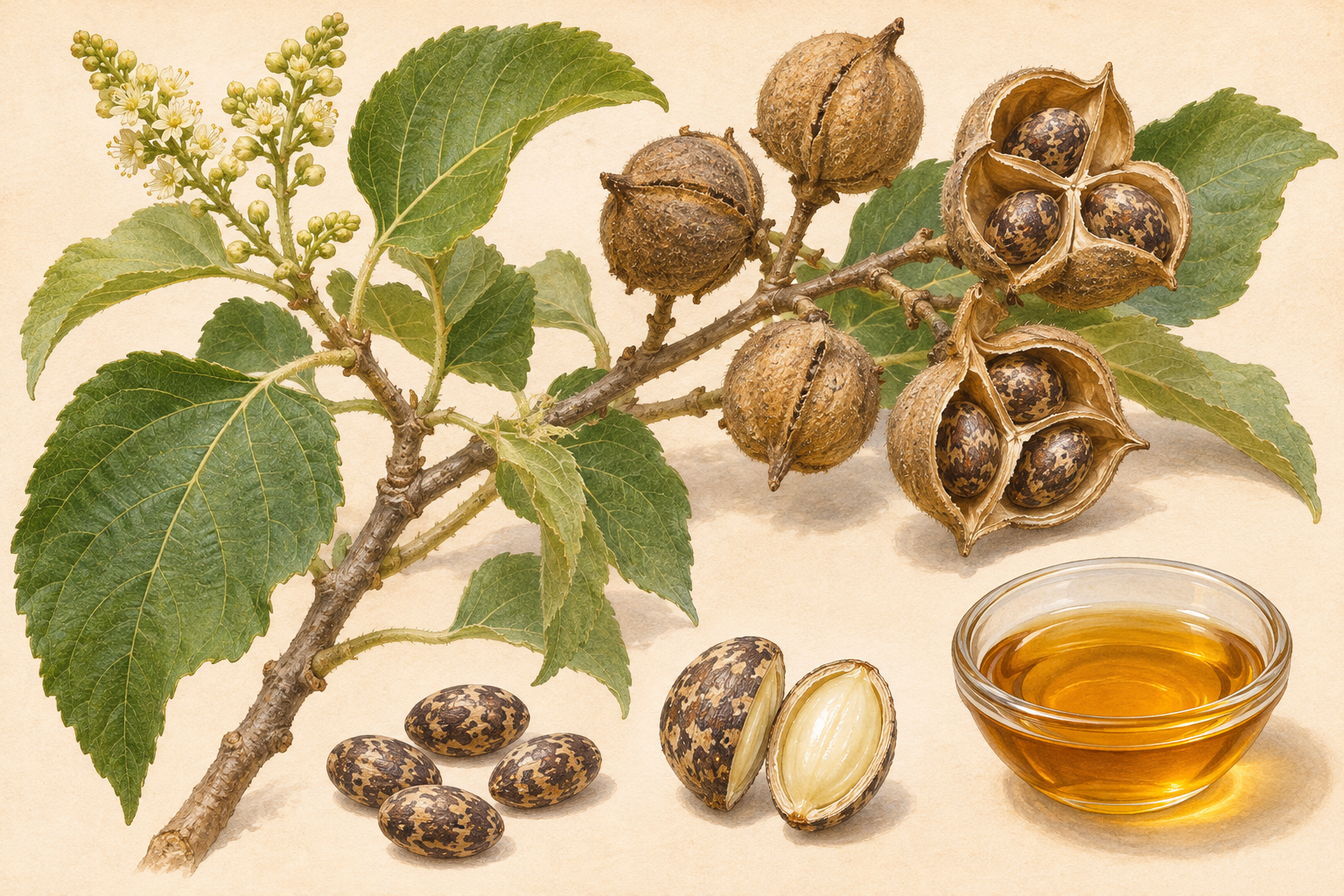
Overview
Caution: this oil is rich in an unusual epoxy fatty acid. Its presence alone does not establish human toxicity, but safe intake conditions remain unverified.
Oil separated from seeds of Cephalocroton cordofanus, called dingiri in eastern Sudan. PROTA records occasional extraction of the oil for cooking, distinct from eating the seeds. The oil contains a high proportion of an unusual epoxy fatty acid, and its safety as a modern food oil has not been established. Do not consume oil without verified food-grade suitability.
Source material
Seeds of Cephalocroton cordofanus. Eating the seeds is distinct from extracting oil from them for cooking.
Region
Specific use is recorded for eastern Sudan. The plant also occurs in Ethiopia, Eritrea and northeastern Tanzania, but its distribution does not establish identical extraction and food traditions in every region.
Food use
PROTA records occasional cooking use of the separated seed oil, without identifying dishes or quantities. Eating the seeds directly is a different use.
Extraction
Oil is separated from the seeds. The cited material does not establish a particular press, heating temperature or refining procedure as universal across the region.
Safety
The oil is rich in an unusual epoxy fatty acid. Historical use establishes neither a safe intake nor a validated treatment; do not consume oil without verified food suitability.
Product-specific compliance in Japan, the US and EU and safe intake conditions remain unverified. Purchase, consumption and home extraction or detoxification are not recommended here.
Sources
PROTA, Cephalocroton cordofanus, Uses / Properties: https://plantuse.plantnet.org/en/Cephalocroton_cordofanus_(PROTA)