THE OIL ATLAS
Butternut / white walnut oil
Overview
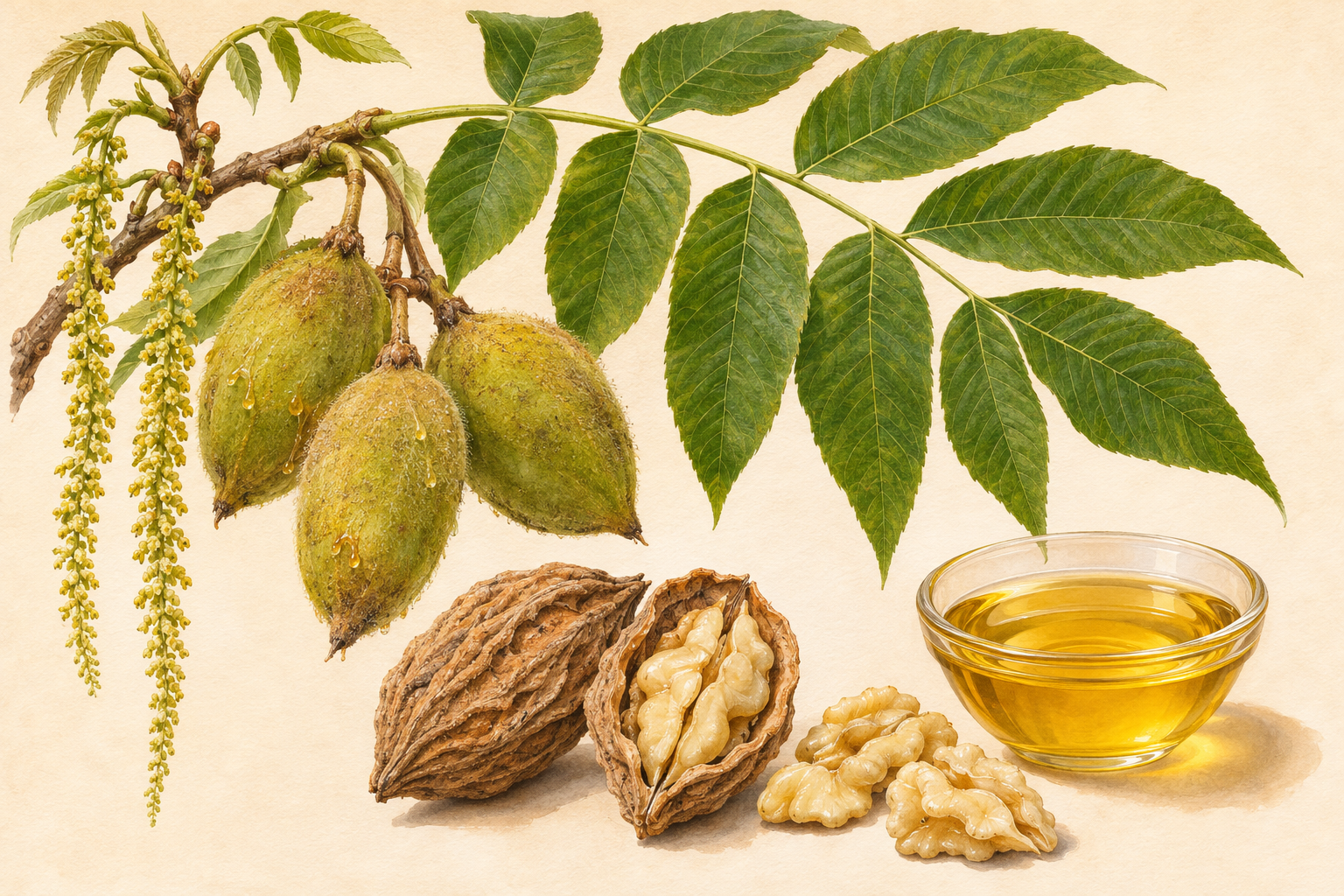
Butternut oil comes from Juglans cinerea kernels. A University of Missouri manual reports that Indigenous people boiled the kernels to obtain oil and used it like butter.
Source material
The species is Juglans cinerea L., also called butternut or white walnut. It is distinct from Persian walnut and black walnut.
Composition
The manual provides no separated-oil fatty-acid table or nutrition values per 100 g. A generic walnut-oil table cannot be assumed to describe this species.
Region
The account concerns Indigenous use in North America, without identifying a particular people or date for this extraction practice.
Food use
The separated oil was used like butter, a different preparation from eating whole kernels or adding them to baked foods.
Extraction
The account describes boiling kernels to recover oil, without giving validated temperatures, duration, extraction yield or storage instructions.
Safety
People with walnut allergy should also exercise caution with the oil. Use food-grade products and reject rancid oil. A historical extraction account is not a substitute for modern food-safety controls.
Sources
University of Missouri Center for Agroforestry, Training Manual for Applied Agroforestry Practices, 2018, Butternut: https://www.sare.org/wp-content/uploads/Training-Manual-for-Applied-Agroforestry-Practices.pdf