THE OIL ATLAS
West African bombax seed oil
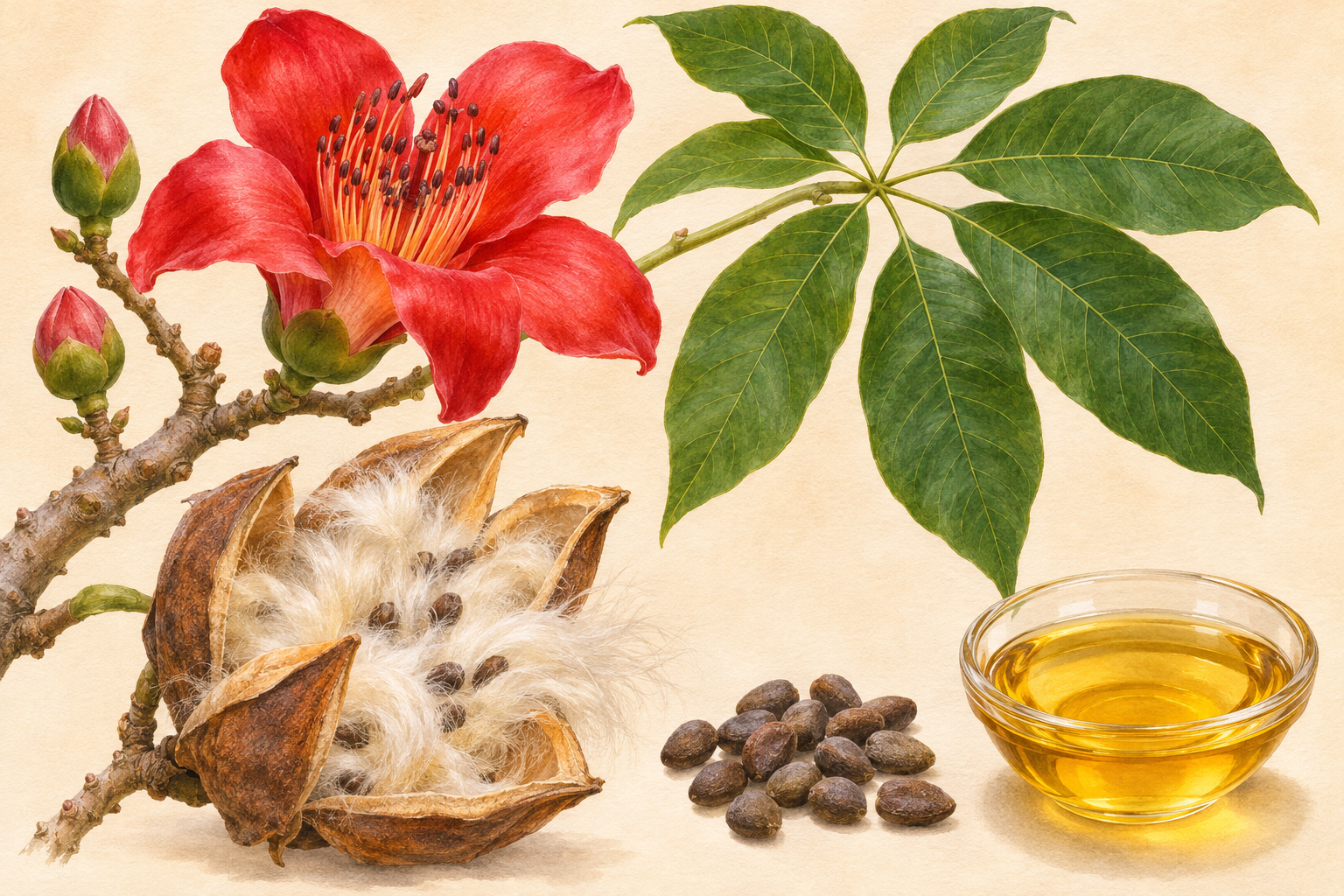
Overview
Seed oil from the West African tree Bombax costatum. An ethnobotanical survey in Benin records edible-oil use from its seeds.
Source material
The source is Bombax costatum seed, not Ceiba pentandra or the Asian Bombax ceiba. Their composition and toxicity findings cannot simply be transferred.
Region
The study published in 2017 conducted 118 semi-structured interviews around Benin’s Pendjari Biosphere Reserve. It investigated local knowledge rather than testing oil consumption.
Food use
Table III identifies seed use as edible oil, distinct from eating leaves or calyces. The table’s 90% concerns the food-use category, not a finding that 90% of respondents consumed seed oil.
Extraction
Seed-oil use is reported through interviews. The table does not establish directly observed extraction, refining conditions or named dishes.
Safety
The food-use record is not a safety certification. Current product hazards, allergens, contamination, oxidation tests, validated food-processing conditions and jurisdiction-specific compliance remain unverified. Kapok-oil composition is not substituted for this species. Home extraction, detoxification and purchase are not recommended.
Sources
Assogba et al. (2017), Usages de Bombax costatum dans les terroirs riverains de la réserve de biosphère de la Pendjari, Bois et Forêts des Tropiques 333:17–29, Table III. https://doi.org/10.19182/bft2017.333.a31465 PROTA, Bombax costatum: https://plantuse.plantnet.org/en/Bombax_costatum_(PROTA)