THE OIL ATLAS
Moabi kernel butter
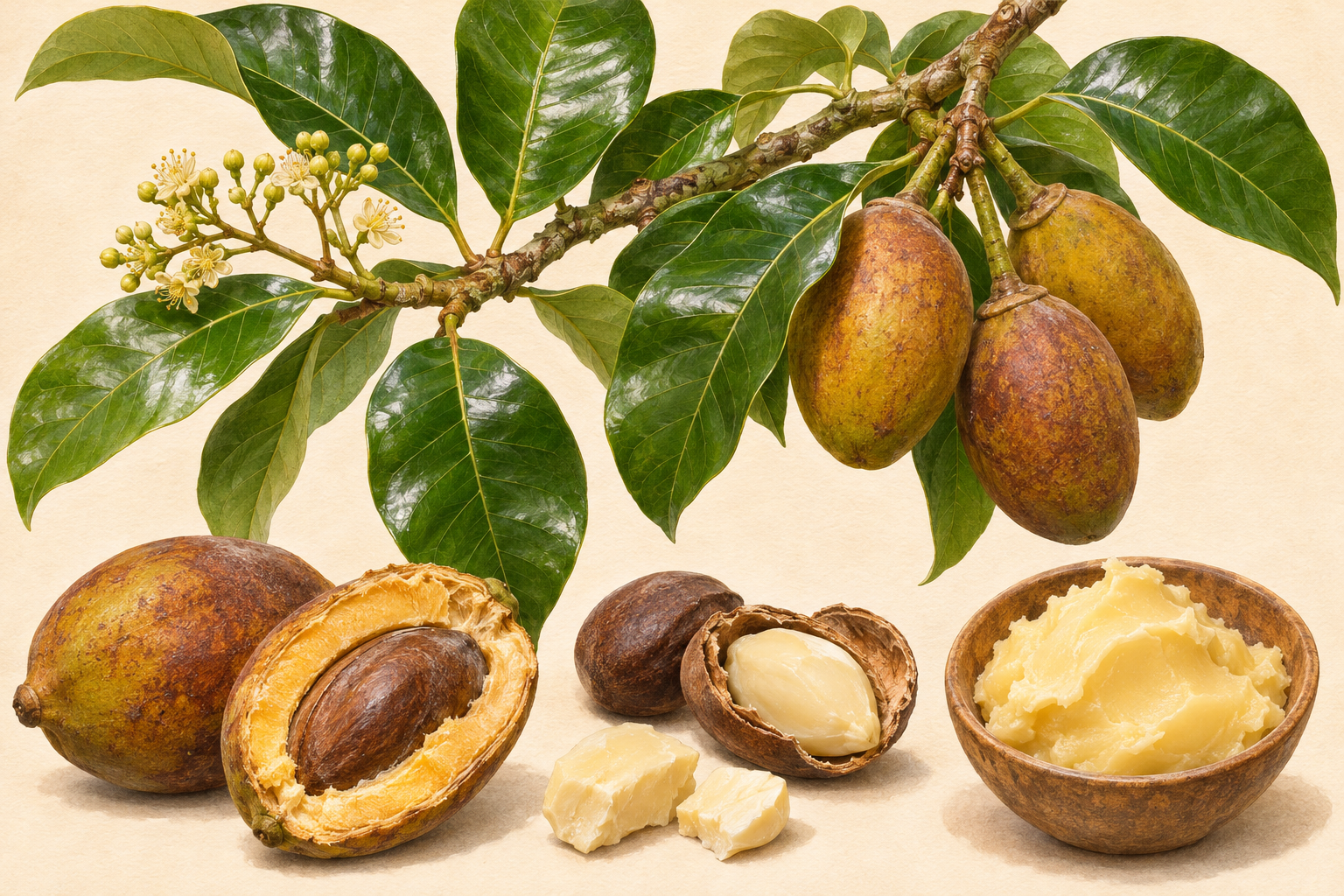
Overview
Moabi oil is kernel oil from Baillonella toxisperma. Forest-community accounts in Cameroon describe cooking use and consumption like butter.
Source material
The source is Baillonella toxisperma Pierre seed kernel (Sapotaceae), not its timber or bark.
Composition
Fungo et al. (2017) report traditional-extraction yields of 38.2–45.6% from Cameroonian seeds and a maximum α-tocopherol content of 24.3 mg/100 g oil. Extraction yield is not fatty-acid composition; these are sample results, not retail guarantees.
Region
Food use is recorded in Cameroon and Gabon. Cameroonian accounts describe women processing oil for valued household consumption.
Food use
The separated oil is used in cooking and like butter. Eating fruit pulp and applying herbal oil externally are different uses.
Extraction
The CARPE report describes drying seeds, pounding kernels and extracting oil by hand or a wooden press. Equipment and conditions can differ locally.
Safety
The 2017 samples included acid values as high as 14.87 mg KOH/g. Tradition does not certify every batch’s food quality. Oxidation, hydrolysis and contamination require controls. Use only suitable food-grade oil, not external-use or industrial material.
Sources
Fungo et al. (2017), African Journal of Food, Agriculture, Nutrition and Development 17(4):12758–12774, author-institution abstract: https://alliancebioversityciat.org/publications-data/physico-chemical-characteristics-and-fatty-acid-profile-baillonella-toxisperma CARPE, Baillonella toxisperma: A State of Knowledge, section 7.2.3: https://carpe.umd.edu/sites/default/files/documentsarchive/report-plenderleith_brown.pdf