THE OIL ATLAS
Cacay / Orinoco nut oil
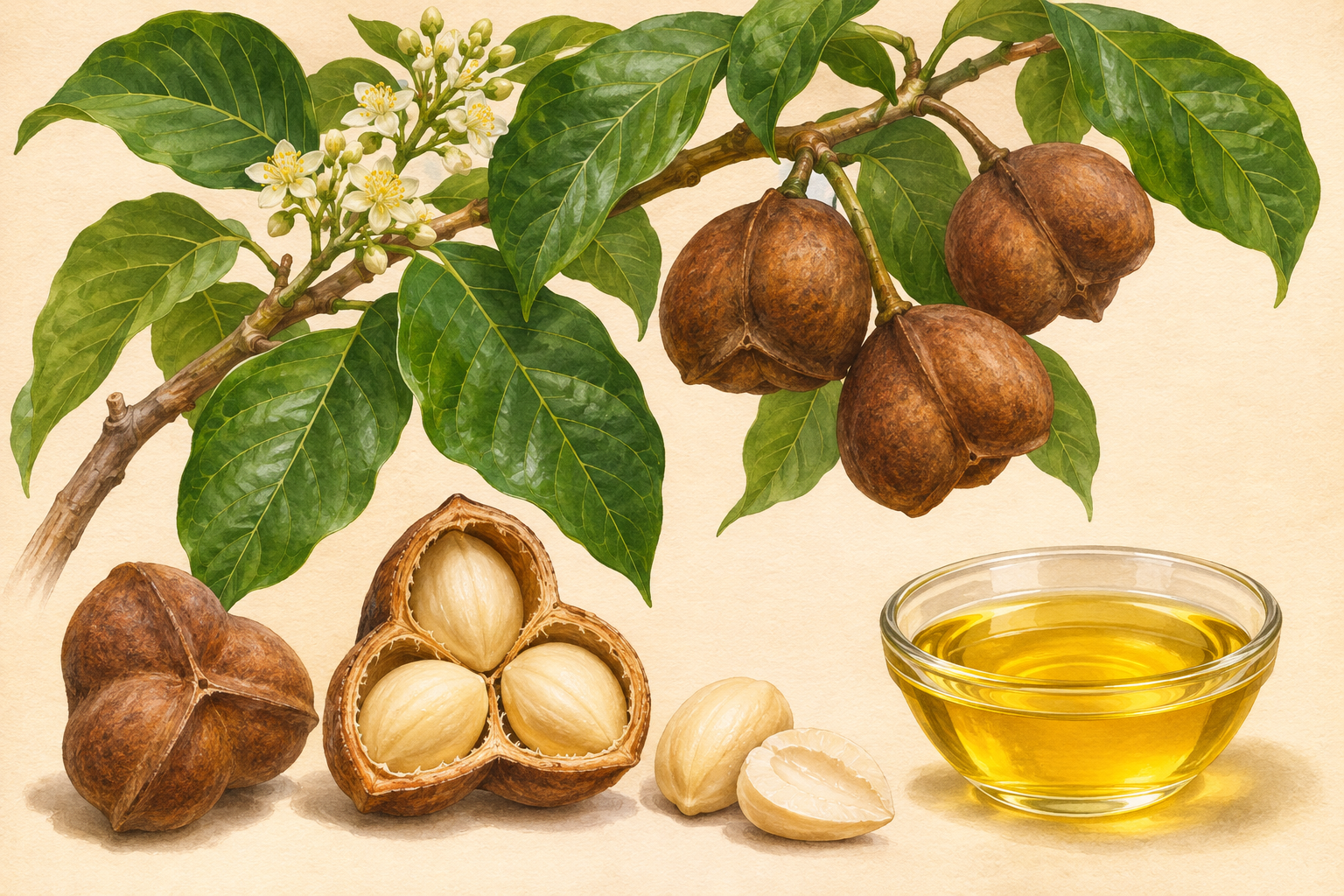
Overview
Cacay oil comes from tree seeds of the Orinoco and Amazon regions and is also called inchi oil. Extraction is recorded in a guide to traditional edible oils.
Source material
The source is Caryodendron orinocense kernels, distinct from Plukenetia volubilis sacha inchi despite the shared name.
Region
Vega Turizo’s 2004 edible-oil guide describes actual Indigenous extraction in the Orinoco and Amazon regions. SINCHI’s 2024 manual also records traditional seed use and oil extraction.
Food use
The region uses separated seed oil as an edible oil, a use distinct from widely marketed cosmetic oils.
Extraction
The traditional process heats crushed kernels, separates floating oil, removes moisture and filters it. SINCHI also describes kernel selection, drying and pressing.
Safety
SINCHI emphasises preventing quality loss from moisture and mould. Food-prepared oil and cosmetic-only products are distinct. A laboratory crude oil meeting some quality criteria does not establish overall food suitability.
Sources
Vega Turizo, Guía para la elaboración de aceites comestibles, Convenio Andrés Bello, 2004, section 6.1, pp.24–25: https://es.scribd.com/document/359869561/Guia-Para-La-Elaboracion-de-Aceites-Comestibles-Caracterizacion-y-procesamiento-de-Nueces SINCHI, Aprovechemos el cacay, 2024: https://sinchi.org.co/files/publicaciones/publicaciones/pdf/Manual%20Cacay%20digital.pdf