THE OIL ATLAS
Poga seed oil
Overview
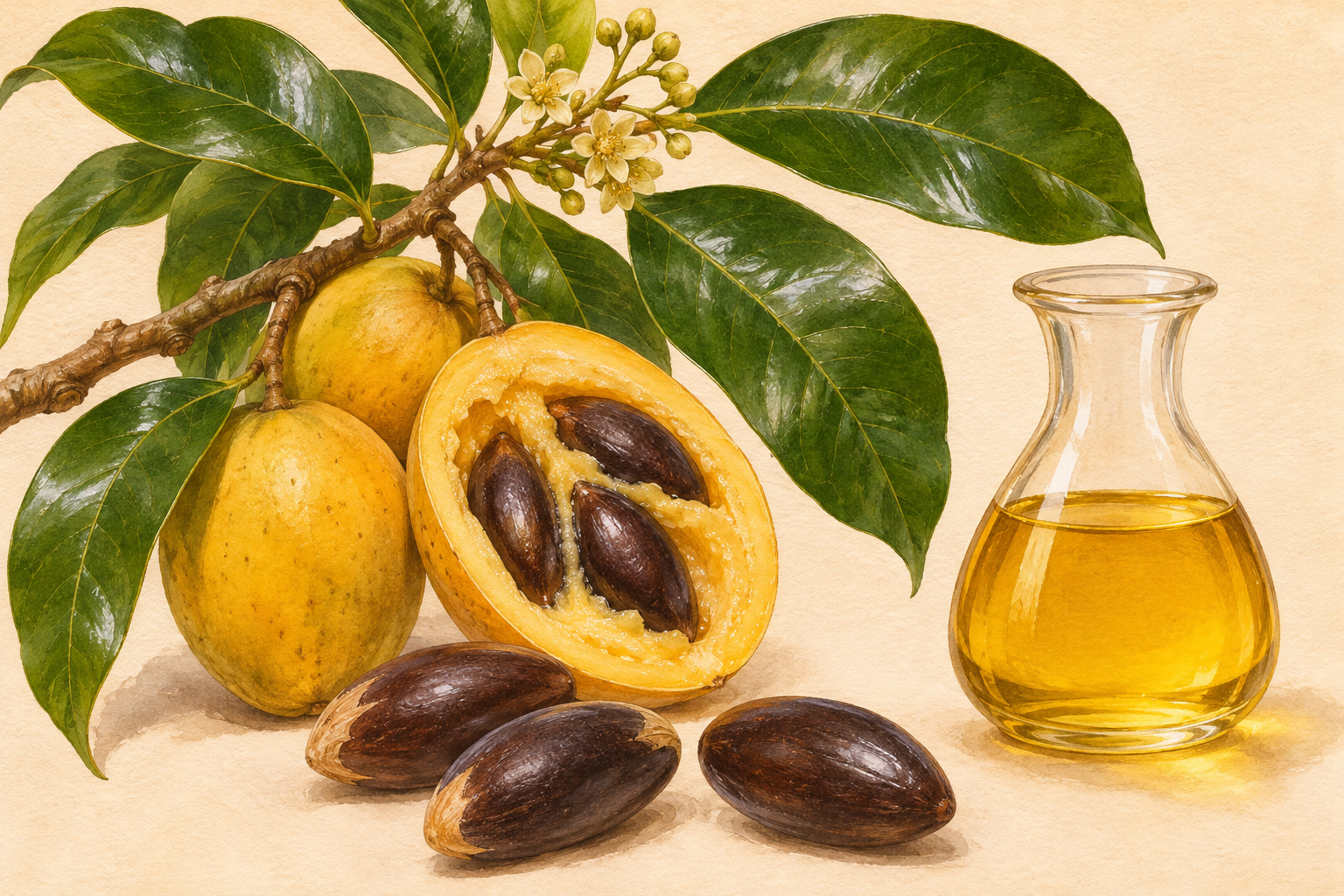
Seed oil obtained from Poga oleosa in Central Africa. PROTA records regional trade in the seeds as well as cooking with oil extracted from them. Trade in seeds alone does not establish a market for bottled edible oil.
Source material
Cooking oil separated from seeds of the Central African forest tree Poga oleosa. Eating the fruit or seeds themselves is distinct.
Region
PROTA describes seeds sold relatively commonly in markets in Cameroon and Gabon and imported into Equatorial Guinea from Cameroon. Seed trade volumes are not direct measurements of separated-oil consumption.
Food use
PROTA explicitly records cooking with oil separated from Poga oleosa seeds. The pulp and whole seeds are also edible, but those uses are separate from the oil. A Cameroonian fruit-tree account likewise identifies a culinary oil produced from the kernels.
Extraction
Oil is expressed from the seeds. PROTA describes the residual oilcake as suitable for cattle feed, but does not specify pressing temperatures or refining conditions.
Safety
The oil is compared in general character to olive and groundnut oils, not claimed to have identical composition or allergenicity. Check food-grade status and store sealed away from heat and light.
Sources
PROTA, *Poga oleosa* (Plant Resources of Tropical Africa), https://plantuse.plantnet.org/en/Poga_oleosa_%28PROTA%29 ; Vivien & Faure, *Fruitiers du Cameroun*, *Poga oleosa* entry, https://plantuse.plantnet.org/fr/Poga_oleosa_%28Fruitiers_du_Cameroun%29