THE OIL ATLAS
Panda oleosa seed oil
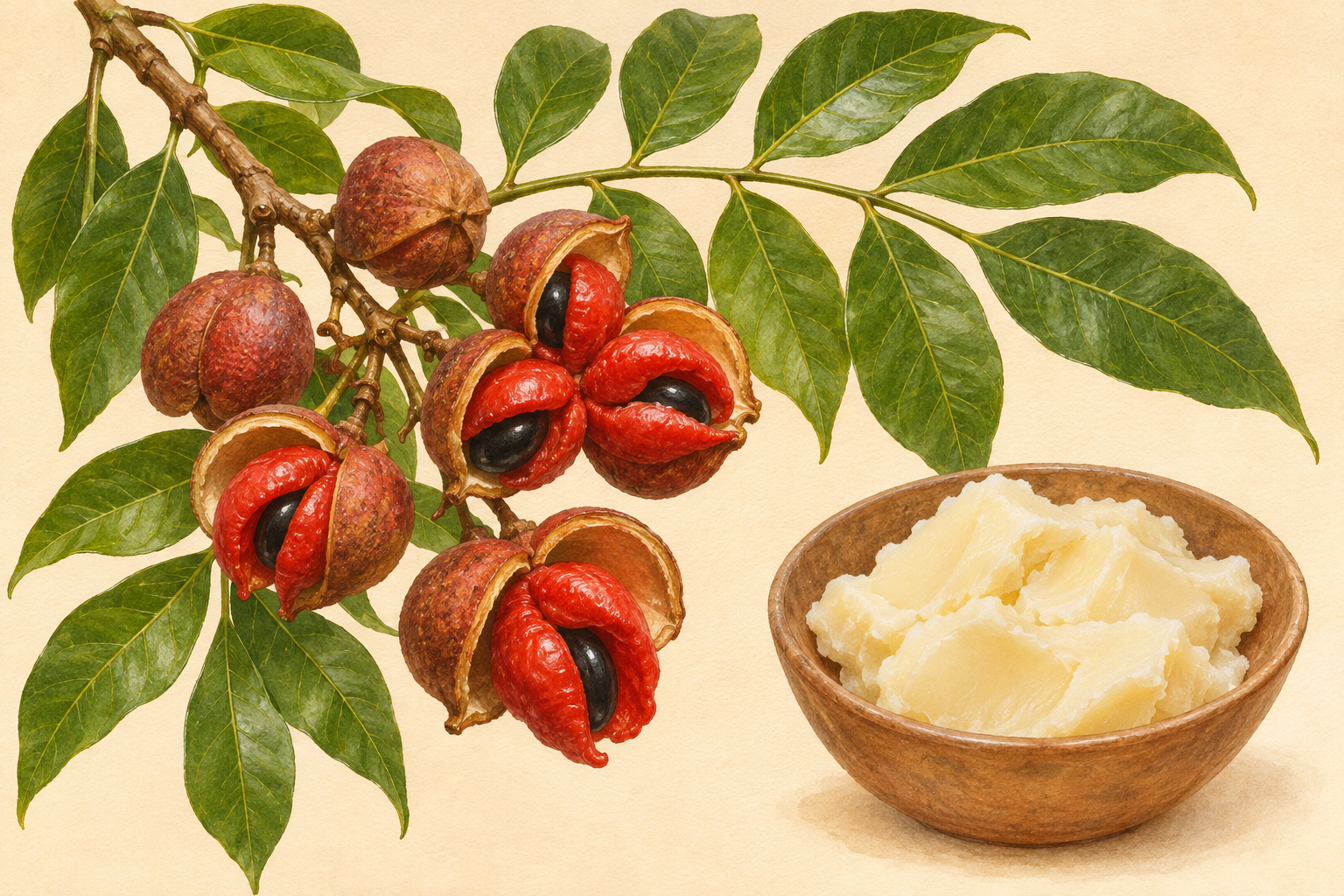
Overview
Seed oil of Panda oleosa, a forest tree of West and Central Africa. PROTA records household extraction and cooking with the separated oil. Adding crushed seeds to soup is a different practice and must not be presented as use of the extracted oil.
Source material
Oil separated from seeds of the West and Central African forest tree Panda oleosa. This differs from adding pounded seeds to food.
Composition
PROTA reports approximately 50% oil in seeds on a dry-matter basis. Its reported fatty-acid profile of separated seed oil is myristic 1%, palmitic 26%, stearic 6%, arachidic 0.5%, oleic 33.5% and linoleic 32.5% (proportions of fatty acids). Whole-seed proximate composition and oil fatty-acid percentages are different measurements; the account does not provide complete analytical sample conditions.
Region
PROTA places the species from Liberia to the Central African Republic and DR Congo and records seeds sold in Gabonese markets. The full botanical distribution should not be interpreted as a map of documented culinary oil use.
Food use
The PROTA species account explicitly states that oil extracted from Panda oleosa seeds is used domestically in the kitchen. It separately records pounded seeds added to soups and stews in Gabon; using whole or pounded seeds is not evidence of separated oil use.
Extraction
Seeds are removed from the hard fruit stone and oil is separated from the seeds. PROTA describes splitting the hard stone with a chopping knife in Gabon, but does not specify household oil-extraction temperatures, presses or refining conditions. Adding pounded seeds directly to food is a different process.
Safety
Distinguish market seeds from food-grade extracted oil. Verify intended food use and keep the oil sealed, away from heat and light.
Sources
PROTA, *Panda oleosa* (Plant Resources of Tropical Africa), https://plantuse.plantnet.org/en/Panda_oleosa_%28PROTA%29 (domestic kitchen use of extracted seed oil, dry-seed oil content, fatty acids and regional evidence)