THE OIL ATLAS
African oil bean seed oil
Overview
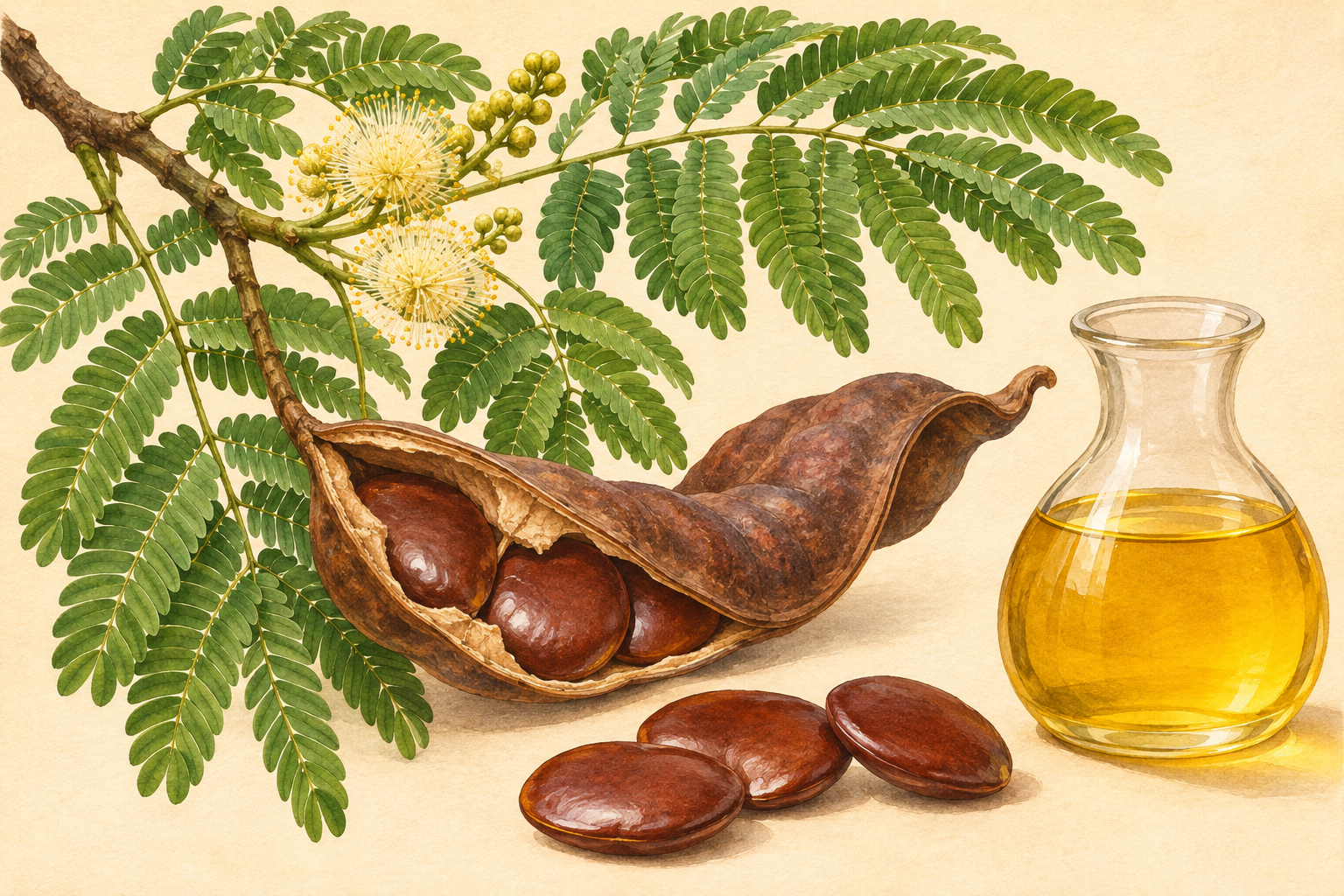
Owala oil is an edible oil extracted from the seeds of the African oil bean (Pentaclethra macrophylla).
Source material
The source material is seeds of Pentaclethra macrophylla. Eating the fruit, seed or kernel itself must be distinguished from using the separated fat.
Composition
| Measure | PROTA value | Material and unit |
|---|---|---|
| Seed fat | 35–52 g | Per 100 g unfermented seed |
| Linoleic acid | 42–54% | Percentage of fatty acids in separated oil |
| Oleic acid | 19–29% | Same basis |
| Lignoceric acid | 11–12% | Same basis |
| Behenic acid | 5–6% | Same basis |
Seed fat per 100 g and fatty-acid percentages of oil have different denominators.
Region
The tree grows in the forest zone of West and Central Africa and is often retained around farms and home gardens.
Food use
The seeds yield edible oil. Ugba, a fermented seed condiment popular in Nigeria, is a different food and must not be confused with the separated oil.
Extraction
Oil is separated from the seeds. PROTA documents seed consumption, fermentation and edible-oil extraction as distinct uses without prescribing one universal extraction apparatus.
Safety
PROTA reports the alkaloid paucine in unfermented seeds. Detoxification during ugba fermentation is distinct from evaluating the safety of separated oil. Use oil manufactured and labeled for food; do not substitute untreated seeds or non-food-grade extracts.
Sources
PROTA / plant-resource account, *Pentaclethra macrophylla*: https://plantuse.plantnet.org/en/Pentaclethra_macrophylla_%28PROTA%29