THE OIL ATLAS
Cocoa butter
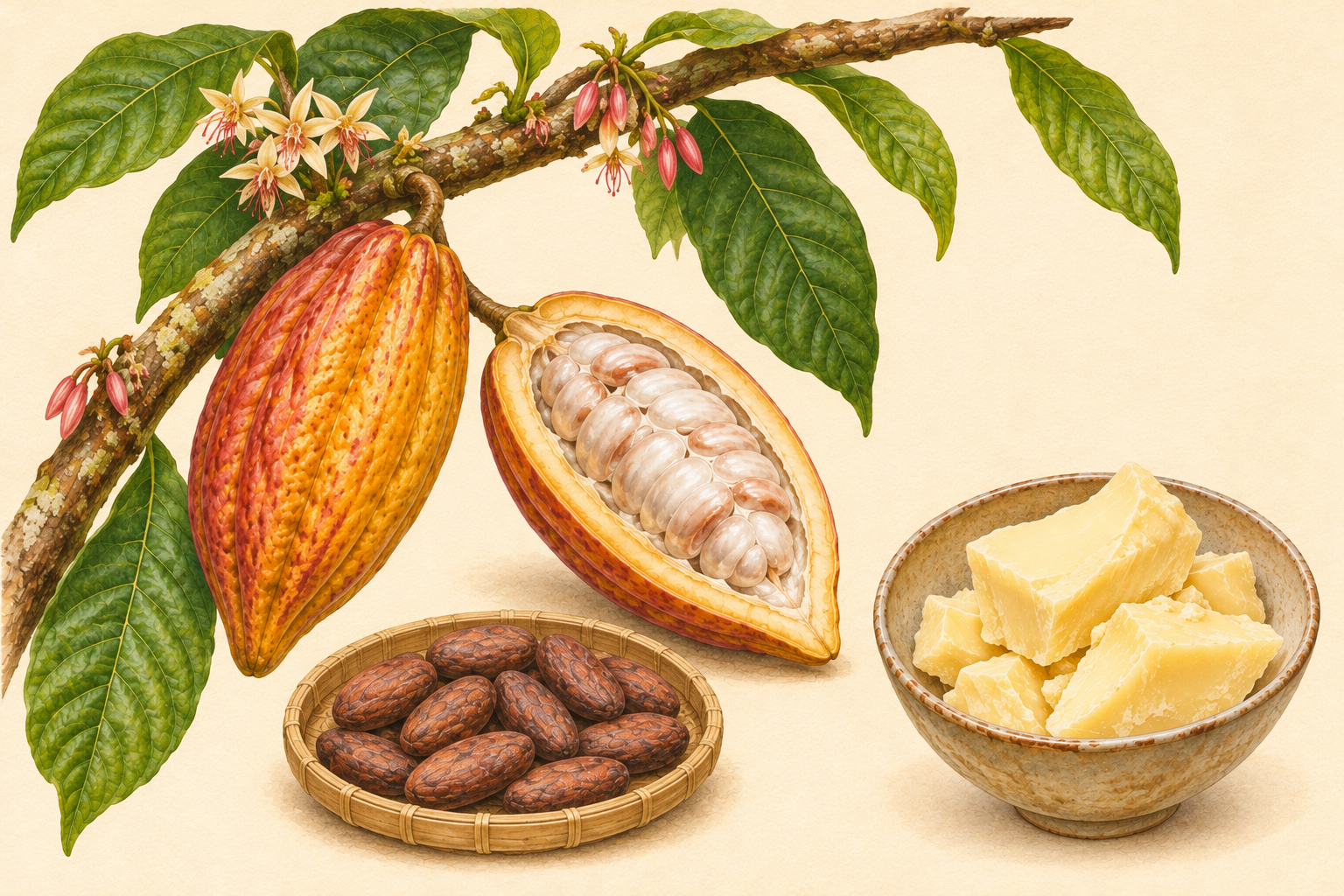
Overview
A solid edible fat separated from cocoa beans. It helps determine the snap and melting texture of chocolate and is also an essential ingredient in white chocolate.
Source material
The seeds of Theobroma cacao are fermented, dried and processed into cocoa liquor, from which the fat is pressed. Values for whole cocoa liquor or cocoa powder should not be mistaken for those of the separated butter.
Composition
| Component or measure | Value | Material, unit and source |
|---|---|---|
| Stearic acid | 37.3% | One unrefined cocoa-butter sample in a 2021 study; percentage of total fatty acids |
| Palmitic acid | 25.4% | Same sample and basis |
| Oleic acid | 33.5% | Same sample and basis |
| Free fatty acids | No more than 1.75% | Codex CXS 86-1981; mass fraction expressed as oleic acid, not the oleic-acid share above |
| Unsaponifiable matter | No more than 0.7% (0.35% for pressed butter) | Same Codex standard; mass fraction |
Region
Cocoa-bean origins and the countries where cocoa butter is used in chocolate manufacture need not be the same. It is an ingredient in confectionery industries internationally; no unsupported country ranking is given here.
Food use
Cocoa butter forms part of the fat phase of dark and milk chocolate and is used in white chocolate even though the latter contains no cocoa liquor. Codex CXS 87-1981 specifies at least 20% cocoa butter on a dry-matter basis for white chocolate. Tempering manages crystallisation and affects gloss, snap and melt-in-the-mouth texture.
Extraction
Beans are fermented, dried and shelled to obtain nibs. Roasting and grinding produce cocoa liquor, which is pressed to separate the butter; the fat is filtered. Some products undergo neutralisation, bleaching or deodorisation, altering colour and flavour. Pressing conditions are not identical across producers.
Separating fat from cacao material and incorporating the resulting cocoa butter into chocolate or confectionery are different stages. Nutritional values for cocoa powder or cocoa mass should not be attributed to cocoa butter itself.
Safety
Choose food-grade cocoa butter and protect it from excessive heat, light and off-odours in storage. The Codex free-fatty-acid limit is a quality measure, not a recommended intake of oleic acid. In confectionery, allergens such as milk or nuts may come from other ingredients and should not be attributed automatically to cocoa butter itself.
Use cocoa butter manufactured for food. Temperature control during chocolate crystallization is distinct from safe long-term home storage. Follow product storage instructions and avoid rancid or deteriorated fat.
Sources
Additional references - https://www.eurococoa.com/cocoa-story/cocoa-story-the-production-process-from-cocoa-beans-to-semi-finished-products/ - https://www.fao.org/fao-who-codexalimentarius/sh-proxy/ro/?lnk=1&url=https%253A%252F%252Fworkspace.fao.org%252Fsites%252Fcodex%252FStandards%252FCXS%2B86-1981%252FCXS_086e.pdf - https://www.nature.com/articles/s41467-021-25206-1 - https://www.fao.org/fao-who-codexalimentarius/sh-proxy/en/?lnk=1&url=https%253A%252F%252Fworkspace.fao.org%252Fsites%252Fcodex%252FStandards%252FCXS%2B87-1981%252FCXS_087e.pdf