THE OIL ATLAS
Patawa oil
Overview
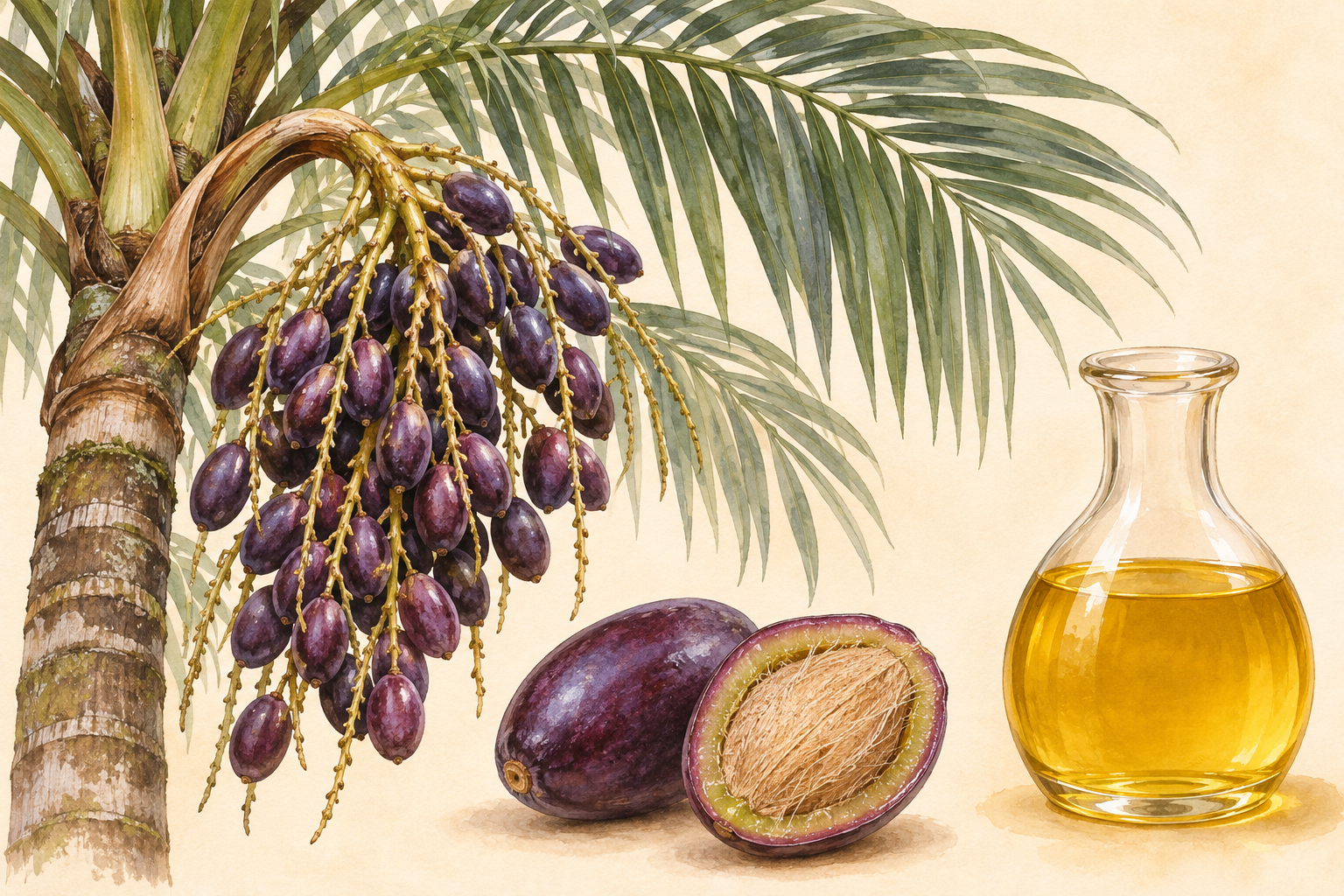
Oil separated from the mesocarp of the Amazonian palm Oenocarpus bataua, also known as ungurahua. Research records the separated oil being used for frying, salad seasoning and preserving meat.
Source material
This palm-fruit oil must be distinguished from consumption of the fruit itself.
Composition
A 2009 study analysed mesocarp oils from 38 samples collected in French Guiana and Peru. The figures below are mean percentages of total fatty acids in that sample set, not guaranteed values for retail products.
| Fatty acid | Mean share | Sample and source |
|---|---|---|
| Oleic | 72.7% | 38 mesocarp-oil samples, 2009 study |
| Palmitic | 18.1% | Same |
| cis-Vaccenic | 2.3% | Same |
| Linoleic | 1.9% | Same |
| Stearic | 1.7% | Same |
| Palmitoleic | 0.9% | Same |
| Alpha-linolenic | 0.8% | Same |
The mean lipid content of dried mesocarp (51.6%) describes the raw material, not the nutritional composition of the finished oil.
Region
Collected and used in Amazonian communities; fruit drinks must be distinguished from edible oil separated from the pulp.
Food use
Documented uses of separated patawa oil include frying, dressing salads and preserving meat. These are distinct from preparing a drink from the pulp. Even where a named dish is not documented, the use of the oil itself can be described precisely.
Extraction
A documented traditional method treats fruit with boiling water, then cools and settles the liquid fraction to separate the oil phase from water. Crushing pulp with water and sieving it for a drink does not itself recover separated oil. Laboratory solvent-extraction yield studies should not be presented as this traditional process.
Safety
Freshness, residual moisture, oxidation and hygienic collection and storage matter.
Distinguish experimentally extracted oil or cosmetic raw material from oil manufactured and labeled for food use. A history of eating another part of the plant does not establish the safety of separated oil.
Sources
1. https://onlinelibrary.wiley.com/doi/10.1155/2012/524075 2. https://restoration.elti.yale.edu/resource/fruit-production-ungurahua-palm-oenocarpus-bataua-subsp-bataua-arecaceae-indigenous-managed