THE OIL ATLAS
Camelina oil
Overview
Camelina oil is a food oil pressed from camelina seeds. It is rich in alpha-linolenic acid and is used in dressings and other foods. Prolonged high-temperature heating is not recommended.
Source material
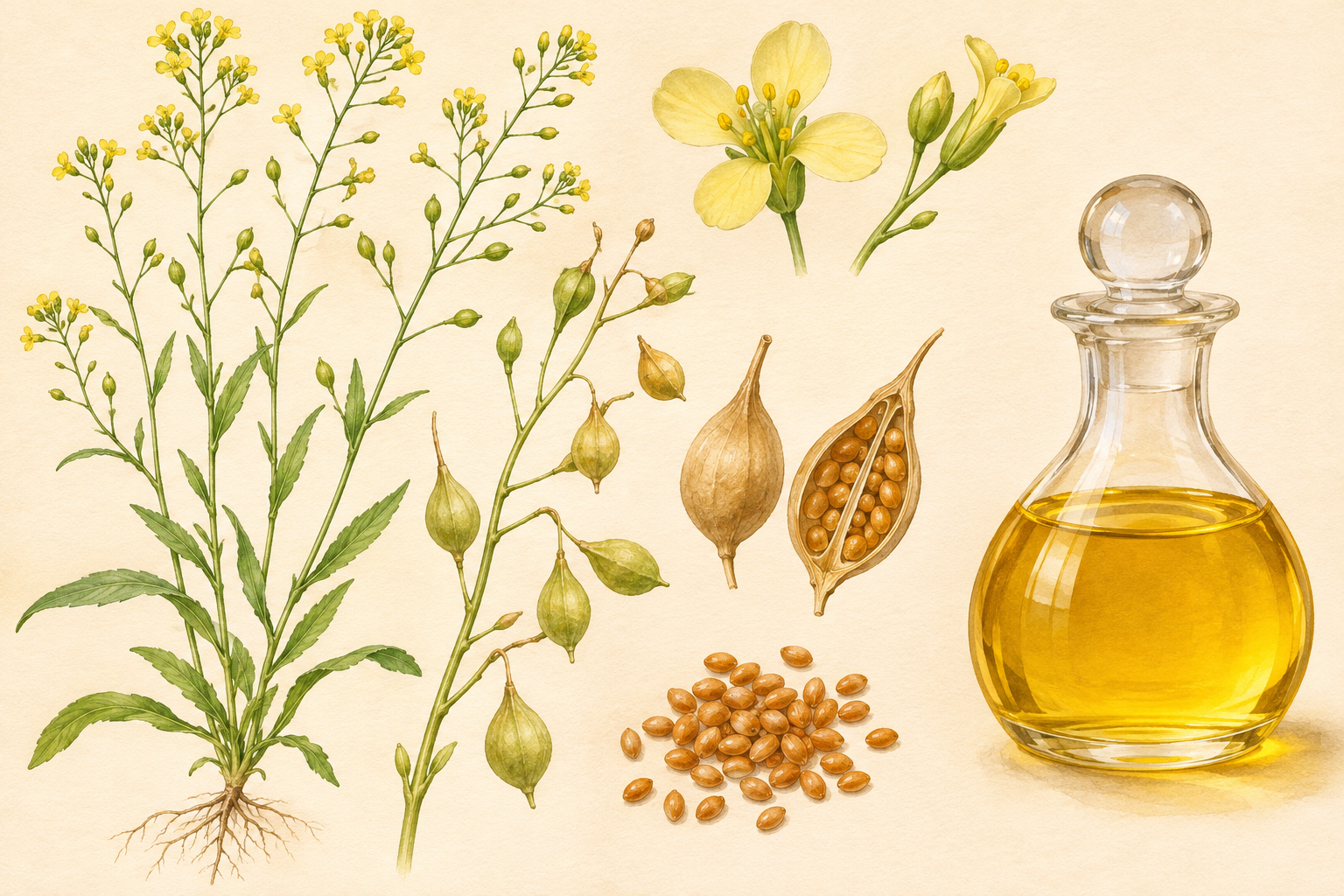
The oil comes from the seeds of Camelina sativa, a member of the mustard family distinct from rapeseed.
Composition
For the cold-pressed oil assessed by Health Canada in 2010, percentages by total fat were 7.9% saturated, 34.7% monounsaturated and 57.4% polyunsaturated fat. Individual fatty acids were 38.1% alpha-linolenic, 16.9% linoleic, 16.7% oleic and 16.1% eicosenoic acid. These describe the assessed oil, not guaranteed values for every product.
Region
Health Canada describes northern Europe and central Asia as its native region and records European cultivation and consumption until the 1940s. At the time of its review, cultivation also occurred in Canada, the United States, Slovenia and Italy.
Food use
Health Canada lists cooking oil, salad dressings, spreads and margarines as food uses. Its assessment does not establish a named regional dish.
Extraction
The Canadian safety assessment concerned cold-pressed oil separated from camelina seeds, not simply consumption of the seeds themselves.
Safety
In 2010 Health Canada raised no objection to the assessed cold-pressed oil as a food ingredient, but advised against prolonged heating. Residual protein was below 300 mg per 100 g oil; possible relevance to mustard allergy was noted, although no camelina-oil allergy cases had been documented at the time. This is not blanket approval for every product or jurisdiction.
Sources
Health Canada, “Camelina Oil — Novel Food Information” (2010).